
医学大模型

Search documents
破解基层医疗“三难”
Xin Lang Cai Jing· 2026-01-08 20:05
Core Insights - The establishment of the National AI Application Pilot Base in Hefei aims to address challenges in the integration of AI technology within grassroots healthcare, focusing on the disconnection between healthcare services and AI, conflicts with existing information systems, and the low-level repetitive construction of vertical models in the medical field [1][2]. Group 1 - The pilot base will create an efficient data flow system, aggregating 5PB of medical data and integrating 34 specialized medical knowledge bases and 42 multimodal datasets to support grassroots healthcare [2]. - The initiative will focus on developing five major medical models and creating application toolchains for the healthcare industry, facilitating rapid service delivery in industry scenarios [2]. - The project will target ten grassroots healthcare service scenarios and eleven public health service scenarios, developing intelligent decision support systems for general practitioners and targeted health checkups to enhance grassroots healthcare service capabilities [2].
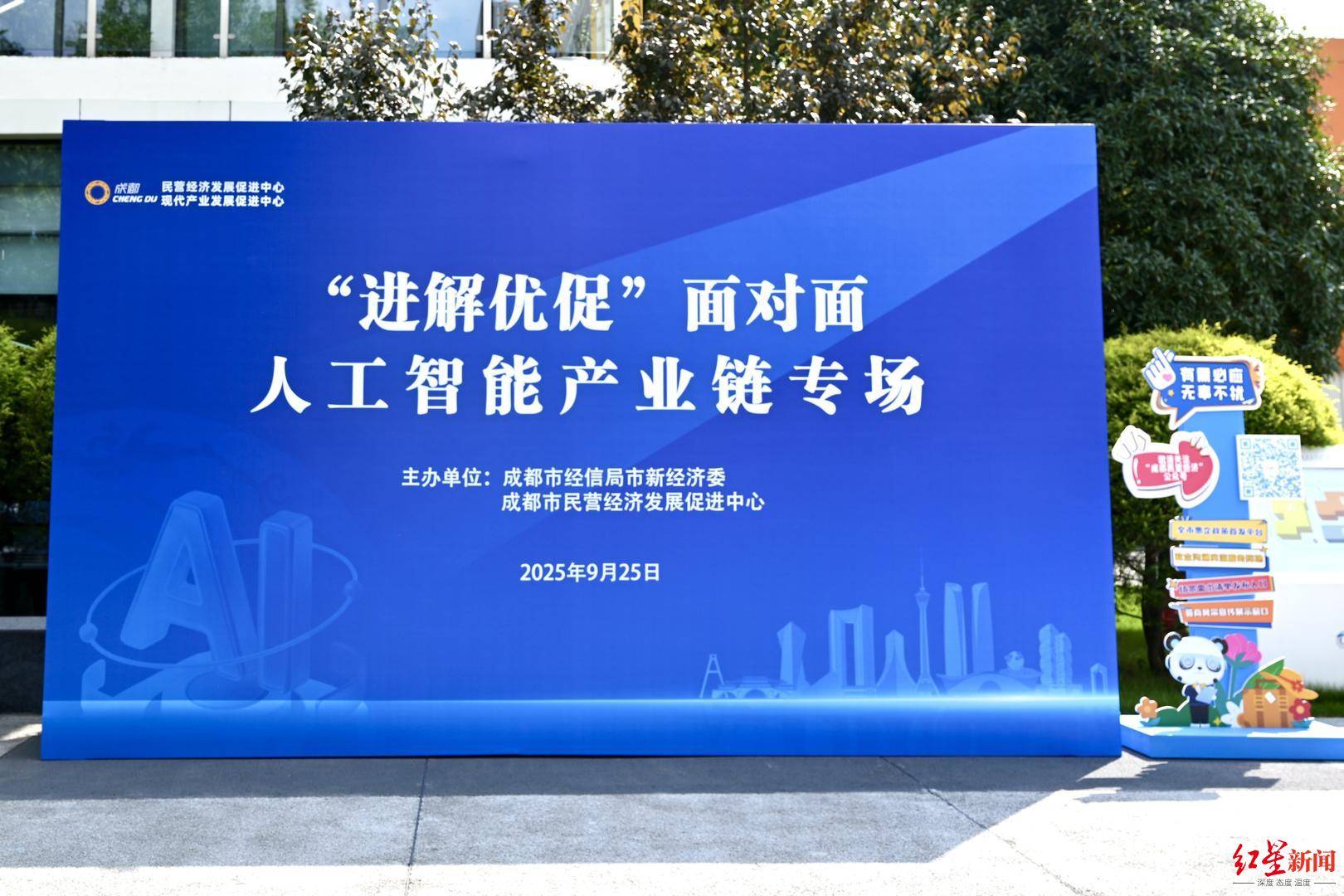
每天有局长坐班、每周有链长接待!成都“进解优促”再出新招,政企面对面敞开聊
Sou Hu Cai Jing· 2025-09-25 15:51
Core Viewpoint - The event focused on facilitating direct communication between AI companies and government officials to address pressing issues faced by the industry, emphasizing a collaborative approach to problem-solving [1][3][21] Group 1: Event Overview - The event titled "Face-to-Face with AI Enterprises" was held in Chengdu, featuring 62 company representatives and city leaders engaging in direct dialogue [1] - The format encouraged open discussions without lengthy speeches, allowing entrepreneurs to raise specific concerns related to financing, policies, and application scenarios [1][3] - The event was characterized by a lively atmosphere, with many participants eager to engage, leading to an expansion from 15 to over 60 attending companies due to high demand [7][9] Group 2: Key Issues Raised by Companies - Companies expressed a dual concern regarding financing and application scenarios, highlighting the need for government support in these areas [9][10] - Specific requests included access to the newly established Future Industry Fund in Chengdu, which aims to support local AI enterprises [10][12] - The need for practical application scenarios was emphasized, with calls for state-owned enterprises to open up opportunities for local AI solutions [13][15] Group 3: Government Responses and Initiatives - Government officials responded promptly to company inquiries, outlining specific measures such as the establishment of a 17.8 billion yuan Future Industry Fund to support various stages of investment [15] - A list of 48 innovative application scenarios related to AI was shared, with plans for further expansion to facilitate real-world applications [15] - The health sector was highlighted as a key area for AI integration, with initiatives to pilot AI-assisted diagnostics in community health centers [15][21] Group 4: Collaborative Ecosystem Development - The event fostered a collaborative environment, encouraging companies to shift from merely stating needs to exploring potential partnerships and synergies [17][21] - The presence of various stakeholders, including government departments and investment institutions, aimed to create an "industrial ecosystem" conducive to growth [17] - Future plans include weekly industry chain events to maintain ongoing dialogue and support for local enterprises [21]

医渡科技20260626
2025-06-26 15:51
Summary of Yidu Technology Conference Call Company Overview - **Company**: Yidu Technology - **Fiscal Year**: 2025 - **Key Financials**: - Total revenue: 715 million RMB - Net loss: 135 million RMB, a decrease of 38.9% year-on-year [2][3][10] - Operating cash flow outflow: 250 million RMB, a decrease of 23.8% year-on-year [2][4][11] Key Business Segments 1. AI for Medical - Revenue growth: 10.3% year-on-year in the big data platform and solutions segment [2][10] - AI platform deployed in over 30 top-tier hospitals, reducing medical record writing time to 30 seconds and TNM staging assessment time by 70% [5][14][33] - AI diagnostic assistant served 26,000 patients from February to June 2025 [9][12] 2. AI for Life Science - Revenue: 270 million RMB, a decrease of 23.7% year-on-year [18] - Active clients: 132, with 16 out of the top 20 global pharmaceutical companies as clients [8][18] - Completed 411 clinical trials and 275 real-world studies [7][18] 3. AI for Care - Revenue: 122 million RMB, a decrease of 28% year-on-year [22] - Main operator for Shenzhen and Beijing's health insurance programs, with over 6 million and 15 million insured individuals respectively [24][30] Operational Efficiency - Operating expenses (OPEX) decreased by 23% year-on-year, with OPEX as a percentage of revenue down by 10 percentage points [2][11] - Sales expenses as a percentage of revenue decreased from 26% to 20% [11] - R&D expenses as a percentage of revenue decreased from 29% to 26% [11] AI Model Development - Self-developed medical model's hallucination rate decreased by 80%, trained on over 500 billion tokens [8][10] - Performance in medical scenarios rated better than Deepseek R1 [9] Strategic Initiatives - Launched "1+N+X" product matrix for physician dictation, integrating multiple large models to enhance the entire medical process [5][14] - New data platform EVA 5.0 significantly improved data processing efficiency by over 4 times [15] Future Outlook - Expected revenue growth of approximately 20% in AI for Medical for FY 2026 [29][30] - Focus on high-quality revenue growth in AI for Life Science, with a target to exceed industry growth rates [29][30] - Plans for stock buyback due to current low stock prices, with sufficient cash reserves of approximately 3.78 billion RMB [30] Additional Insights - The company has established a strong presence in the healthcare AI sector, with significant partnerships and projects in various hospitals and research institutions [17][18][35] - Continuous investment in AI technology and data management to maintain competitive advantages in the healthcare market [34][35]