
单季戊四醇

Search documents
中毅达:公司单季戊四醇可用于合成润滑油基础油
Zheng Quan Ri Bao Wang· 2026-01-14 13:21
Core Viewpoint - Zhongyida (600610) produces pentanediol as a basic chemical raw material, which is primarily used in the synthesis of various resins and as an important intermediate for flame retardants and stabilizers, serving multiple industries such as plastics, coatings, and daily chemicals [1] Group 1 - The company's pentanediol is utilized in the synthesis of lubricant base oils (ester oils) [1] - The main application directions include synthetic alkyd resins and saturated polyester resins, which are used in coatings and inks [1] - The company's products serve downstream customers involved in various production sectors related to the aforementioned applications [1]

涨价概念股迎来退潮期!2倍大牛股一字跌停,近5亿资金急待出逃
Ge Long Hui A P P· 2025-05-09 06:18
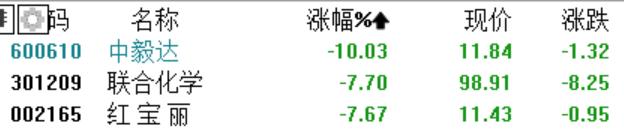
Group 1 - Chemical stocks experienced a collective decline today, with Zhongyida hitting the daily limit down, and United Chemical and Hongbaoli dropping over 9% and 8% respectively [1][2] - Zhongyida's latest stock price is 11.84 CNY per share, with a total market capitalization of 12.68 billion CNY, and a trading volume of 1.47 billion CNY at the limit down [2] - The decline in chemical stocks is linked to a risk warning announcement from Zhongyida, indicating that its stock price is significantly detached from its fundamentals [3][4] Group 2 - Zhongyida's announcement highlighted that its price-to-book ratio is 169.67, far exceeding the industry average of 1.91, indicating potential market trading risks [7] - The company has a goodwill value of 160 million CNY and a net asset value of 81.08 million CNY, with a cumulative undistributed profit of -2.098 billion CNY as of last year [7] - Since April, chemical stocks have been active due to price increases, with Zhongyida's stock price rising over 226% from March 10 to the recent close [7] Group 3 - Zhongyida has experienced significant price volatility, with its stock price previously rising from 1.91 CNY to 22.38 CNY, a cumulative increase of 720.4% from 2012 to 2016 [9] - The stock has also seen a cumulative decline of 90.64% from its peak in 2018 to its lowest point in 2021 [10] - The recent surge in Zhongyida's stock price is attributed to the rising prices of its main product, dipentene [13] Group 4 - The supply-demand dynamics for dipentene are tight, with prices continuing to rise due to limited supply and strong demand from downstream industries [16] - As of May 8, the market average price for dipentene was 75,800 CNY per ton, reflecting a 1.2% increase from the previous working day [17] - Analysts expect a significant supply gap in the industry due to low inventory levels and high concentration of production capacity, which may lead to continued price increases for dipentene [17]

双单季戊四醇行情分析
2025-04-15 14:30
Summary of Conference Call Industry Overview - The conference call primarily discusses the chemical industry, focusing on the production and pricing of dual-agent and single-agent materials, particularly in the context of PCB (Printed Circuit Board) manufacturing and related applications. Key Points and Arguments Pricing Trends - The price of a specific material has increased from 32,000 yuan per ton to approximately 63,000 yuan per ton, effectively doubling since March 2025, indicating a significant upward trend in pricing [1] - The price of single-agent materials has also risen, with a notable increase of 43% from 11,000 yuan per ton in July 2024 to 11,475 yuan per ton currently [1] Production Costs and Margins - The production cost for single-agent materials is currently around 9,700 yuan per ton, yielding a gross profit of approximately 1,700 yuan per ton [1] - The production of dual-agent materials is subject to specific technical barriers, with production conditions such as reaction temperature and chemical ratios affecting yield and quality [2] Market Dynamics - The increase in dual-agent pricing is attributed to supply-side constraints, including potential production halts from certain manufacturers and overall market demand stability [3][10] - The dual-agent market is characterized by high-value applications, including light-curing materials and electronic chemicals, which are expected to drive future demand [4] Production Capacity - Various manufacturers are mentioned, including Chifeng Ruiyang with a capacity of nearly 40,000 tons and Yun Tianhua with a capacity of 10,000 tons, indicating a competitive landscape with varying production capabilities [5][6] - The overall production capacity for single-agent materials in China is estimated at around 300,000 tons, with actual production levels around 240,000 to 250,000 tons [7] Export and Domestic Consumption - Approximately 2,000 tons of dual-agent materials are exported annually, primarily to Japan and Taiwan, highlighting the international demand for these products [9] - The domestic PCB market is experiencing growth, with expectations of increased production and consumption of dual-agent materials [21] Future Outlook - The market is projected to grow at a rate of about 10% annually, driven by the increasing demand for high-end PCB applications and the ongoing trend of domestic production replacing imports [20][22] - The potential for new entrants in the market is limited due to high technical barriers and the established dominance of existing players, particularly in high-end PCB manufacturing [26][27] Challenges and Risks - Environmental regulations and seasonal production constraints, particularly in northern China during winter, pose risks to supply stability [10][11] - The market is sensitive to price fluctuations, and significant increases could lead to customers seeking alternative materials if prices rise excessively [18] Additional Important Content - The discussion highlights the importance of technical expertise in producing dual-agent materials, with not all manufacturers capable of producing both single and dual agents effectively [8] - The call emphasizes the need for ongoing monitoring of market conditions and production capabilities to navigate potential supply chain disruptions and pricing volatility [30]
