
卫星应用数智服务云平台

Search documents
中国商业航天火箭卫星,将加速升级
Zhong Guo Zheng Quan Bao· 2026-01-29 04:30
Core Viewpoint - The China Aerospace Science and Technology Corporation (CASC) is set to enhance its commercial space capabilities by developing competitive commercial launch vehicles and expanding satellite applications, aiming for a more mature and scalable commercial space industry. Group 1: Commercial Launch Capabilities - CASC plans to implement a commercial launch capacity enhancement project to develop internationally competitive commercial launch vehicles for routine transportation [1] - The company aims to achieve a reusable rocket capacity of 20 tons for low Earth orbit and complete the development and testing of heavy-lift rockets capable of delivering 100 tons to low Earth orbit [1] Group 2: Satellite Development and Applications - CASC will initiate a commercial satellite efficiency enhancement project, focusing on the development of new satellite types and advanced payloads, including the construction of satellite constellations [1] - The company plans to develop world-class payload products and new generation satellites, such as flat-panel satellites, software-defined satellites, computing satellites, and ultra-low Earth orbit satellites [1] Group 3: Infrastructure and Service Enhancements - CASC will strengthen its industrial infrastructure by addressing gaps in launch, recovery, and measurement control, and will establish new commercial launch sites in various regions [2] - The company aims to create an integrated commercial launch site system that includes intelligent landing sites and recovery capabilities [2] - A comprehensive commercial space measurement and control network will be developed to provide intelligent, low-cost, and reliable solutions [2] Group 4: New Application Scenarios - CASC will explore new application scenarios such as low Earth orbit satellite internet, mobile direct connections, aviation internet, and vehicle networking [3] - The company will utilize new infrastructure like low-altitude drones and ultra-low Earth orbit satellites to develop innovative applications [3] Group 5: Space Tourism and Resource Development - CASC plans to promote space tourism, smart infrastructure, resource development, and space traffic management during the 14th Five-Year Plan period [4] - The company aims to accelerate the development of suborbital and orbital space tourism vehicles and establish a comprehensive operational system for space tourism [5] - A gigawatt-level space digital infrastructure will be constructed to integrate computing, storage, and transportation capabilities [6] - CASC will conduct major projects for space resource development, focusing on key technologies for resource exploration and autonomous mining [7] - The company will also work on technologies for monitoring, warning, and clearing space debris to ensure the safety of space infrastructure [8]

中国商业航天火箭卫星将加速升级
第一财经· 2026-01-29 03:22
Group 1 - The core viewpoint of the articles emphasizes the enhancement of China's commercial space capabilities through various engineering projects aimed at developing competitive commercial launch vehicles and satellite systems [1][2][3] Group 2 - The China Aerospace Science and Technology Corporation plans to implement a commercial launch capacity enhancement project, focusing on developing reusable rockets capable of carrying 20 tons to low Earth orbit and heavy launch vehicles with a capacity of 100 tons [1] - The company will also advance a commercial satellite efficiency leap project, which includes the development of new satellite types and advanced payloads, as well as the construction of satellite constellations for national satellite internet and various new applications [1] - Infrastructure improvements will be made in the commercial space industry, including the construction of new launch sites and recovery systems to address gaps in launch, recovery, and control operations [2] - A comprehensive commercial launch site system will be established, integrating launch and recovery functions, production, and testing capabilities to meet the demands of larger satellite constellations [2] - The company aims to create an integrated space application data system and a satellite application service cloud platform to provide comprehensive information services and promote large-scale applications [2][3]

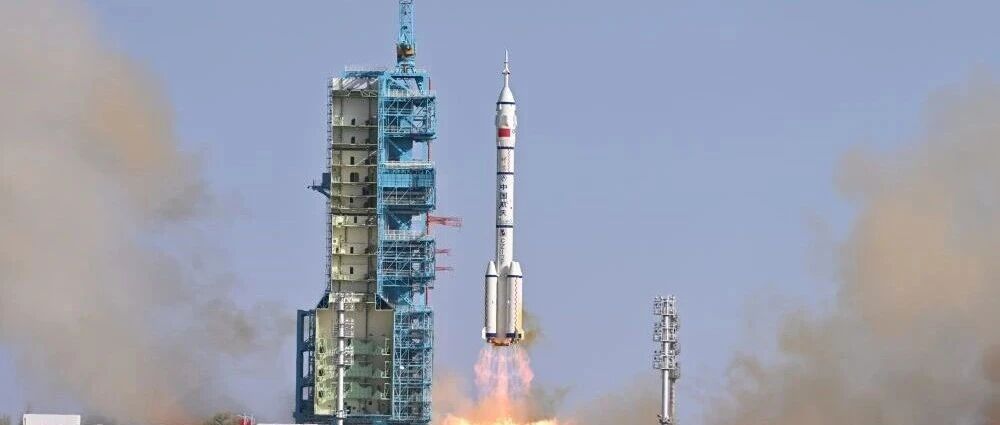
中国商业航天产业基础设施将补强,开发更多应用场景
Xin Lang Cai Jing· 2026-01-29 03:16
Core Insights - China is enhancing its commercial space industry by implementing infrastructure improvement projects to address gaps in launch, recovery, and control operations [1] - The focus is on building new commercial launch sites in Hainan, the eastern coast, and Jiuquan, creating a complementary and collaborative commercial launch site system [1] - The development of an integrated commercial launch site that combines launch/recovery, production, and testing functions is planned to meet the demands of larger satellite constellation construction [1] Group 1: Infrastructure Development - The company will construct intelligent land and sea landing sites and recovery capabilities [1] - A unified commercial space measurement and control network will be established, integrating various technical interfaces for high, medium, and low Earth orbits [1] - The goal is to provide intelligent, low-cost, and highly reliable commercial space measurement and control solutions [1] Group 2: Application Expansion - The company will implement a space application industry expansion project focusing on application technology breakthroughs [1] - Research will be conducted on adaptive satellite communication, high-precision navigation signal processing, and multi-source data fusion [1] - An open and shared space application data system will be built, along with a satellite application intelligent service cloud platform [1] Group 3: New Application Scenarios - The company aims to develop new scenarios for low Earth satellite internet, including mobile direct connections, aviation internet, and vehicle networking [2] - Smart applications for low-altitude airspace route planning and flight control will be explored [2] - New application services such as space environment applications, space computing, and space debris removal will be cultivated [2]