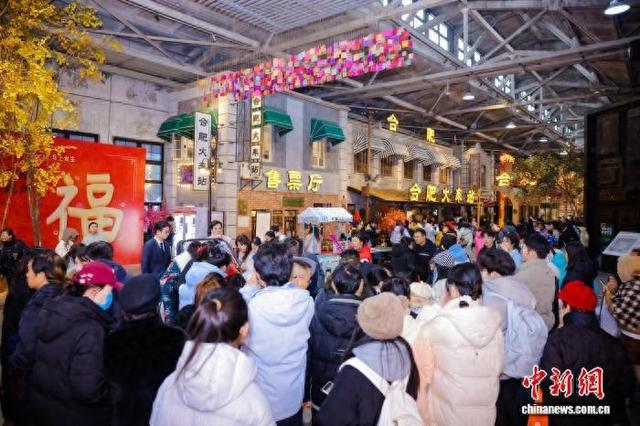
合柴1972文创园

Search documents
合肥以“细腻针法”推进保护性更新——城市在“长大” 记忆未走远
Ren Min Ri Bao· 2026-01-26 00:44
Core Viewpoint - The article highlights the transformative urban renewal efforts in Hefei, showcasing the blend of historical preservation and modern development, which has significantly enhanced the city's cultural and economic landscape [4][6][13]. Urban Renewal and Cultural Heritage - Hefei has undergone remarkable growth, with a population exceeding 10 million and an economic scale surpassing 1 trillion yuan, reflecting its rapid development over the decades [4]. - The renovation of the Huaihe Road pedestrian street is a focal point, emphasizing its historical significance and the integration of modern commercial activities with cultural heritage [5][6]. - The renovation process is characterized by a systematic approach that preserves historical aesthetics while upgrading infrastructure, including the renewal of old pipelines and the restoration of building facades [6][7]. Community Engagement and Historical Significance - Local residents have witnessed the transformation of their neighborhoods, with improved living conditions and a revitalized sense of community [8]. - The streets and alleys, such as Cuozhaoshan Alley, have been redesigned to reflect historical narratives, making them attractive to both locals and tourists [7][8]. Parks and Public Spaces - The renovation of the Xiaoyaojin Park aims to maintain its historical narrative while enhancing its recreational facilities, thus catering to diverse community needs [10][11]. - The park features a new "Memory Corridor" that showcases historical events, such as the famous battle led by Zhang Liao, enhancing cultural engagement through immersive experiences [10][11]. Industrial Heritage and Economic Development - The transformation of old industrial sites into cultural and commercial hubs, like the Luzhou Yiku, illustrates Hefei's strategy to revitalize its industrial heritage while fostering new economic activities [12]. - The New Grain Warehouse Cultural Commercial Complex has attracted over 15 million visitors and generated revenue exceeding 700 million yuan since its opening, demonstrating the successful integration of cultural and commercial elements [12]. Conclusion - Hefei's urban renewal is a model of how cities can balance historical preservation with modern development, enhancing both cultural identity and economic vitality [13].


“锈带”变“秀带” 合肥旧厂房衔接往事与新潮
Xin Lang Cai Jing· 2026-01-01 11:31
Core Viewpoint - The transformation of industrial heritage sites into cultural and creative parks, such as the Hechai 1972 Cultural and Creative Park in Hefei, reflects a growing trend in China where historical industrial sites are repurposed to attract tourists and create immersive experiences [3][6]. Group 1: Overview of Hechai 1972 Cultural and Creative Park - The Hechai 1972 Cultural and Creative Park, formerly the Hefei Diesel Engine Factory and Hefei Prison site, opened in 2019 and has received over 15.5 million visitors [3]. - The park retains original industrial structures like watchtowers, domes, workshops, and chimneys, while also creating new landmarks such as the Hefei Home Appliance Story Museum and Time Exhibition Hall [3]. - The park aims to provide an immersive experience, recreating historical landmarks like Hefei Railway Station and Liberation Cinema within its premises [3][6]. Group 2: Visitor Experience and Educational Value - Visitors express a sense of historical connection, with older generations reminiscing about the past and younger visitors engaging with contemporary culture [3]. - The park serves as a valuable resource for educational programs, allowing students to experience authentic historical traces [6]. - The trend of transforming industrial sites into cultural tourism destinations is seen across various regions in China, turning "industrial rust belts" into attractive "lifestyle showcases" [6]. Group 3: Academic Perspective - Experts highlight the need for the regeneration of old factory spaces to meet the demands of urban industrial upgrades and transfers [6]. - The industrial heritage encapsulates local memories and narratives, aligning with contemporary tourists' nostalgia and desire for historical context [6].