后轮转向等)

Search documents
连导航都要收钱,百年豪车巨头急了
虎嗅APP· 2025-10-23 23:59
Core Viewpoint - Mercedes-Benz is undergoing significant challenges, including a large-scale layoff plan and declining sales performance, particularly in the Chinese market, which is crucial for its future growth [4][10]. Group 1: Layoff and Cost-Cutting Measures - Mercedes-Benz is implementing its largest layoff plan in history, with approximately 4,000 employees accepting severance packages, including senior management receiving up to €500,000 (approximately 4.12 million RMB) [4]. - The company aims to save about €5 billion annually by 2027 through outsourcing decisions and not filling vacant positions, with a target of reducing production and fixed costs by approximately 10% [7]. - The layoffs are a response to disappointing sales figures, with global sales in Q3 2025 at 525,300 units, down 12% year-on-year, and a total of 1,601,600 units sold in the first three quarters, a 9% decrease [8]. Group 2: Sales Performance - Mercedes-Benz's total revenue for the previous year was €145.59 billion, a 4% decline, with EBIT down 31% to €13.6 billion and net profit down 28.4% to €10.4 billion [8]. - In the first half of the current year, revenue fell to €66.38 billion, an 8.6% decrease, and net profit dropped by 55.8% from €60.87 million to €26.88 million [9]. - The Chinese market has been a significant factor in the decline, with revenue in 2024 at €23.139 billion, down 8.5%, and vehicle sales dropping 7.3% to 683,600 units [10]. Group 3: Challenges in the Chinese Market - Mercedes-Benz faces intense competition in China, with over 100 companies vying for market share, making it critical for the company to maintain its position [18]. - The EQ series electric vehicles have not performed well compared to domestic competitors, with September sales figures for models like EQB and EQE being significantly lower than those of local brands [18]. - The company plans to introduce 36 new models by 2027, including 17 electric vehicles, and aims to reduce local material costs by over 10% by 2027 [20].

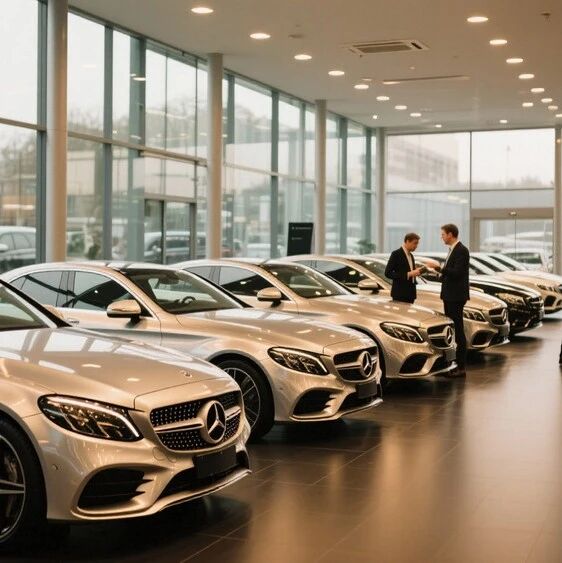
连导航都要收钱,百年豪车巨头急了
凤凰网财经· 2025-10-23 12:43
Core Viewpoint - Mercedes-Benz is undergoing significant challenges, including a large-scale layoff plan and declining sales performance, as it struggles with transformation and market competition [1][2]. Group 1: Layoff and Cost-Cutting Measures - Mercedes-Benz is implementing its largest layoff plan in history, with approximately 4,000 employees accepting severance packages, including senior management receiving up to €500,000 (approximately 4.12 million RMB) [1]. - The company aims to save about €5 billion annually by 2027 through outsourcing decisions and not filling vacant positions, with a target of encouraging around 30,000 employees to voluntarily leave [3][4]. - The layoffs are part of a broader strategy to reduce production and fixed costs by approximately 10% each, with a planned reduction of 100,000 units in domestic production [3]. Group 2: Sales Performance - In Q3, Mercedes-Benz's global sales reached 525,300 units, reflecting a year-on-year decline of 12% and a quarter-on-quarter decline of 4% [4]. - Cumulatively, the first three quarters of 2025 saw total sales of 1,601,600 units, down 9% compared to the previous year [4]. - The decline in sales is particularly pronounced in the Chinese market, which is the largest single market for Mercedes-Benz, with a 14% drop in sales in the first half of the year [8][7]. Group 3: Financial Performance - In 2024, Mercedes-Benz reported total revenue of €145.59 billion, a decrease of 4% year-on-year, with EBIT down 31% to €13.6 billion and net profit down 28.4% to €10.4 billion [4][6]. - For the first half of 2025, revenue was €66.38 billion, down 8.6% year-on-year, and net profit fell by 55.8% to €2.688 billion [7]. Group 4: Market Strategy and Challenges - Mercedes-Benz is facing intense competition in the Chinese market, with over 100 competitors, and is planning to launch 36 new models by 2027, including 17 electric vehicles [20][21]. - The company is also criticized for its controversial operational strategies, such as charging for features that are typically free in competitor vehicles, which has led to customer dissatisfaction [9][10]. - The management acknowledges the need to adapt and innovate in the Chinese market, emphasizing that smart technology can be applied to both electric and fuel vehicles [21].