
和田老式月饼

Search documents
文旅新探丨南疆慢车年味浓
Xin Lang Cai Jing· 2026-02-07 13:34
Group 1 - The article highlights the festive atmosphere surrounding the slow train from Hotan, Xinjiang, which serves as a means for locals to transport goods and visit family during the Spring Festival [1][4] - Passengers are seen carrying various local specialties, including traditional mooncakes, dried apricots, and walnut wood carvings, reflecting the rich cultural heritage of Southern Xinjiang [4][6] - The train has also become a popular choice for tourists, who enjoy the scenic views while traveling, indicating a shift in the train's usage from solely a transport service to a leisure experience [7] Group 2 - The article emphasizes the increasing significance of the Spring Festival in Southern Xinjiang, with families preparing traditional meals and engaging in festive activities, showcasing the region's cultural values [6][7] - Local vendors, such as Abulaiti Naimi, report increased sales of mooncakes during this period, indicating a boost in local commerce tied to the holiday season [4][6] - The train's role in connecting communities and facilitating the exchange of goods and cultural practices is underscored, as it continues to serve as a vital link for families during the festive season [1][7]

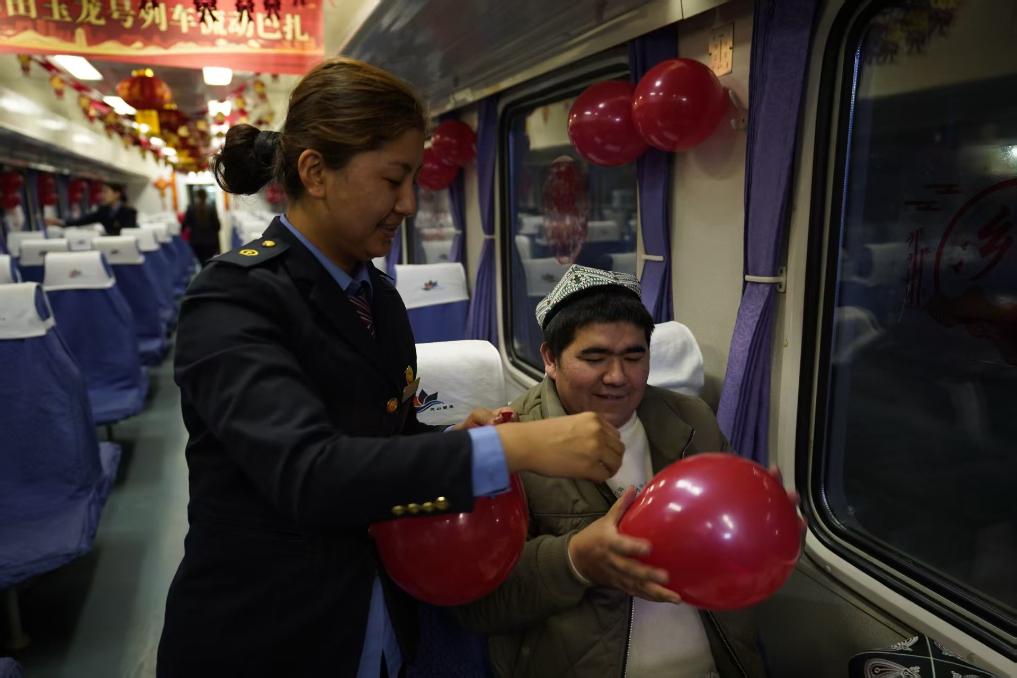
文旅新探|南疆慢车年味浓
Xin Lang Cai Jing· 2026-02-07 13:33
Core Viewpoint - The article highlights the cultural significance and festive atmosphere surrounding the slow train service from Hotan, Xinjiang, which has become a mobile marketplace for local specialties during the Chinese New Year season, reflecting the growing importance of traditional customs in the region [1][2]. Group 1: Train Service and Cultural Significance - The slow train from Hotan serves as a vital link for local residents, allowing them to travel for family visits and work, while also transforming into a vibrant marketplace for traditional New Year goods [1][2]. - Passengers on the train carry various local specialties, such as traditional mooncakes and dried fruits, which symbolize the festive spirit and the importance of family reunions during the New Year [1][2]. Group 2: Economic Activity and Local Commerce - Vendors on the train, like Amuti, sell their products directly to passengers, creating a unique trading environment that enhances the festive experience and supports local economies [2]. - The article notes that the increasing festive atmosphere in southern Xinjiang reflects a broader trend of families returning home for the New Year, contributing to local commerce and community bonding [2]. Group 3: Changing Travel Trends - The train has seen a rise in "backpackers" who choose to travel lightly and enjoy the scenic views, indicating a shift in how people experience the New Year celebrations [2]. - The train's role has evolved from merely a transportation service to a cultural experience, where travelers can engage with local traditions and festivities [2].