唑吡坦

Search documents
“睡个好觉,为什么成了现代人的奢侈?”——如何科学应对失眠?
第一财经· 2026-01-12 11:23
Core Viewpoint - Insomnia has become a significant health issue in China, with a sleep disturbance rate of 48.5% among individuals aged 18 and above, indicating a need for scientific approaches to address sleep problems [2]. Summary by Sections Definition of Insomnia - Insomnia is defined by three dimensions: insufficient sleep quality and quantity, functional impairment during the day, and excessive anxiety about not being able to sleep. Chronic insomnia disorder is diagnosed when these symptoms occur at least three times a week for over a month [4]. Catalysts for Insomnia - The core issue of sleep disorders in modern individuals is attributed to multiple overlapping factors, including long-term stress leading to emotional disturbances, poor lifestyle habits, and physical health issues or medication effects. Young professionals in major cities are particularly affected [5]. Long-term Consequences of Insomnia - Chronic insomnia can significantly increase the risk of hypertension by 3.7 times and diabetes by 2.5 times. It also hinders the brain's ability to clear beta-amyloid protein, a key factor in Alzheimer's disease. Additionally, the likelihood of developing new depression is 3-4 times higher in chronic insomniacs compared to those without insomnia [6]. Assessment and Treatment of Insomnia - Hospitals typically conduct comprehensive assessments for insomnia patients, utilizing detailed interviews, sleep diaries, and monitoring tools. Cognitive Behavioral Therapy for Insomnia (CBT-I) is the preferred treatment, focusing on correcting misconceptions about sleep and adjusting harmful behaviors [7]. Classification of Sleep Medications - Sleep medications are categorized into several classes, including benzodiazepines, non-benzodiazepines, antidepressants, and melatonin receptor agonists, each with different focuses and side effects. Newer medications like dual orexin receptor antagonists are noted for their safety and lower dependency risks [9][11]. Key to Healthy Sleep - Establishing a stable sleep rhythm, eliminating sleep disturbances, and aligning with the body's natural sleep needs are crucial for achieving healthy sleep. Recommendations include creating a quiet and comfortable sleep environment, avoiding stimulants before bed, and engaging in moderate exercise [12].


警方通报“育儿嫂给孩子喂安眠类药物”:涉事人员已被控制
Xin Lang Cai Jing· 2026-01-03 01:43
Group 1 - The core issue involves a caregiver allegedly administering a sedative to a 9-month-old baby, leading to severe health concerns for the child [2][3] - The caregiver, identified as Zou, has been detained by local authorities, and an investigation is ongoing [1] - The substance involved, Zolpidem, is a short-acting sedative primarily used for treating severe insomnia and is classified as a controlled substance [3]
每月7600元请的育儿嫂到家后,宝宝异常嗜睡,体内查出安眠药成分!育儿嫂称“问心无愧”,警方通报:邹某某已被控制,正进一步调查
Mei Ri Jing Ji Xin Wen· 2026-01-02 15:14
Group 1 - A caregiver in Jinhua, Zhejiang Province, has been detained for allegedly administering a sedative to a 9-month-old baby, leading to an ongoing police investigation [1][4] - The caregiver was hired through a local agency for 7,600 yuan for 26 days, and the baby's unusual symptoms prompted the mother to seek medical attention, revealing the presence of "Zolpidem," a controlled substance [4][6] - The agency's representative stated they are awaiting the results of the police investigation and mentioned that the caregiver claimed the baby was already on medication due to health issues [6]
浙江金华警方通报
券商中国· 2026-01-02 13:00
Core Viewpoint - A caregiver in Jinhua, Zhejiang Province, has been accused of administering a sedative to a 9-month-old baby, leading to an ongoing police investigation [1][4]. Group 1: Incident Details - The police received a report from a resident, Xu, claiming that the caregiver, Zou, had given sedative medication to her child [1][2]. - The caregiver has been taken into custody by law enforcement, and the case is under further investigation [1][2]. - The mother noticed unusual symptoms in her baby, including excessive sleepiness, reduced urine output, and skin rashes, prompting medical tests that revealed the presence of "Zolpidem," a short-acting sedative [4]. Group 2: Legal and Medical Implications - Zolpidem is classified as a controlled substance and is primarily used for short-term treatment of severe insomnia [4]. - The incident raises concerns about the safety and regulation of caregivers in domestic settings, particularly regarding the administration of medications to children [4].
金华警方:育儿嫂邹某某被控制
Xin Lang Cai Jing· 2026-01-02 12:18
Group 1 - A caregiver in Jinhua, Zhejiang Province, has been detained for allegedly administering a sedative to a 9-month-old baby, leading to an ongoing police investigation [1][4] - The caregiver was hired through a local agency for 7,600 yuan for 26 days, and the baby's unusual symptoms prompted the mother to seek medical attention, revealing the presence of Zolpidem, a controlled substance [4] - The agency involved has stated they are awaiting the results of the police investigation and mentioned that the caregiver claimed the baby was already on medication due to health issues [4]
浙江警方通报“育儿嫂喂孩子安眠类药物”:邹某某已被公安机关控制,案件正在进一步调查中
Xin Lang Cai Jing· 2026-01-02 12:18
Group 1 - A mother in Yongkang, Zhejiang, reported that her 9-month-old baby was allegedly drugged by a nanny, leading to symptoms such as excessive sleepiness and reduced milk intake [3] - The nanny was hired from a home care company for 7,600 yuan for 26 days, and the baby was found to have the sedative "Zolpidem" in their system after a hospital check [3] - The home care company stated they are awaiting the results of the police investigation and mentioned that the nanny claimed the baby was already on medication due to illness [3] Group 2 - The mother clarified that her baby was taking a small dose of Amoxicillin for a urinary tract condition, asserting that there was no possibility of exposure to controlled substances like Zolpidem [3] - The nanny has been taken by the police for investigation, and the mother is determined to pursue legal action [3]
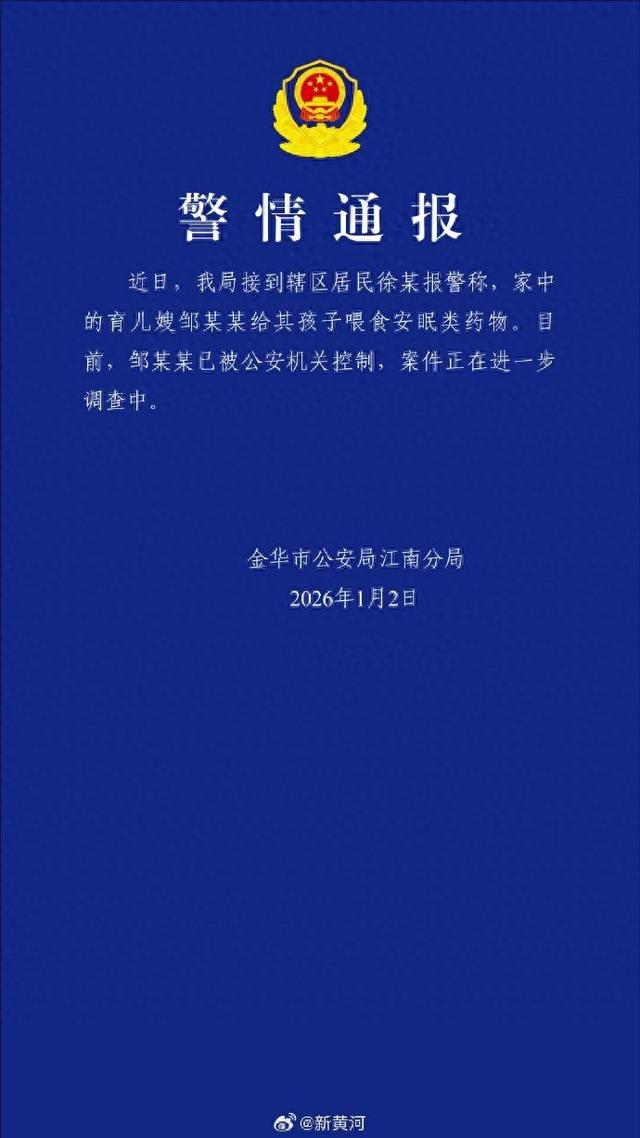
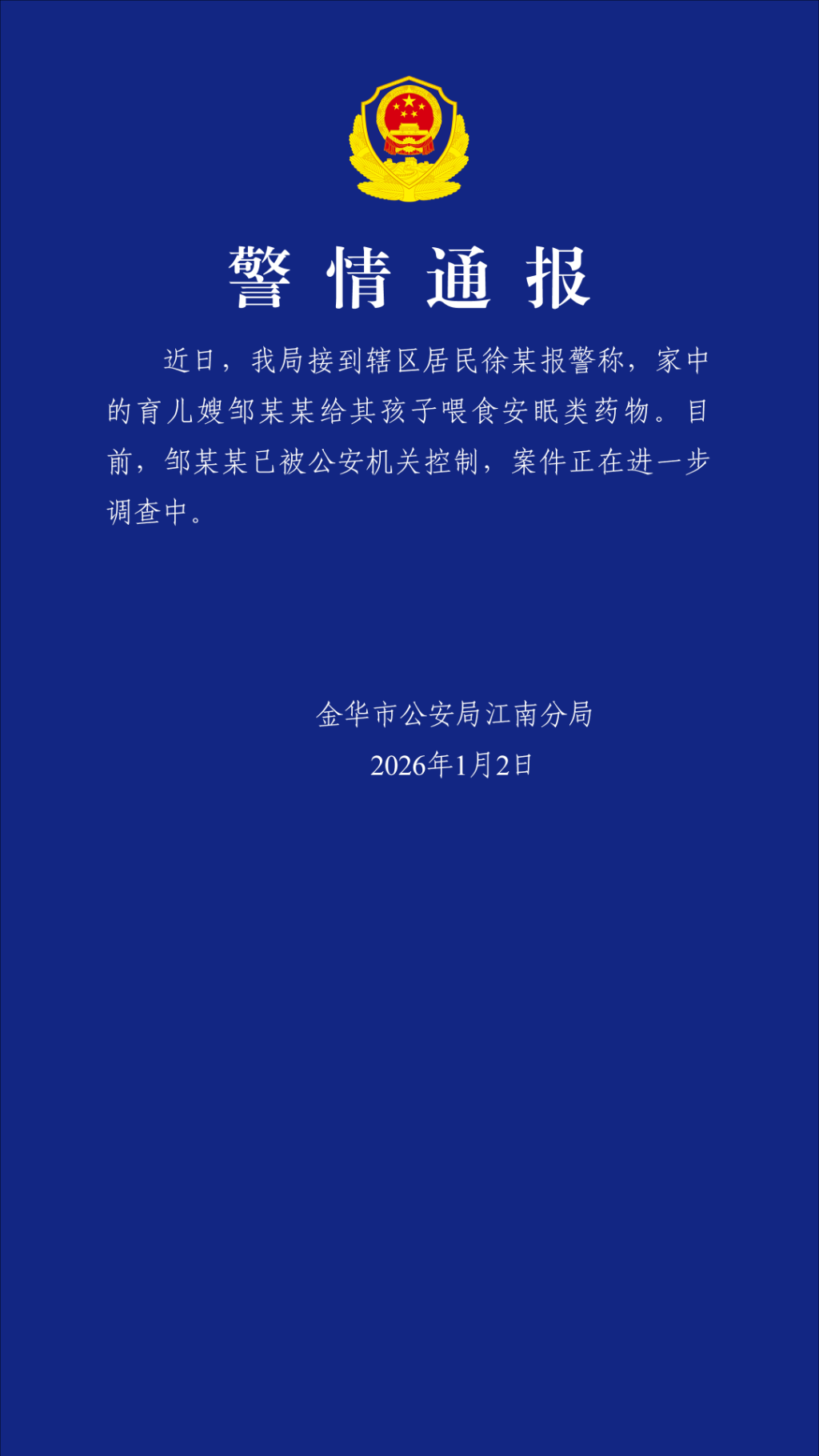
浙江金华警方:育儿嫂邹某某给孩子喂食安眠类药物,已被控制
Xin Lang Cai Jing· 2026-01-02 11:13
Group 1 - The core issue involves a caregiver, Zou, who allegedly administered a sedative medication, Zolpidem, to a 9-month-old baby, leading to severe health concerns for the child [1] - The caregiver has been detained by local authorities, and an investigation is ongoing to determine the circumstances surrounding the incident [1] - Medical tests confirmed the presence of Zolpidem in the child's system, which is classified as a controlled substance used for short-term treatment of severe insomnia [1]
宝宝异常嗜睡体内查出安眠药成分
Xin Lang Cai Jing· 2026-01-02 08:12
Core Viewpoint - A serious incident involving a 9-month-old baby in Yongkang, Zhejiang, where the child was found to have traces of the sedative Zolpidem in their system, allegedly administered by a nanny [1] Group 1: Incident Details - The mother, Ms. Xu, reported that her baby became unusually drowsy and had a reduced milk intake after hiring a nanny for 26 days at a cost of 7,600 yuan [1] - Medical tests revealed the presence of Zolpidem, a controlled substance used for short-term treatment of severe insomnia [1] - The nanny has been taken into police custody for investigation, while she denies any wrongdoing, claiming she is "innocent" [1] Group 2: Company Response - The management of the agency that provided the nanny stated they are unaware of the specific circumstances and are awaiting the results of the police investigation [1] - The nanny reportedly informed the agency that the baby was on medication due to illness, which the mother refuted, stating the baby was only taking a small dose of Amoxicillin for a urinary tract condition [1]
罗翔谈吸毒是否入刑
第一财经· 2025-12-11 03:22
Core Viewpoint - The discussion on whether drug use should be criminalized requires a nuanced analysis, suggesting that a binary perspective may not be the best approach [1] Group 1: Theoretical Perspective on Criminalization - The classification of drug use as a crime depends on the definitions of crime and criminal law, with a significant increase in light crime cases over the years, indicating a shift towards a "light crime era" in China [2] - The concept of "micro-crimes" is introduced, where offenses punishable by less than one year of imprisonment are considered minor, but mainstream opinion still categorizes them as light crimes [2] - Administrative detention is a severe penalty, and there are arguments for including administrative penalties within the criminal law framework, as they involve deprivation of personal freedom [3] Group 2: Practical Perspective on Criminalization - The strict stance against drug use in China is consistent, with various drug-related behaviors already classified as crimes, ranging from serious offenses to minor infractions [5] - The conflict between criminal law and drug control law arises from differing definitions of drug offenses, with the latter allowing for non-criminal administrative penalties under certain conditions [6][7] - The legal framework aims to avoid a one-size-fits-all approach, recognizing the need for flexibility in addressing drug-related issues while ensuring that severe penalties are reserved for serious offenses [7] Group 3: Public Discussion and Legal Balance - Public discourse on legal issues often reflects diverse perspectives, emphasizing the importance of articulating viewpoints rather than solely persuading others [8] - Legal reforms must balance various interests, avoiding the sacrifice of the minority for the majority and preventing the emergence of privilege or tyranny of the majority [8] - The legal system is characterized as an art of balance, where punishment should not be excessively harsh or lenient, but rather aligned with the principles of justice and human rights [9]