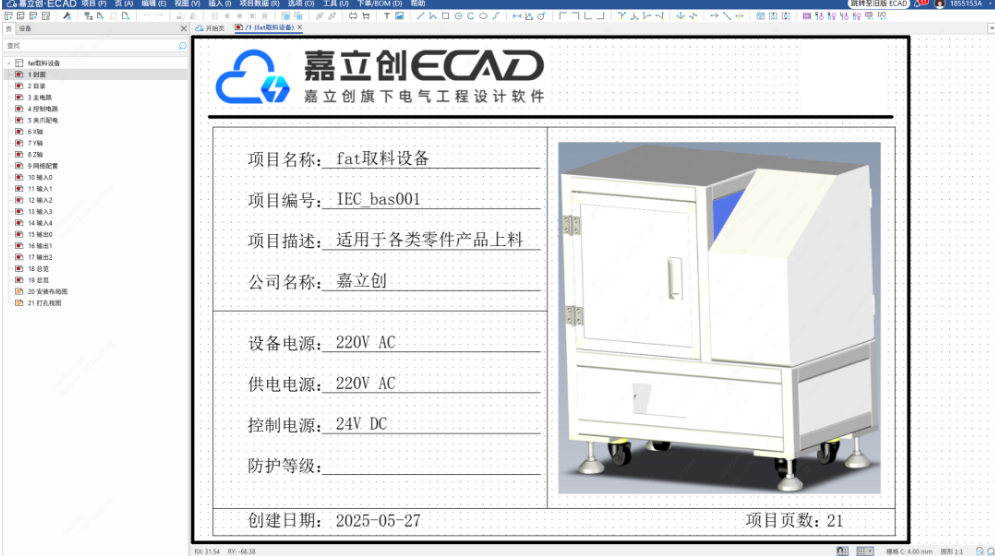
嘉立创ECAD电气设计软件

Search documents
年轻创业者为何扎堆深圳做AI
2 1 Shi Ji Jing Ji Bao Dao· 2026-01-15 06:25
Core Insights - Artificial intelligence (AI) is a strategic technology driving a new wave of technological revolution and industrial transformation, significantly altering human production and lifestyle [1] - Shenzhen is positioning itself as a leading AI hub by creating an environment that supports comprehensive AI development, including supply chain efficiency, open application scenarios, and robust industrial ecosystems [1][3] Group 1: AI Ecosystem in Shenzhen - Shenzhen has over 2,600 AI companies, forming a tiered development structure led by major players like Tencent and Huawei, along with more than 10 AI unicorns and 34 listed robotics companies [3] - The city is focused on "chain supplementation" to address pain points in the transition from concept to product in the smart terminal sector, establishing a national AI application pilot base [3] - The "Moli Ying" AI ecosystem community in Nanshan is a leading incubator in China, providing comprehensive services to nearly 200 resident companies with a total valuation exceeding 20 billion [4] Group 2: Support for Startups - Shenzhen's policies are designed to support entrepreneurs with low-cost office spaces and a multi-tiered housing system, allowing talent to settle and thrive in the city [7] - The city has launched various funding initiatives, including a 500 billion yuan venture capital fund and specific grants for AI research and development, to facilitate the growth of startups [9] - Shenzhen's market cultivation system supports companies from inception to public listing, with an average time of 13.35 years for startups to become listed companies, which is faster than the national average [10] Group 3: Talent Development - Shenzhen is cultivating high-end, interdisciplinary talent through institutions like the Hong Kong University (Shenzhen) AI Academy, emphasizing practical training in design thinking and system engineering [8] - The city has attracted 220,000 returnees and 26,500 high-level talents, with a significant number of scholars recognized among the top 2% globally [8] Group 4: Innovation and Commercialization - Startups in Shenzhen are rapidly moving from technical prototypes to commercial markets, with notable success stories emerging from the "Moli Ying" community [5][6] - The city has established a mechanism for seamless integration of technology validation and commercialization, with nearly 300 high-value application scenarios available for enterprises [9]


嘉立创ECAD工业软件发布,加速电气设计自主创新
Jin Rong Jie Zi Xun· 2025-12-31 04:48
Core Viewpoint - The launch of Jialichuang ECAD electrical design software marks a significant milestone in China's electronic and electrical design sector, providing a cloud-based solution that enhances collaboration and efficiency in industrial software [1][9]. Group 1: Cloud Transition in Electrical Design - The ECAD software addresses long-standing issues in the industrial automation and equipment manufacturing sectors, where engineers faced high costs for foreign software or inefficient 2D CAD tools [3]. - Traditional workflows often resulted in "data silos," where PCB design, mechanical structure design, and electrical wiring design were disconnected, leading to assembly issues [3]. - Jialichuang ECAD utilizes a cloud-native architecture, allowing engineers to design anytime and anywhere using just a browser, thus breaking the dependency on high-performance workstations [3][4]. Group 2: Innovation in Work Processes - The software features over 280,000 component libraries and adheres to international standards, transforming the design process from manual drawing to a more intuitive "building block" approach [4]. - Engineers can now complete high-quality designs in a fraction of the time previously required, significantly improving productivity [4]. Group 3: Building an Integrated Ecosystem - Jialichuang ECAD aims to create a "super ecosystem" that integrates electronic, mechanical, and electrical design, which has traditionally been dominated by foreign companies [6]. - The platform allows seamless switching between PCB design, mechanical matching, and electrical wiring, enhancing research and development efficiency [6]. Group 4: Reshaping Supply Chain Logic - The software's integration with Jialichuang's extensive electronic and mechanical supply chain allows real-time inventory checks and BOM generation, addressing previous procurement challenges [7]. - This integration liberates engineers from tedious BOM matching tasks, enabling them to focus on core innovations [7]. Group 5: Promoting Digital Infrastructure for Innovation - The free standard version of Jialichuang ECAD significantly lowers the barrier for small enterprises to access professional design tools, reducing legal risks associated with software piracy [8]. - The software's availability in educational settings will enhance the training of future engineers, aligning their skills with industry standards [8]. Group 6: New Business Model for Industrial Software - The launch signifies a shift in the business model for Chinese industrial software companies, moving away from solely selling tools to creating a comprehensive design-manufacturing-procurement ecosystem [9].