云端协同

Search documents
华为憨憨、千问G1眼镜、Vbot浮出水面:谁代表AI硬件的下一站?
虎嗅APP· 2026-03-26 09:44
Core Viewpoint - The AI hardware industry is transitioning from a "technology-driven" approach to a "scenario-driven" model, with a focus on practical applications and real-world problem-solving [5][6]. Group 1: Validated Judgments - Functional robots are outperforming general humanoid robots, with practical products like delivery and cleaning robots achieving mass production in specific scenarios [8]. - The industry consensus is that the viable path for edge AI by 2026 involves a hybrid architecture of cloud-based complex reasoning and local lightweight interactions, rather than purely offline models [8]. - Competition is shifting towards brand and channel strength, as product differentiation diminishes due to hardware standardization [9]. Group 2: Disproven Misconceptions - The expectation that general humanoid robots would be commercially viable by 2026 has been proven incorrect due to unresolved technical challenges [10]. - The notion that plush AI pets represent a low-barrier entrepreneurial opportunity has been debunked, as the market has become saturated with similar products [10]. - The belief that edge AI would be the definitive trend by 2026 has been challenged, as hardware limitations hinder the deployment of large models on local devices [10]. Group 3: Representative Products in Confirmed Directions - Vbot, a functional robot, exemplifies a successful product by addressing real-world needs in a stable and cost-effective manner, focusing on user experience rather than humanoid aesthetics [13][14]. - The Qianwen AI glasses G1 are significant for their pricing strategy and hybrid technology approach, integrating cloud services with local processing to enhance user experience [15][17]. - TicNote Pods integrate recording, transcription, and translation features into headphones, aligning with the trend of mobile AI centralization and improving office efficiency [18][20]. - Ropet, an AI pet, has succeeded in a competitive market by focusing on emotional value and effective brand management rather than solely on technological innovation [21][24]. Group 4: Products with Diverging Opinions - The plush AI pet market is highly saturated, with products like Fuzozo and Mooni M1 facing significant challenges due to lack of differentiation and high competition [26]. - Independent office AI hardware, such as standalone AI chairs and recording devices, are losing market relevance as their functionalities overlap with mobile devices [26]. - General humanoid robots are overhyped, with significant technical barriers preventing practical applications, relegating them to mere promotional tools [27]. - AR glasses aimed at replacing mobile screens are misaligned with user needs and face significant technical challenges, leading to a consensus that they lack commercial viability [27]. - Pure edge AI hardware claiming to run large models locally are deemed impractical due to hardware constraints, with the industry agreeing on a hybrid approach as the only feasible path forward [27]. Group 5: Special Observations - The "Intelligent Huan Huan" AI pet, developed by Huawei and Lobo Smart, has achieved impressive sales but raises questions about whether its success is due to channel strength or product capability [29][32]. Conclusion - The AI hardware industry is undergoing a necessary culling process, rewarding products that effectively address real-world problems and establish commercial viability, while those relying on mere technological concepts are being phased out [34].


智慧科技赋能 广东春运高速通行提效升级
Xin Lang Cai Jing· 2026-02-09 02:49
Core Insights - The article discusses the expected increase in traffic during the 2026 Spring Festival travel period in Guangdong, with an estimated 307 million vehicle trips, representing a year-on-year growth of 3.09% [1] Group 1: AI and Technology Integration - The introduction of an "AI Monitor" system in the Guanghe Expressway monitoring center enhances the detection of abnormal events on the road, utilizing 36 surveillance cameras for real-time video analysis [3] - The AI system can identify issues such as abnormal parking, congestion, and illegal lane usage, with a detection accuracy of 95% and the ability to alert personnel within 5 seconds of an incident [3] - The Guangshao Expressway's smart cloud cabin allows for centralized management of multiple stations, enabling quick assistance for drivers through a one-click help feature [4] Group 2: Smart Management Systems - The smart management system at the Wayaogang service area has effectively managed increased traffic, with an average daily vehicle flow of 5,200, doubling compared to pre-Festival levels [5] - The system supports over ten service scenarios, including parking guidance and traffic monitoring, providing detailed support for crowd control [5] - The service area has implemented digital solutions for parking management, including real-time updates on parking availability and traffic flow analysis, enhancing the overall experience for travelers [6]

他们用青春将“源代码”写入深蓝
Ke Ji Ri Bao· 2026-01-06 03:30
Core Viewpoint - The article highlights the advancements in underwater communication technology led by Jiangsu Hengtong Marine Technology Co., Ltd., focusing on the development of all-optical sensing technology to enhance the safety and efficiency of submarine cable networks [1][2][3]. Group 1: Technological Advancements - The research team has achieved safe transmission of optical signals over a distance of 300 kilometers, with pilot applications in various provinces including Anhui, Yunnan, Jiangsu, and Gansu [1]. - The team is working on eliminating the cumbersome optical-to-electrical signal conversion process, which reduces latency and power consumption while decreasing reliance on imported semiconductor chips [2]. - A "cloud-edge collaborative" computing model has been proposed to process massive data collected by underwater sensors, allowing for quick local processing of urgent information while complex analyses are handled by land-based cloud computing centers [3]. Group 2: Collaborative Efforts - The collaboration between industry and academia is emphasized, with Hengtong providing real data and universities contributing algorithm development, leading to superior AI models compared to traditional ones based on public datasets [3]. - A complete innovation chain has been established, involving theoretical research, technological development, product creation, and application, with a research team of nearly 100 members focusing on key materials, core devices, and high-end equipment in the underwater communication and sensing field [3]. Group 3: Future Prospects - The ongoing development of the "sensing-computing-integration" network aims to enhance the understanding of oceanic conditions, contributing to the goal of becoming a maritime power [4].

嘉立创ECAD工业软件发布,加速电气设计自主创新
Jin Rong Jie Zi Xun· 2025-12-31 04:48
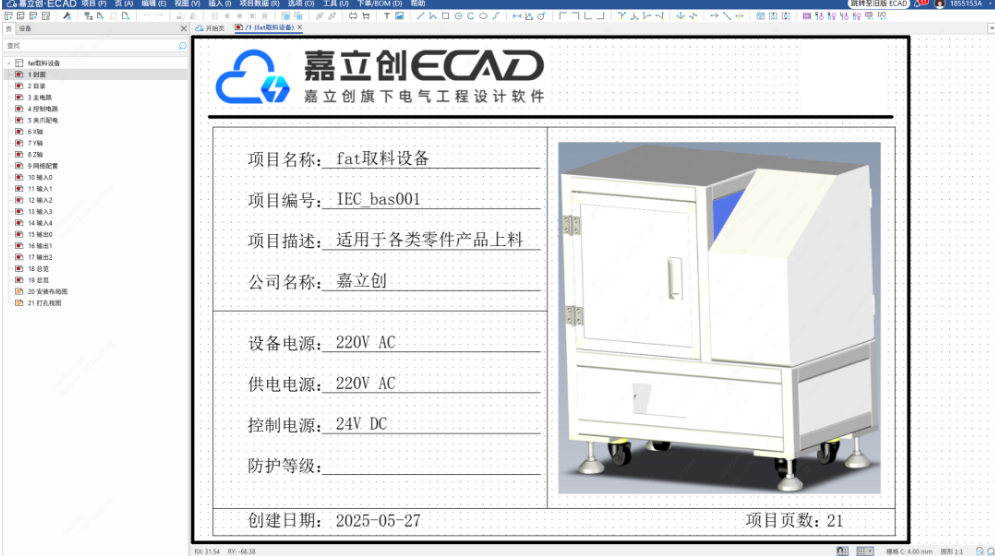
Core Viewpoint - The launch of Jialichuang ECAD electrical design software marks a significant milestone in China's electronic and electrical design sector, providing a cloud-based solution that enhances collaboration and efficiency in industrial software [1][9]. Group 1: Cloud Transition in Electrical Design - The ECAD software addresses long-standing issues in the industrial automation and equipment manufacturing sectors, where engineers faced high costs for foreign software or inefficient 2D CAD tools [3]. - Traditional workflows often resulted in "data silos," where PCB design, mechanical structure design, and electrical wiring design were disconnected, leading to assembly issues [3]. - Jialichuang ECAD utilizes a cloud-native architecture, allowing engineers to design anytime and anywhere using just a browser, thus breaking the dependency on high-performance workstations [3][4]. Group 2: Innovation in Work Processes - The software features over 280,000 component libraries and adheres to international standards, transforming the design process from manual drawing to a more intuitive "building block" approach [4]. - Engineers can now complete high-quality designs in a fraction of the time previously required, significantly improving productivity [4]. Group 3: Building an Integrated Ecosystem - Jialichuang ECAD aims to create a "super ecosystem" that integrates electronic, mechanical, and electrical design, which has traditionally been dominated by foreign companies [6]. - The platform allows seamless switching between PCB design, mechanical matching, and electrical wiring, enhancing research and development efficiency [6]. Group 4: Reshaping Supply Chain Logic - The software's integration with Jialichuang's extensive electronic and mechanical supply chain allows real-time inventory checks and BOM generation, addressing previous procurement challenges [7]. - This integration liberates engineers from tedious BOM matching tasks, enabling them to focus on core innovations [7]. Group 5: Promoting Digital Infrastructure for Innovation - The free standard version of Jialichuang ECAD significantly lowers the barrier for small enterprises to access professional design tools, reducing legal risks associated with software piracy [8]. - The software's availability in educational settings will enhance the training of future engineers, aligning their skills with industry standards [8]. Group 6: New Business Model for Industrial Software - The launch signifies a shift in the business model for Chinese industrial software companies, moving away from solely selling tools to creating a comprehensive design-manufacturing-procurement ecosystem [9].
破解行业痛点 国产电气设计软件引领产业升级
Xin Lang Cai Jing· 2025-12-28 19:25
Core Viewpoint - Shenzhen Jialichuang Technology Group Co., Ltd. has launched its ECAD (Electrical Design Software) with a "perpetual free use" standard version, addressing a critical gap in electrical design tools for engineers in China and establishing a new industrial internet paradigm centered on "cloud collaboration and manufacturing feedback to design" [1][2] Group 1: Software Innovation and Features - The ECAD software addresses long-standing pain points in the industrial automation and equipment manufacturing sectors, allowing engineers to design without the high costs associated with foreign software or the inefficiencies of basic 2D CAD tools [1][2] - The software features a cloud-native architecture, enabling engineers to work from any location using just a browser, thus transforming the design process from manual drawing to a more efficient "building block" approach with over 280,000 component libraries and intelligent rules compliant with international standards [2][3] - The launch of Jialichuang ECAD signifies a shift of domestic industrial software from being merely "usable" to "user-friendly" and "intelligent," showcasing capabilities such as automatic layout generation and 3D previews [2][3] Group 2: Collaborative Ecosystem and Supply Chain Integration - Jialichuang ECAD aims to create a "super ecosystem" by integrating electronic, mechanical, and electrical design software, which has traditionally been dominated by foreign companies [3][4] - The software allows seamless switching between PCB design, mechanical structure matching, and electrical wiring, significantly enhancing R&D efficiency through multidisciplinary collaboration [3][4] - The integration of design and manufacturing processes enables real-time checks on component availability and pricing, thus resolving issues related to supply chain disconnection and enhancing the overall design experience [4][5] Group 3: Free Strategy and Industry Impact - The decision to offer a perpetual free version of ECAD addresses the challenges posed by software piracy and high costs, making professional-grade design tools accessible to startups and reducing legal risks [5][6] - The free access to ECAD is expected to have a profound impact on electrical engineering education, allowing students to engage with industry-standard tools and processes, thereby enhancing the future workforce [5][6] - The launch of ECAD represents a strategic move towards building a self-sufficient and globally competitive industrial software ecosystem, moving away from traditional profit models based solely on tool sales [5][6]
云端携手:AI如何定义下一代智能终端?
3 6 Ke· 2025-09-05 03:54
Core Insights - A new wave of artificial intelligence (AI) is transitioning from the cloud to various devices, reshaping human-machine interaction through AI-driven terminal experiences [1][2] - The rise of edge intelligence is not meant to sever ties with the cloud but to create a "cloud-edge collaborative" intelligent model that balances experience, cost, and security [1][2] Group 1: Key Drivers of Edge Intelligence - Real-time performance and safety are critical, especially in fields like robotics and autonomous driving, where even milliseconds of delay can pose safety risks [1][2] - Data privacy and compliance necessitate local processing of sensitive information, requiring robust models to be deployed on the edge [1][2] - Balancing cost and efficiency involves placing simpler, high-frequency tasks on the edge while reserving complex tasks for the cloud, enabling scalable commercial deployment [2] - Global collaboration and optimization are essential, with the cloud serving as a management platform that integrates dispersed devices for optimal system performance [2] Group 2: Ecosystem and Role Distribution - The ecosystem requires collaboration among hardware manufacturers, algorithm developers, and comprehensive AI cloud platforms like Alibaba Cloud, which provides a full-stack service from computation to application development [2][3] - Clear role delineation exists within the ecosystem, with hardware vendors supplying physical devices, algorithm companies focusing on model development, and platforms like Alibaba Cloud acting as the "intelligent foundation" [2][3] Group 3: Implementation Strategies - Companies are adopting a hybrid approach of edge and cloud deployment, tailoring their technology paths based on customer needs and task complexity [4][5] - Successful applications of cloud-edge collaboration have been demonstrated in educational settings, where real-time feedback and evaluations are generated efficiently [10] Group 4: Technical Challenges and Solutions - Technical hurdles in scaling edge AI include model lightweighting, computational adaptation, and inference optimization, particularly in privacy-sensitive industrial applications [8][9] - The need for real-time, robust, and secure operations in edge devices drives the requirement for local model deployment, while complex learning processes are handled in the cloud [8][9] Group 5: Future Directions and Innovations - Alibaba Cloud is committed to enhancing its infrastructure and model services to support diverse industry needs, focusing on open-source models and customizable solutions [12][11] - The development of multi-modal interaction capabilities is underway, enabling devices to understand and respond to user inputs more effectively [13]

新华三徐润安:以“智算之力”打破AI的天花板
Jing Ji Guan Cha Wang· 2025-08-25 09:18
Core Insights - By 2025, AI will evolve from a trending sector to a foundational technology empowering various industries, driven by increasing demand for AI solutions and innovations across the infrastructure market [1] Group 1: AI Infrastructure and Market Trends - The demand for heterogeneous computing power is expected to experience explosive growth, with IDC predicting a compound annual growth rate of 33.9% for intelligent computing in China over the next five years [1] - AI is penetrating deeply into sectors such as internet, finance, telecommunications, manufacturing, and government, with applications in education, healthcare, and energy also on the rise [1] - The future of AI infrastructure will focus on cloud-edge collaboration, integrating various types of computing power (CPU, GPU, NPU, DPU) to meet diverse AI application needs [3][5] Group 2: AI Application and Development - AI applications in enterprise markets may not progress as rapidly as anticipated, influenced by factors such as computing power, algorithms, data, application scenarios, and talent development [2] - The emergence of low-code platforms will lower the barriers for AI development and application, allowing enterprises to leverage AI capabilities without large algorithm teams [2] - Specialized industry models, combining professional data, domain knowledge, and real-time feedback, will provide greater value than general-purpose AI capabilities [2] Group 3: Technological Innovations and Solutions - New technologies such as model compression, edge computing, and mature toolchains will significantly reduce the thresholds for AI development and application in the next 3-5 years [2] - The company is developing a full-stack AI solution that includes distributed storage, lossless networking, and a robust computing platform to support diverse AI applications [5] - The "Turing Town" model aims to incubate the computing technology industry chain while facilitating collaboration between models and computing power [5][6]
阿里魔搭:7万模型汇聚1600万开发者,共筑中国AI开源新生态
Sou Hu Cai Jing· 2025-07-02 03:42
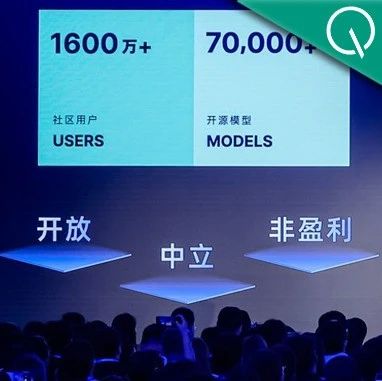
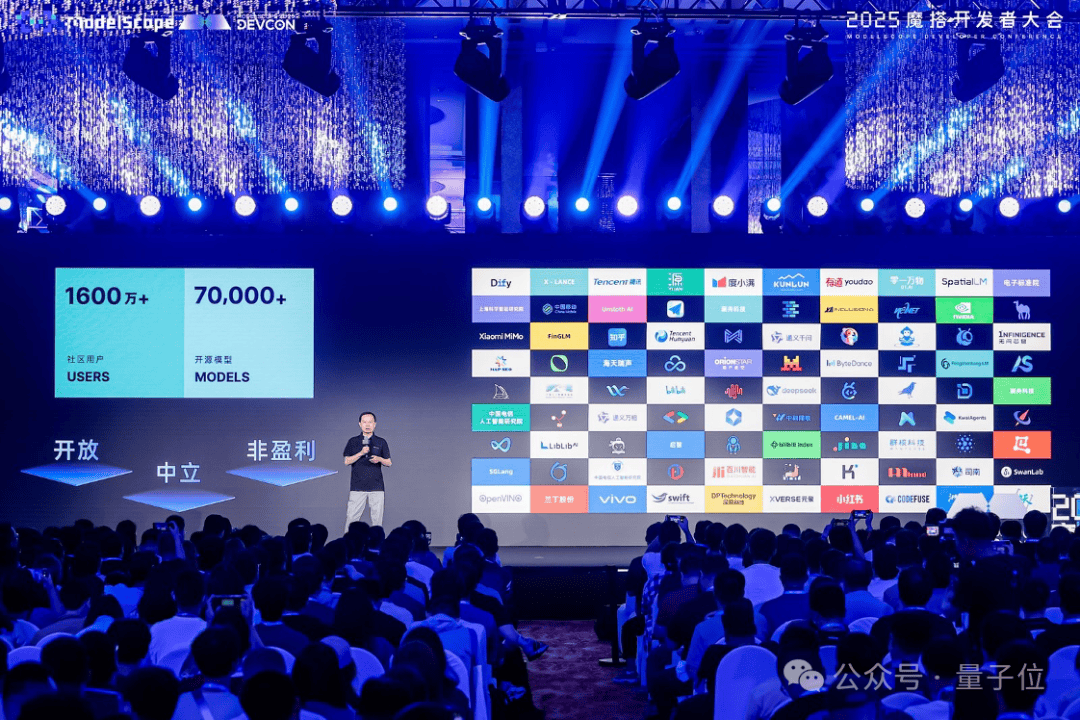
Core Insights - The Alibaba Modao community has been recognized as China's largest AI open-source community, achieving significant growth in model availability and user engagement [1][3][4] Group 1: Community Growth and Achievements - The Modao community has surpassed 70,000 open-source models, marking a 200-fold increase since its inception [1] - User base has expanded to 16 million, representing a nearly 16-fold growth compared to April 2023 [1] - Over 500 institutions have contributed to the community's development [1] Group 2: Platform Capabilities and Offerings - Modao community serves as a comprehensive AI platform, supporting developers in model experience, download, tuning, training, inference, and deployment across various fields [3] - The community provides over 4,000 types of MCP services and debugging tools, enhancing developer support [1][4] - Free computing power is offered to developers to facilitate model usage [3][4] Group 3: Open Source and Collaboration - The community emphasizes an open, neutral, and non-profit organizational structure, promoting inclusive AI technology [4] - The introduction of the MCP Square provides thousands of MCP services and hosting options, with open interfaces for third-party integration [4] - A developer badge incentive program has been launched to reward outstanding contributions, offering free GPU computing power and other benefits [4] Group 4: Future Directions and Innovations - The launch of models like DeepSeek and Qwen highlights the growing importance of open-source in AI innovation [3] - The CTO of Alibaba Cloud emphasized the significance of "cloud collaboration" and the need for further research on integrating edge models with cloud capabilities [3]
7万个模型、1600万开发者,魔搭已建成中国最大AI开源社区
量子位· 2025-06-30 09:50
Core Viewpoint - The article highlights the emergence of the Modao community as China's largest AI open-source community, emphasizing its role in supporting developers across various AI fields and its rapid growth in model availability and user engagement [1][2][5]. Group 1: Modao Community Overview - The Modao community currently supports over 70,000 open-source models, representing a growth of over 200 times [5][17]. - The community has expanded its user base to 16 million, a 16-fold increase since April 2023 [5]. - Modao community is becoming a primary platform for developers, with significant contributions from over 500 organizations [5][18]. Group 2: AI Development Trends - The article discusses the importance of "cloud-edge collaboration" in AI model development, highlighting the need for a balance between on-device and cloud-based processing [4][7]. - AI technologies are rapidly evolving, with various directions such as agents and embodied intelligence showing accelerated growth [6]. Group 3: Model Lifecycle and Tools - Modao aims to cover the entire lifecycle of models, from data collection to application, emphasizing the integration of tools and services [11][12]. - The community provides free computing resources for model debugging and application development, showcasing its commitment to toolchain completeness [11][22]. Group 4: Open Source and Collaboration - Open-source initiatives are seen as a core strength for ecosystem development, with major companies like Alibaba and Tencent participating in the Modao community [18]. - The community promotes inclusivity and collaboration, allowing developers to contribute and innovate without being tied to a single company [19][20]. Group 5: Future Opportunities - The article suggests that there is significant potential for innovation and investment opportunities within the Modao community, particularly in bridging the gap between model capabilities and real business needs [21][22]. - The launch of the Modao Developer Medal incentive program aims to encourage contributions and innovation within the community [22].