国都聚成

Search documents
基民猛亏自己稳赚?基金经理只挨骂不惩罚的日子到头了...
3 6 Ke· 2026-02-04 08:27
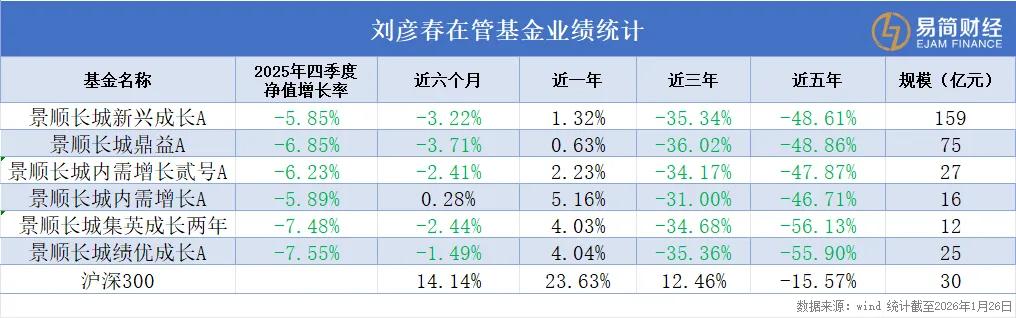
Core Viewpoint The fund industry is undergoing a significant reshuffle, with many fund managers facing criticism for poor performance while still receiving high salaries and bonuses. Recent regulations aim to change this dynamic by aligning fund manager compensation with fund performance. Group 1: Industry Overview - The fund industry is experiencing a major reshuffle, with a record number of fund managers leaving their positions, reaching 453 in 2025, a 33% increase from the previous year [1][23]. - The performance of fund managers has been mixed, with some achieving high returns, such as a public fund that gained 233% in a year, while others, particularly those holding traditional stocks, have seen significant losses [1][14]. - The number of fund managers has been increasing, with 83% of them having never experienced a bull market, leading to heightened competition and pressure within the industry [1][33]. Group 2: Fund Manager Performance - Notable fund managers, such as Liu Yanchun, reported losses between 5.8% and 7.5% in the fourth quarter, with some funds losing nearly half of their value over five years [5][6]. - Zhang Wei, a rising star in the pharmaceutical sector, initially achieved an 85.64% return but lost a significant portion of that profit in the latter half of the year [3][9]. - Many fund managers are criticized for holding onto underperforming stocks while privately investing in high-performing technology stocks, leading to dissatisfaction among investors [13][15]. Group 3: Regulatory Changes - New regulations introduced in December 2025 aim to align fund manager compensation with fund performance, requiring a significant portion of their salaries to be invested in their own funds [25][26]. - Performance assessments will now heavily weigh long-term results, with at least 80% of the evaluation based on three-year performance metrics [25][29]. - Fund managers who underperform will face salary reductions, with a minimum 30% cut for those whose funds lag behind benchmarks by more than 10% over three years [29][30]. Group 4: Emerging Trends - Despite the challenges faced by many traditional fund managers, a new wave of successful fund managers has emerged, with the number of managers overseeing over 10 billion yuan in assets increasing significantly [31][32]. - The market is seeing a shift towards younger fund managers, with many achieving rapid growth in assets under management, indicating a potential change in the competitive landscape [31][33].

圣晖集成股价涨5.12%,国都证券旗下1只基金重仓,持有1万股浮盈赚取2.35万元
Xin Lang Cai Jing· 2025-11-03 02:12
Core Insights - Shenghui Integrated Group Co., Ltd. experienced a stock price increase of 5.12%, reaching 48.25 CNY per share, with a total market capitalization of 4.825 billion CNY [1] Company Overview - Shenghui Integrated Group was established on September 3, 2003, and went public on October 13, 2022. The company is located in Suzhou High-tech Zone, Jiangsu Province [1] - The main business activities include cleanroom engineering services in high-tech industries such as IC semiconductors and optoelectronics. The revenue composition is as follows: cleanroom engineering 64.36%, other electromechanical installation projects 31.78%, equipment sales 3.74%, and others 0.11% [1] Fund Holdings - Guodu Securities has a fund that heavily invests in Shenghui Integrated, specifically Guodu Jucheng (011389), which held 10,000 shares in the third quarter, accounting for 3.9% of the fund's net value, making it the fourth-largest holding [2] - The fund has a total size of 11.6662 million CNY and has achieved a year-to-date return of 10.41%, ranking 5845 out of 8223 in its category [2] Fund Manager Performance - The fund managers of Guodu Jucheng include Liao Xiaodong, Zhang Xiaolei, and Gong Yongjin, with varying tenures and performance records [3] - Liao Xiaodong has a tenure of 5 years and 174 days, with the best return of -24.14% and the worst return of -65.41% during his tenure [3] - Zhang Xiaolei has a tenure of 6 years and 324 days, achieving a best return of 80.09% and a worst return of -23.54% [3] - Gong Yongjin has a shorter tenure of 1 year and 215 days, with a consistent return of 9.93% [3]