国际快递和国内服务

Search documents
直击进博会|对话联邦快递中国区总裁许宝燕:中国是联邦快递策略的中心 对中国市场前景充满信心
Zhong Guo Jing Ying Bao· 2025-11-08 09:42
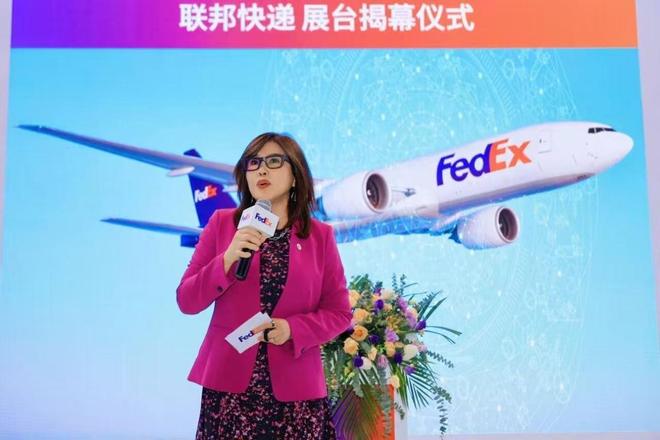
Core Insights - The China International Import Expo (CIIE) has become a significant platform for multinational companies to showcase their commitment to the Chinese market, with FedEx being a notable participant for six consecutive years [1][2] - FedEx is expanding its operations in China, operating over 300 international flights weekly and recently adding five new cargo flights connecting China to Paris [1][3] - FedEx views China as a core part of its strategy, highlighting the country's potential for rapid growth in international business [1][3] Group 1: Market Presence and Strategy - FedEx has established 103 subsidiaries in China, employing over 10,000 staff and operating nearly 3,000 delivery vehicles [3] - The company has strategically set up over 100 ground operation stations in major cities, enhancing its logistics network [3] - FedEx aims to strengthen its air logistics network and service capabilities in response to the growing demand in China's second and third-tier cities [3][4] Group 2: Innovation and Sustainability - FedEx is focusing on sustainability, aiming for carbon-neutral operations by 2040 and transitioning to a fully electric delivery fleet by 2030 [4][5] - The company is leveraging emerging technologies like AI and IoT to enhance supply chain resilience and efficiency for Chinese customers [5][6] - FedEx has developed software to simplify international shipping processes for small and medium-sized enterprises, addressing challenges related to customs and tariffs [6] Group 3: Engagement at CIIE - At the CIIE, FedEx showcased its commitment to supply chain resilience, digital transformation, sustainability, and social responsibility through an interactive exhibition [2] - The company emphasized its role in supporting trade between China and global markets, reflecting its dedication to contributing to global economic development [2][5]

直击进博会 对话联邦快递中国区总裁许宝燕:中国是联邦快递策略的中心 对中国市场前景充满信心
Zhong Guo Jing Ying Bao· 2025-11-08 05:04
Core Insights - The China International Import Expo (CIIE) has become a significant platform for multinational companies to showcase their commitment to the Chinese market, with FedEx being a notable participant for six consecutive years [1][3]. Company Strategy - FedEx has been actively expanding its operations in China, operating over 300 international flights weekly to connect Chinese customers with global markets [3]. - The company recently announced the addition of five new cargo flights connecting China to Paris, enhancing its global network coverage [3]. - FedEx has established 103 subsidiaries in China, employing over 10,000 staff and operating nearly 3,000 delivery vehicles [5]. Market Potential - The Chinese express delivery market is viewed as having significant growth potential, driven by policy and trade developments [6]. - FedEx aims to enhance its logistics network and service capabilities in China, focusing on key areas such as cross-border e-commerce and sustainable development [6]. Technological Innovation - FedEx is leveraging emerging technologies like artificial intelligence and the Internet of Things to build agile logistics infrastructure, helping Chinese clients create resilient supply chains [7]. - The company has deployed AI-driven sorting robots in its Guangzhou facility to improve digital operations and smart logistics networks [7]. Sustainability Efforts - FedEx is committed to sustainability, aiming for carbon-neutral operations by 2040, with a focus on electric vehicle adoption and reducing carbon emissions [6]. - The company plans to transition to a 100% zero-emission fleet for new delivery vehicles by 2030 [6]. Support for SMEs - FedEx is addressing challenges faced by small and medium-sized enterprises (SMEs) in cross-border e-commerce, such as complex customs regulations and tariffs [8]. - The company has developed software to simplify international shipping processes and optimize local transportation solutions, significantly reducing time costs for SMEs [8].