图形渲染GPU曦彩G系列

Search documents
亏损收窄股价却缩水四成,2100亿沐曦股份怎么了?
凤凰网财经· 2026-03-07 10:55
Core Viewpoint - Muxi Co., Ltd., a prominent domestic GPU chip giant, is facing challenges despite its rapid revenue growth, as it continues to report significant losses and high R&D expenditures [4][10][21]. Group 1: Financial Performance - Muxi Co., Ltd. expects to achieve revenue between 400 million to 600 million yuan in Q1 2026, representing a year-on-year growth of 24.84% to 87.26% [8]. - The company anticipates a net profit loss attributable to shareholders of 90.76 million to 182 million yuan for the same period, although this loss is narrower than the 233 million yuan loss reported in the same quarter last year [9][10]. - The total net profit loss for the year 2025 was reported at 781 million yuan, indicating ongoing financial struggles [11]. Group 2: Market Position and Challenges - Muxi Co., Ltd. has a strong background with a core team from renowned companies like AMD, which has helped it gain significant attention in the capital market since its establishment in 2020 [15][18]. - The company has faced a decline in stock price, dropping 40% from its peak, with a current market capitalization of 213.5 billion yuan [20][21]. - Despite impressive revenue growth rates in previous years, the company is experiencing a slowdown, with 2025 revenue growth at 121.26% compared to extraordinary rates of 12334.6% and 1301.46% in 2023 and 2024, respectively [12][13]. Group 3: R&D and Product Dependency - Muxi Co., Ltd. has heavily invested in R&D, with expenditures of 648 million, 699 million, and 901 million yuan from 2022 to 2024, accounting for 282.11% of cumulative revenue during that period [23]. - The company relies significantly on its Xiyun C500 series chip, which accounted for 97.28% and 97.87% of its main business revenue in 2024 and Q1 2025, respectively [26][27]. - High customer concentration is a concern, with the top five customers contributing 100%, 91.58%, 71.09%, and 88.35% of revenue in the respective years, indicating vulnerability to changes in demand from these clients [28].


沐曦股份IPO成功过会:三年研发投入约24亿元 新一代国产GPU开发进度曝光
Hua Xia Shi Bao· 2025-10-25 01:29
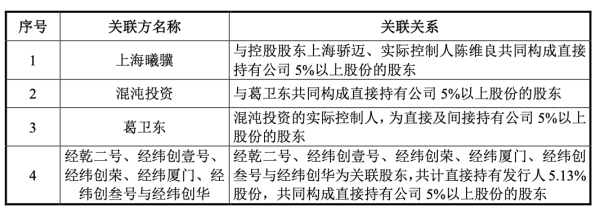
Core Viewpoint - The IPO process of domestic GPU company Mu Xi Integrated Circuit (Shanghai) Co., Ltd. is progressing, with a valuation of 21 billion yuan and a fundraising plan of 3.904 billion yuan, aiming to promote domestic substitution in the chip sector dominated by Nvidia [1] Financial Performance - Mu Xi's revenue has grown from 426,400 yuan in 2022 to 743 million yuan in 2024, reflecting a strong compound annual growth rate [1] - The company's main revenue source is the Xiyun C500 series chip, which is expected to generate 722 million yuan in 2024, accounting for 97.28% of the main business revenue for that year [3] - Despite rapid revenue growth, Mu Xi has not yet achieved profitability, with cumulative losses reaching 3.29 billion yuan from 2022 to Q1 2025 [3][4] Research and Development - Mu Xi has invested significantly in R&D, with total expenditures of approximately 2.465 billion yuan from 2022 to Q1 2025 [1][4] - The company is developing new products, including the Xiyun C600 and C700 series chips, as well as the Xisi N and Xicai G series GPUs [5] Cash Flow Situation - The net cash flow from operating activities has been consistently negative, totaling a net outflow of 4.361 billion yuan [4] - The company anticipates reaching a breakeven point by 2026, with improved cash flow expected as sales scale up [4] Shareholder Structure - Mu Xi has several related shareholders holding over 5% of the company's shares, including Shanghai Xiji and Chaos Investment [7][8] - A significant customer, Shanghai Yuanlu Jiajia Information Technology Co., Ltd., also holds 0.55% of the company's shares and contributed 28.39% of the main business revenue in Q1 2025 [9][10] Market Position and Strategy - The company emphasizes its independent operation and claims no significant adverse impact from related parties, ensuring no major competition or unfair transactions with controlling shareholders [11]