基于 T55 芯片的仓架融合系统

Search documents
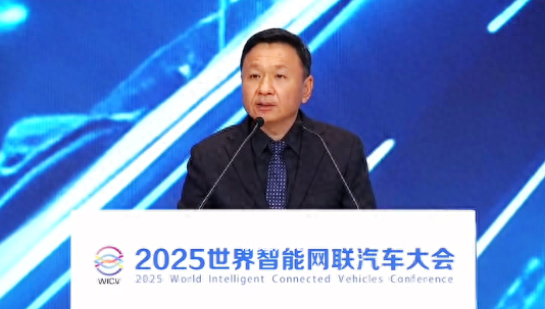
北汽张建勇:中国智驾从跟跑到领跑,破局挑战需政策协同与技术共享
Huan Qiu Wang· 2025-10-17 02:40
Core Insights - The global intelligent connected vehicle industry is rapidly advancing, with China transitioning from a follower to a leader due to a combination of policy guidance, market drive, and technological breakthroughs [3][4] Group 1: Industry Development - The Chinese intelligent connected vehicle industry has seen significant policy improvements, including the introduction of a comprehensive regulatory framework that covers access and safety responsibilities [3] - Key milestones include the release of pilot lists for intelligent connected vehicle access in 2024 and the implementation of mandatory national standards for information security and software upgrades [3] - The commercial application of intelligent connected vehicles is accelerating, with cities like Beijing, Hangzhou, and Wuhan leading in testing and operational demonstrations [3][4] Group 2: Technological Advancements - Intelligent driving technology is evolving from isolated breakthroughs to systemic upgrades, with a focus on data-driven advancements [3][4] - The transition to intelligent driving 3.0 emphasizes the importance of data, algorithms, and computing power, with a shift from distributed to centralized electronic architectures [3] - North Car Group is developing a proprietary high-end intelligent connected technology system called "Yuanjing," which aims to redefine the interaction between humans, vehicles, and infrastructure [4] Group 3: Company Strategy - North Car Group emphasizes user-centric development, focusing on cost, cycle, quality, and experience through a dual approach of self-research and collaboration [4] - The company has tailored its intelligent connected technology strategies for different vehicle models, achieving significant cost reductions while enhancing features [4] - North Car Group has established strategic partnerships with over 20 leading companies, including Huawei, to foster an open and collaborative ecosystem [4][5] Group 4: Industry Challenges and Proposals - Despite notable achievements, the industry faces challenges such as insufficient policy coordination, technological silos, and supply chain risks [5] - Two key proposals include promoting policy collaboration to clarify operational guidelines and enhancing technical sharing to avoid resource wastage [5] - The development of intelligent connected vehicles is viewed as a long-term collaborative effort, requiring a focus on safety and innovation [5]