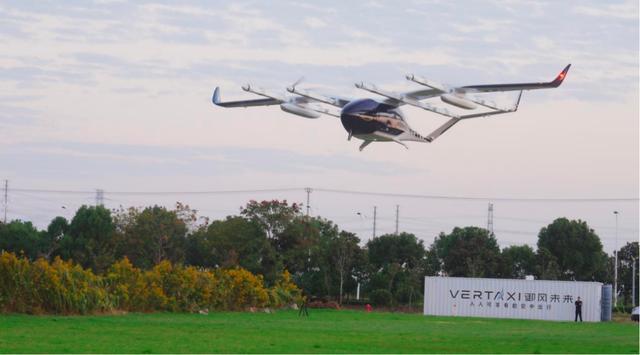
复合翼eVTOL

Search documents
eVTOL技术路线之争 复合翼与倾转旋翼引领低空经济竞逐
Huan Qiu Wang Zi Xun· 2025-08-23 05:07
Core Viewpoint - The eVTOL (electric Vertical Take-Off and Landing) industry is experiencing intense competition in key technological routes, with compound wings and tilt-rotor designs emerging as the most representative directions for urban air mobility systems [1][3]. Group 1: Market Overview - As of June 2025, among 31 key global eVTOL manufacturers, compound wing configurations account for approximately 42%, while tilt-rotor designs follow closely with a 35% share [3]. - The compound wing and tilt-rotor designs are the focal points of industry and capital interest due to their significant advantages in technological maturity and application potential [3]. Group 2: Technical Advantages - The compound wing eVTOL features a design that allows for independent operation of vertical take-off and horizontal cruising systems, resulting in high reliability and good aerodynamic efficiency [4]. - In terms of safety, the compound wing's independent lift and propulsion systems enhance operational resilience in complex urban environments, allowing for rapid activation of backup lift units in case of disturbances [4]. - The compound wing also demonstrates superior energy efficiency and range capabilities compared to other configurations [4]. Group 3: Tilt-Rotor Characteristics - The tilt-rotor eVTOL, known as the "airborne transformer," utilizes mechanical tilting mechanisms to transition power units from vertical to horizontal flight, achieving higher flight speeds [4]. - Tilt-rotor designs are noted for their strong payload capacity and clearer certification paths, making them suitable for short-distance commuting and high-end tourism markets [4]. Group 4: Challenges and Development - Tilt-rotor designs face challenges related to mechanical complexity and potential increases in failure rates, necessitating multiple redundancy designs to meet safety standards [5]. - Both compound wing and tilt-rotor technologies are currently developing in parallel, each with its own strengths, with the compound wing being more suitable for high-frequency urban air traffic networks and the tilt-rotor excelling in speed and payload capacity [5]. - The industry consensus indicates that eVTOL technology is in a critical phase of technical challenges and certification, with no single technology route currently surpassing others across all dimensions [5].