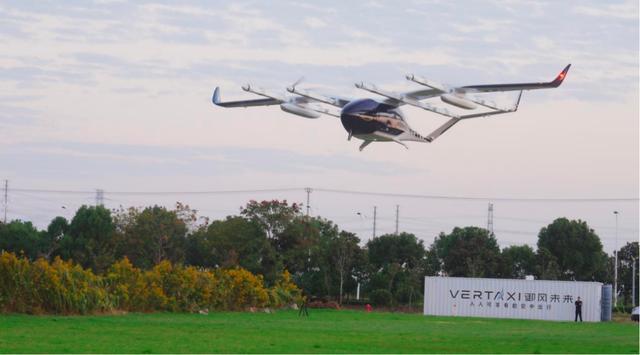
倾转旋翼eVTOL

Search documents
2025世界设计之都大会今开幕“设计之都”15年来产业规模已超1.6万亿元 上海设计:全球认可的品质符号
Jie Fang Ri Bao· 2025-09-25 01:53
Core Insights - The 2025 World Design Capital Conference (WDCC) has opened in Shanghai, marking the fourth year of hosting this event and the 15th anniversary since Shanghai was designated a "City of Design" by UNESCO in 2010 [1] - Over the past 15 years, Shanghai's creative and design industry has experienced a double-digit annual growth rate, expanding from 472.4 billion yuan to over 1.6 trillion yuan, with 21 national industrial design centers and 200 municipal design innovation centers established [1] Industry Impact - Design has become a tangible competitive advantage for companies, as evidenced by Dyson's bladeless fan and Apple's iPhone, which helped shift market dominance from Nokia [2] - Shanghai's enterprises, such as Chando, have successfully leveraged design in their products, with their "Ice Muscle Water" selling over 80 million bottles in 12 years, showcasing sustainable design practices that significantly reduce carbon emissions [2] - The eVTOL aircraft developed in Shanghai features a unique "tilt-rotor" design, enhancing both vertical takeoff and high-speed flight capabilities, leading to a recent procurement agreement with UAE's Autocraft for 350 units valued at 1 billion USD [2] Design in Urban Development - The integration of design in various sectors such as integrated circuits, biomedicine, artificial intelligence, high-end equipment, and new energy vehicles is evident, with notable products like the C919 aircraft and advanced medical imaging devices [3] - The transformation of Shanghai's industrial reputation from the 1970s to the current "fashion eight products" reflects the city's evolving design landscape, with innovative products gaining market traction [3] - The annual "Shanghai Design 100+" competition has attracted over 2,600 entries from 17 countries, serving as a platform for emerging brands and generating over 250 billion yuan in economic impact [3] Global Design Influence - Shanghai's design initiatives have enhanced the city's brand power and global resource allocation capabilities, with iconic landmarks and events like the Shanghai Design Week and Shanghai Fashion Week showcasing its design prowess [4] - The establishment of the "International Design Hundred" organization and various international collaborations highlight Shanghai's commitment to nurturing design talent and fostering global recognition [4] - The release of the strategic document "Opinions on Building a World-Class 'Design Capital'" in February 2022 underscores Shanghai's ambition to become a leading design city by 2030, marking a shift from design as a mere tool to a core urban development philosophy [4]
eVTOL技术路线之争 复合翼与倾转旋翼引领低空经济竞逐
Huan Qiu Wang Zi Xun· 2025-08-23 05:07
Core Viewpoint - The eVTOL (electric Vertical Take-Off and Landing) industry is experiencing intense competition in key technological routes, with compound wings and tilt-rotor designs emerging as the most representative directions for urban air mobility systems [1][3]. Group 1: Market Overview - As of June 2025, among 31 key global eVTOL manufacturers, compound wing configurations account for approximately 42%, while tilt-rotor designs follow closely with a 35% share [3]. - The compound wing and tilt-rotor designs are the focal points of industry and capital interest due to their significant advantages in technological maturity and application potential [3]. Group 2: Technical Advantages - The compound wing eVTOL features a design that allows for independent operation of vertical take-off and horizontal cruising systems, resulting in high reliability and good aerodynamic efficiency [4]. - In terms of safety, the compound wing's independent lift and propulsion systems enhance operational resilience in complex urban environments, allowing for rapid activation of backup lift units in case of disturbances [4]. - The compound wing also demonstrates superior energy efficiency and range capabilities compared to other configurations [4]. Group 3: Tilt-Rotor Characteristics - The tilt-rotor eVTOL, known as the "airborne transformer," utilizes mechanical tilting mechanisms to transition power units from vertical to horizontal flight, achieving higher flight speeds [4]. - Tilt-rotor designs are noted for their strong payload capacity and clearer certification paths, making them suitable for short-distance commuting and high-end tourism markets [4]. Group 4: Challenges and Development - Tilt-rotor designs face challenges related to mechanical complexity and potential increases in failure rates, necessitating multiple redundancy designs to meet safety standards [5]. - Both compound wing and tilt-rotor technologies are currently developing in parallel, each with its own strengths, with the compound wing being more suitable for high-frequency urban air traffic networks and the tilt-rotor excelling in speed and payload capacity [5]. - The industry consensus indicates that eVTOL technology is in a critical phase of technical challenges and certification, with no single technology route currently surpassing others across all dimensions [5].