外汇互换合约

Search documents
韩国当局亮明捍卫本币“坚定决心” 韩元延续涨势至11月初以来新高
Zhi Tong Cai Jing· 2025-12-26 06:41
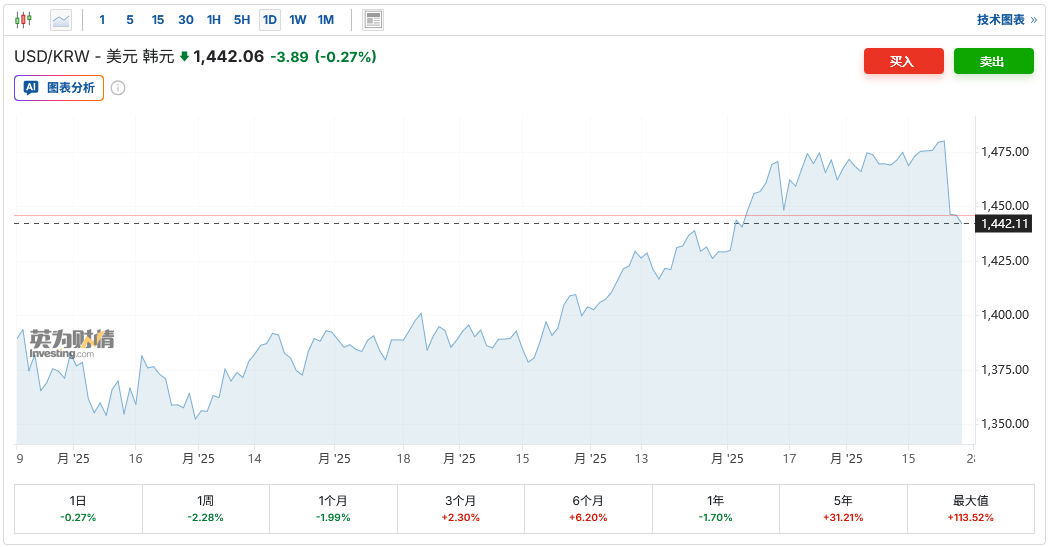
Core Viewpoint - The South Korean authorities are taking decisive actions to stabilize the won, which has recently depreciated significantly against the dollar, reaching its lowest levels since the 2009 financial crisis. The government is implementing various measures to support the currency and prevent further depreciation [3][4]. Group 1: Currency Performance - The Korean won has strengthened against the US dollar, reaching its highest level since early November, with the dollar to won exchange rate dropping by 0.27% to 1442.06, and a weekly decline of 2.28% [1][3]. - The won had previously depreciated to 1485 won per dollar, marking a significant decline of approximately 8% against the dollar in the second half of the year, making it the worst-performing currency in Asia [3]. Group 2: Government Actions - The South Korean government has expressed its commitment to addressing the won's weakness, indicating that excessive depreciation is not beneficial. The Bank of Korea and the Ministry of Finance have held multiple meetings to discuss the issue [3]. - The government is implementing new tax measures to stabilize the foreign exchange market, including a temporary tax exemption for individual investors who convert overseas stock sale profits into won for domestic investments [4]. - The Bank of Korea has signed a $65 billion currency swap agreement with the National Pension Service to increase dollar liquidity domestically and has decided to temporarily exempt financial institutions from foreign exchange stability taxes starting next month [4]. Group 3: Market Sentiment and Forecast - Analysts note that the won is highly sensitive to negative news, with external factors affecting its performance. The currency is expected to remain within a range of 1470 to 1480 won per dollar unless other factors influence a decline [5]. - The recent interventions by the South Korean authorities, including verbal interventions and market measures, have had a positive impact on the won's performance, aided by a recovery in risk appetite and a weaker dollar [3].