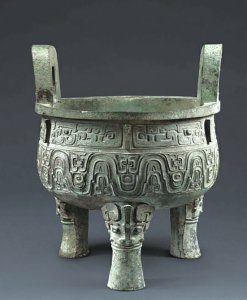
大克鼎

Search documents
器以载道:博物馆里的中华文明基因图谱(下)
Xin Lang Cai Jing· 2026-01-13 18:48
Core Insights - The article highlights the significance of ancient Chinese artifacts, particularly bronze vessels, as crucial historical records that reflect the social structure and cultural practices of their time [10][11][19]. Group 1: Major Artifacts - The Dake Ding, a bronze vessel from the Western Zhou period, stands at 93.1 cm tall and weighs 201.5 kg, showcasing advanced bronze casting techniques with intricate beast face patterns [10][11]. - The Lianhe Fanghu, a bronze vessel from the Spring and Autumn period, features exquisite dragon motifs and symbolizes the fusion of Central Plains and southern cultures [12]. - The Guiye-shaped stone tool, discovered in Heilongjiang, measures 25 cm in length and represents a high level of stone tool manufacturing technology, dating back approximately 9,000 years [13][14][15]. Group 2: Cultural Significance - The Dake Ding's inscriptions document the feudal system and land distribution in the Western Zhou period, emphasizing the importance of historical responsibility in Chinese culture [11]. - The East Han ceramic performer figurine, measuring 66.5 cm, illustrates the popularity of performance arts during the Han dynasty, reflecting the cultural richness of the Sichuan region [17][18]. - The Gold-inlaid Beast Head Agate Cup from the Tang dynasty exemplifies the high craftsmanship of Tang jade artifacts and serves as evidence of cultural exchanges between the East and West [19][20].

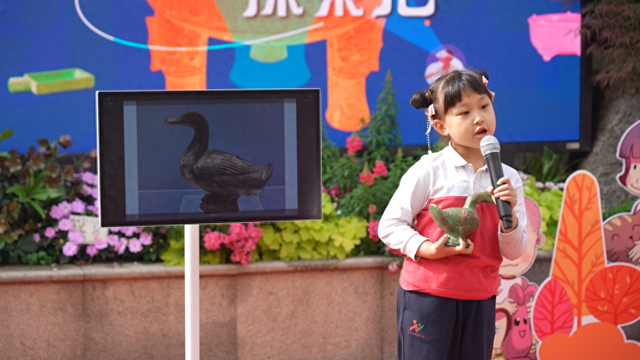
“国宝探索记”增强亲子连接,国宝成了生活想象的一部分
Xin Lang Cai Jing· 2025-05-02 00:24
Group 1 - The article highlights a creative educational initiative at Shanghai Municipal Kindergarten, where children engage with ancient artifacts through hands-on activities and storytelling [1][3][10] - The program, titled "National Treasure Exploration," encourages children to connect with historical artifacts, enhancing their understanding of culture and history [3][10][20] - Children created replicas of artifacts using soft clay, allowing them to express their creativity while learning about the significance of these historical items [5][8][10] Group 2 - The initiative included various activities, such as painting artifacts on fans and canvas bags, which helped children develop artistic skills and appreciation for cultural heritage [12][15][17] - The program also emphasized teamwork and collaboration, as children worked in groups to create and share their artistic interpretations of the artifacts [10][22][24] - The final artworks were displayed in the classroom, creating a sense of accomplishment and community among the children [10][19][26]