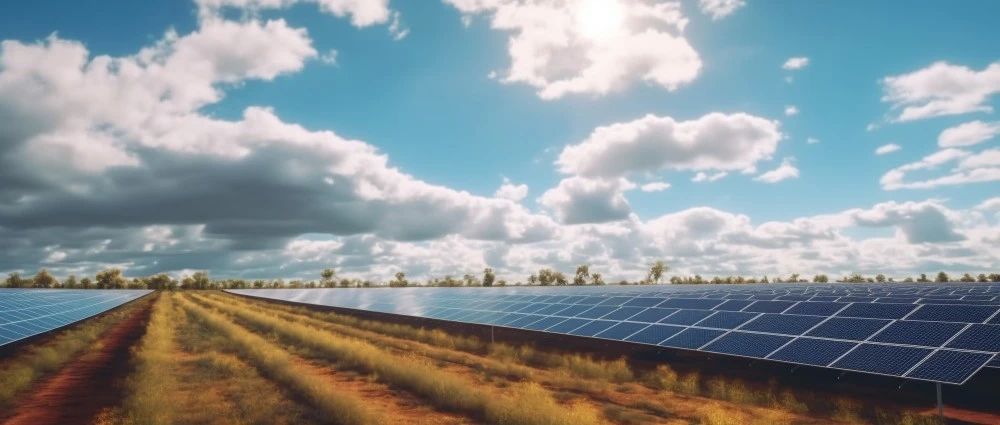
大型电池储能系统

Search documents
国际能源署最新报告预计——全球电力需求将保持强劲增长
Jing Ji Ri Bao· 2026-02-09 22:33
Group 1: Global Electricity Demand Growth - The International Energy Agency predicts strong global electricity demand growth, with an average annual growth rate exceeding 3.5% from 2026 to 2030, driven by industrial, electric vehicle, air conditioning, and data center electricity consumption [1] - By 2025, global electricity demand is expected to grow by 3% year-on-year, with the growth rate surpassing economic growth becoming a common trend in the coming years [1] - Emerging economies will contribute nearly 80% of the new electricity demand by 2030, with China being the main driver, accounting for nearly 50% of the incremental demand [1] Group 2: Renewable Energy and Nuclear Power - By 2030, approximately half of the global electricity will come from renewable energy and nuclear power, with renewable energy generation expected to grow at an annual rate of 8% [2] - Solar photovoltaic generation is projected to increase significantly, with an annual increment exceeding 600 terawatt-hours [2] - Global nuclear power generation is expected to reach a historical high by 2025, driven by increased capacity in countries like France, China, and India [2] Group 3: Coal and Natural Gas Generation - Despite the decline of coal power, it will remain the largest source of electricity globally until 2030, with regional disparities in coal usage [3] - Natural gas generation is expected to grow at an annual rate of 2.6% by 2030, driven by rising electricity demand in the U.S. and a shift from oil to gas in the Middle East [3] Group 4: Electricity Infrastructure and Flexibility - The report emphasizes the need for rapid and efficient expansion of the electricity grid to integrate changing generation structures and demand [4] - Global investment in electricity grids needs to increase by at least 50% from the current $400 billion to meet the 2030 electricity demand [4] - The importance of large battery storage systems is growing in ensuring supply security as battery costs decline and technology matures [4] Group 5: Carbon Emissions and Electricity Prices - Global electricity sector carbon emissions are expected to stabilize in 2025, with a further acceleration in the reduction of carbon intensity anticipated by 2030 [5] - Electricity price disparities among regions continue to exist, with rising prices in the EU and U.S. due to high natural gas prices, while countries like Australia and India see price declines [5] Group 6: Electricity System Security - Recent large-scale power outages highlight the importance of electricity system security, making it a priority for countries [6] - The electricity system faces risks from aging infrastructure, extreme weather events, and cyber threats, necessitating enhanced protection and monitoring systems [6] - A modern operational framework is needed to adapt to changing electricity demands, including updated grid standards and regulatory frameworks [6]
德国储能半年冲刺22.1吉瓦时,户储、工商储、大储各显神通
鑫椤储能· 2025-08-08 02:19
Core Insights - The rapid expansion of battery storage capacity in Germany is evident, with nearly 2 million systems operational by mid-2025, totaling a power capacity of 14.535 GW and usable storage capacity of approximately 22.1 GWh [1][2]. Summary by Sections Battery Storage Systems Overview - The majority of the registered battery storage systems are small photovoltaic home storage units, accounting for 196.7 million units with a total power of 11.5 GW and usable capacity nearing 18.3 GWh [1]. - There are 14,827 medium-scale commercial storage systems with a total power of 663 MW and a capacity exceeding 900 MWh [1]. New Installations in 2025 - Over 250,000 new battery storage systems were installed in the first half of 2025, contributing nearly 2 GW of power and 3.55 GWh of capacity [2][3]. - Among the new installations, 73 large battery storage systems added 509.5 MW of power and 690 MWh of capacity, while small photovoltaic home storage units accounted for 251,948 new units, providing 1.34 GW of power and nearly 2.7 GWh of capacity [3][4]. Future Planning and Demand - There are currently 19,720 storage systems in the planning stage, with a total planned output of approximately 4.7 GW and capacity exceeding 9.4 GWh [4]. - The expansion of battery storage is driven by increasing demand, highlighted by the occurrence of 389 hours of negative wholesale electricity prices in the first half of 2025 [4].