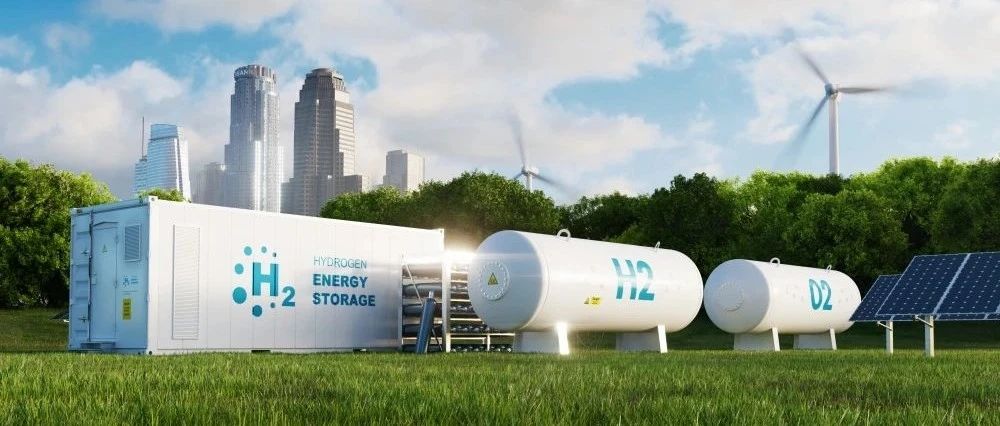
电力系统灵活性

Search documents
国际能源署最新报告预计: 全球电力需求将保持强劲增长
Jing Ji Ri Bao· 2026-02-10 01:49
Core Insights - The International Energy Agency (IEA) predicts strong global electricity demand growth, with an average annual growth rate exceeding 3.5% from 2026 to 2030, driven by industrial, electric vehicle, air conditioning, and data center electricity consumption [1][2] - By 2030, renewable energy and nuclear power are expected to account for 50% of the global electricity mix, with significant contributions from emerging economies, particularly China and India [1][2] Group 1: Global Electricity Demand - Global electricity demand is projected to grow by 3% year-on-year in 2025, with the growth rate expected to be 50% higher than the average of the past decade over the next five years [1] - Emerging economies will contribute nearly 80% of the new electricity demand by 2030, with China alone accounting for about 50% of this increase [1] - India's and Southeast Asia's share of electricity demand growth in emerging economies is expected to rise significantly due to economic growth and increasing air conditioning demand [1] Group 2: Renewable Energy and Nuclear Power - By 2030, approximately half of the global electricity will come from renewable energy and nuclear power, with renewable energy generation expected to grow at an annual rate of 8%, driven by solar photovoltaic power [2] - In 2025, global nuclear power generation is anticipated to reach a historical high, supported by increased nuclear capacity in countries like France, China, and India [2] Group 3: Coal and Natural Gas - Despite the decline of coal power, it will remain the largest source of electricity globally until 2030, with regional disparities in coal usage [3] - Global natural gas generation is expected to grow at an annual rate of 2.6% by 2030, driven by rising electricity demand in the U.S. and a shift from oil to gas in the Middle East [3] Group 4: Electricity Infrastructure and Investment - The report emphasizes the need for rapid and efficient expansion of the electricity grid to integrate changing generation structures and high-load demands from electric vehicles and data centers [4] - To meet the electricity demand by 2030, global grid investments need to increase by at least 50% from the current $400 billion, alongside enhancements in supply chain capabilities [4] Group 5: Carbon Emissions and Pricing - Global electricity sector carbon emissions are expected to stabilize in 2025, with a projected decline in carbon intensity by 14% compared to a decade ago, accelerating further as low-carbon generation increases [5] - Electricity price disparities among regions continue to create competitive pressures, with rising prices in the EU and U.S. due to high natural gas costs, while countries like Australia and India see price decreases [5] Group 6: Electricity Security - Recent large-scale power outages highlight the importance of electricity security, making it a priority for countries to enhance the resilience of their power systems [6] - The report suggests that modernizing operational frameworks and updating grid regulations are essential to meet evolving electricity demands and mitigate risks [6]
国际能源署最新报告预计:全球电力需求将保持强劲增长
Jing Ji Ri Bao· 2026-02-10 00:54
Core Insights - The International Energy Agency (IEA) forecasts strong global electricity demand growth, with an average annual growth rate exceeding 3.5% from 2026 to 2030, driven by industrial, electric vehicle, air conditioning, and data center electricity consumption [1] - By 2030, renewable energy and nuclear power are expected to account for 50% of the global electricity mix, with emerging economies contributing nearly 80% of the new electricity demand [1][2] Group 1: Global Electricity Demand - Global electricity demand is projected to grow by 3% year-on-year in 2025, with the growth rate expected to be 50% higher than the average of the past decade over the next five years [1] - China will remain the main driver of global electricity demand growth, contributing nearly 50% of the increase, with an average annual growth rate of 4.9% over the next five years [1] - India and Southeast Asian countries are expected to significantly increase their share of electricity demand growth in emerging economies by 2030 due to rapid economic growth and rising air conditioning demand [1] Group 2: Renewable Energy and Nuclear Power - By 2030, about half of the global electricity will come from renewable energy and nuclear power, with renewable energy generation expected to grow at an annual rate of 8%, driven by record solar photovoltaic generation [2] - Global nuclear power generation is anticipated to reach a historical high in 2025, supported by increased nuclear capacity in countries like France, China, and India [2] Group 3: Coal and Natural Gas - Despite the decline of coal power, it will remain the largest source of electricity globally until 2030, with coal generation levels stabilizing in 2025 [3] - Natural gas generation is expected to grow at an annual rate of 2.6% by 2030, significantly higher than the 1.4% growth rate of the past five years, primarily driven by rising electricity demand in the U.S. and the Middle East's transition from oil to gas [3] Group 4: Electricity Infrastructure and Investment - The report emphasizes the need for rapid and efficient expansion of the electricity grid to integrate the changing generation structure and high-load demands from electric vehicles and data centers [4] - To meet the electricity demand by 2030, global grid investment must increase by at least 50% from the current $400 billion, alongside significant expansion of the supply chain [4] Group 5: Carbon Emissions and Pricing - Global electricity sector carbon emissions are expected to stabilize in 2025, with a further decline anticipated as low-carbon generation increases [5] - Electricity price disparities among regions continue to exist, with rising prices in the EU and U.S. due to high natural gas prices, while countries like Australia and India see price decreases [5] Group 6: Electricity Security - Recent large-scale power outages highlight the importance of electricity security, making it a priority for countries to enhance the resilience of their power systems [6] - The report calls for modern operational frameworks and updated regulations to address the evolving demands on electricity systems [6]
全球电力需求将保持强劲增长
Sou Hu Cai Jing· 2026-02-10 00:01
Core Insights - The International Energy Agency predicts strong global electricity demand growth, with an average annual increase of over 3.5% from 2026 to 2030, driven by industrial, electric vehicle, air conditioning, and data center electricity consumption [2] - By 2030, renewable energy and nuclear power are expected to account for 50% of the global electricity mix, with significant contributions from emerging economies, particularly China and India [3][4] Group 1: Global Electricity Demand - Global electricity demand is projected to grow by 3% year-on-year by 2025, with the growth rate expected to exceed the economic growth rate in the coming years [2] - Emerging economies will contribute nearly 80% of the new electricity demand by 2030, with China accounting for about 50% of the incremental demand [2] - China's average annual growth rate for new electricity is expected to reach 4.9% over the next five years [2] Group 2: Renewable Energy and Nuclear Power - By 2030, approximately half of the global electricity will come from renewable energy and nuclear power, with renewable energy generation expected to grow at an annual rate of 8% [3] - Solar photovoltaic generation is anticipated to increase by over 600 terawatt-hours annually, contributing significantly to the overall growth of renewable energy [3] - Global nuclear power generation is expected to reach a historical high by 2025, driven by increased capacity in countries like France, China, and India [3] Group 3: Coal and Natural Gas - Despite the decline of coal power, it will remain the largest source of electricity globally until 2030, with regional disparities in coal usage [4] - Natural gas generation is projected to grow at an annual rate of 2.6% by 2030, primarily due to rising electricity demand in the U.S. and a shift from oil to gas in the Middle East [4] Group 4: Electricity Infrastructure and Investment - To meet the electricity demand by 2030, global grid investments need to increase by at least 50% from the current $400 billion, alongside significant supply chain expansions [5] - The report emphasizes the need for enhanced grid flexibility and modernization of operational frameworks to adapt to changing electricity demands [5] Group 5: Carbon Emissions and Environmental Impact - Global electricity sector carbon emissions are expected to stabilize by 2025, with a projected decline in carbon intensity by 14% compared to a decade ago [5] - The electricity production sector remains the largest source of energy-related carbon emissions, generating approximately 13.9 billion tons of CO2 annually [5] Group 6: Electricity Pricing and Competition - Electricity price disparities continue to exist globally, with rising prices in regions like the EU and the U.S. due to higher natural gas prices, while countries like Australia and India see price declines [6] - Recent large-scale power outages highlight the importance of electricity security, making it a priority for nations to enhance the resilience of their power systems [6]

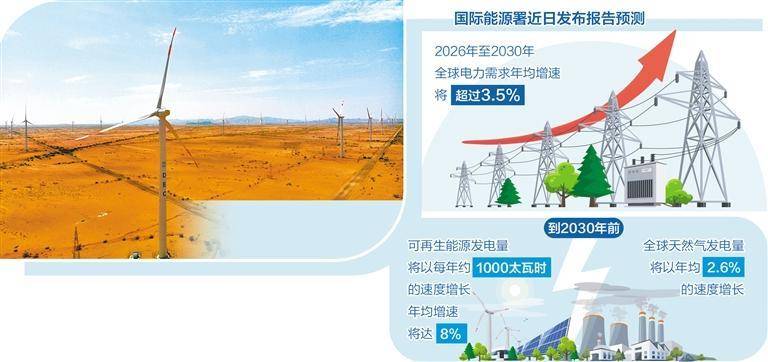
国际能源署最新报告预计——全球电力需求将保持强劲增长
Jing Ji Ri Bao· 2026-02-09 22:33
Group 1: Global Electricity Demand Growth - The International Energy Agency predicts strong global electricity demand growth, with an average annual growth rate exceeding 3.5% from 2026 to 2030, driven by industrial, electric vehicle, air conditioning, and data center electricity consumption [1] - By 2025, global electricity demand is expected to grow by 3% year-on-year, with the growth rate surpassing economic growth becoming a common trend in the coming years [1] - Emerging economies will contribute nearly 80% of the new electricity demand by 2030, with China being the main driver, accounting for nearly 50% of the incremental demand [1] Group 2: Renewable Energy and Nuclear Power - By 2030, approximately half of the global electricity will come from renewable energy and nuclear power, with renewable energy generation expected to grow at an annual rate of 8% [2] - Solar photovoltaic generation is projected to increase significantly, with an annual increment exceeding 600 terawatt-hours [2] - Global nuclear power generation is expected to reach a historical high by 2025, driven by increased capacity in countries like France, China, and India [2] Group 3: Coal and Natural Gas Generation - Despite the decline of coal power, it will remain the largest source of electricity globally until 2030, with regional disparities in coal usage [3] - Natural gas generation is expected to grow at an annual rate of 2.6% by 2030, driven by rising electricity demand in the U.S. and a shift from oil to gas in the Middle East [3] Group 4: Electricity Infrastructure and Flexibility - The report emphasizes the need for rapid and efficient expansion of the electricity grid to integrate changing generation structures and demand [4] - Global investment in electricity grids needs to increase by at least 50% from the current $400 billion to meet the 2030 electricity demand [4] - The importance of large battery storage systems is growing in ensuring supply security as battery costs decline and technology matures [4] Group 5: Carbon Emissions and Electricity Prices - Global electricity sector carbon emissions are expected to stabilize in 2025, with a further acceleration in the reduction of carbon intensity anticipated by 2030 [5] - Electricity price disparities among regions continue to exist, with rising prices in the EU and U.S. due to high natural gas prices, while countries like Australia and India see price declines [5] Group 6: Electricity System Security - Recent large-scale power outages highlight the importance of electricity system security, making it a priority for countries [6] - The electricity system faces risks from aging infrastructure, extreme weather events, and cyber threats, necessitating enhanced protection and monitoring systems [6] - A modern operational framework is needed to adapt to changing electricity demands, including updated grid standards and regulatory frameworks [6]
第一创业晨会纪要-20260202
First Capital Securities· 2026-02-02 10:32
Macroeconomic Group - In 2025, the national general public fiscal revenue decreased by 1.7% year-on-year, a decline of 2.5 percentage points compared to the previous month, with central revenue dropping by 6.5% and local revenue increasing by 2.4% [4] - The government fund income also showed poor performance, with a year-on-year decrease of 7% and land use rights income falling by 14.7% [4] - The January PMI for China's manufacturing sector was 49.3, indicating a contraction, with new orders at 49.2 and new export orders at 47.8, reflecting weak demand [7][9] Industry Comprehensive Group - SpaceX is applying to launch a satellite constellation of up to 1 million satellites, which is expected to boost the commercial application market in the aerospace industry [12] - Jerry Holdings announced a contract worth $182 million (approximately 1.26 billion RMB) for gas turbine generator sets, indicating strong demand in the data center power supply sector [13] Advanced Manufacturing Group - Nanfang Energy expects a net profit of 1.67 to 1.73 billion RMB in 2025, a year-on-year increase of 48% to 53%, driven by improved hydropower generation [15] - SANY Heavy Energy forecasts a significant decrease in net profit for 2025, attributed to intensified competition in the onshore wind turbine market [16] Consumer Group - Denghai Seed Industry anticipates a net profit of 92 to 102 million RMB for 2025, a substantial increase of 62% to 80%, due to reduced seed production costs [20] - Sanfu Outdoor expects to turn a profit in 2025, with a projected net profit of 45 to 67.5 million RMB, driven by the success of its proprietary and exclusive brands [21] - Lichen Industrial forecasts a net profit of 153 to 173 million RMB for 2025, a year-on-year growth of 40% to 59%, supported by effective cost management and market expansion [22] Bond Research Group - The bond market showed mixed performance, with short-term bonds under pressure while long-term bonds experienced a decline due to profit-taking and supply concerns [25]

南网能源院 | 业务动态(总第53期)
Xin Lang Cai Jing· 2025-12-03 13:25
Group 1 - The strategic department director Zhang Xuan and postdoctoral researcher He Binghao attended the 13th meeting of the China-Germany Energy Working Group at the Global Energy Transition Forum, reviewing the 2024 work results and 2025 work plan, focusing on carbon capture, utilization, and storage, as well as power system flexibility [1] - Senior researcher Yuan Kanglong presented on "Research on the Enhancement of Southern Power Grid's Backbone Network Planning" at the 2025 National Power Grid Technology Exchange Conference, discussing the construction history and effectiveness of the backbone network [3] - The main network and system departments participated in a survey on "Key Equipment Technology and Engineering Applications of Flexible DC Grids," engaging with institutions like Zhejiang University and Tsinghua University to discuss foundational stability theories and key equipment development [5] Group 2 - Researcher Wang Haijin presented a report on "Key Technologies for Electricity-Carbon Accounting Based on Large Language Models" at the 6th International Forum on New Power Systems, highlighting the potential of advanced AI tools in improving the accuracy and efficiency of carbon accounting [7] - Researcher Li Yan discussed the planning layout and demonstration effectiveness of the new power system demonstration area in the southern region at the 2025 Autumn Academic Annual Meeting of "China Electric Power" [9] - Researcher Wang Haijin elaborated on the methodology of electricity-carbon accounting driven by large language models at the IEEE International Conference on Energy Engineering and Power Systems [12] Group 3 - The Guangzhou Electric Power Design Institute won three awards at the National Excellent Engineering Survey and Design Award, marking its first participation in this authoritative industry evaluation [10] - The main network department participated in the 13th International Conference on Power System Control, Operation, and Management, sharing innovative results and practical experiences in power grid planning [8] - The distribution network department conducted research on the "Electric Hong Internet of Things Operating System," focusing on digital architecture and smart terminal technologies to support the distribution network's planning [12] Group 4 - The 2025 Standard Design and Typical Cost System Document Review Meeting was held in Guangzhou, aiming to provide a scientific and unified technical basis for the planning, construction, and operation management of the Southern Power Grid [13] - The innovation management team from the enterprise management department visited Jiangsu Industrial Technology Research Institute to discuss typical experiences in traditional industry transformation [14] - The Yulin Power Supply Bureau engaged in discussions with the Southern Power Grid Energy Institute on the transformation requirements of new distribution systems [16] Group 5 - The investment department director Wu Hongliang and senior researcher Yang Yin held discussions with the deputy dean of Peking University's School of Urban Planning and Design on topics including the impact of ultra-fast charging technology on grid risks [19] - Researcher Wang Fengyun spoke at the 32nd China International Power Equipment and Technology Exhibition, discussing the role of hydrogen energy in new power systems [18] - Researcher Liu Ziyi participated in a preparatory meeting for the Global Sustainable Transportation Innovation Alliance, discussing green transformation and international carbon tax [21]


印度电力市场最新数据分析:中长期储能需求236.22GWh
鑫椤储能· 2025-07-16 07:06
Core Viewpoint - The Indian energy storage market is entering a rapid expansion phase, with significant growth in battery storage demand projected for the short and medium term [1][6]. Group 1: Market Demand and Government Support - The Indian Energy Storage Alliance predicts that battery storage demand will reach 8.68 GW/34.72 GWh by 2026-2027 and 47.24 GW/236.22 GWh by 2031-2032 [1]. - The Indian central government's VGF feasibility gap funding plan has a total investment of ₹2.0 billion, supporting 30 GWh of electrochemical storage projects, with 13.2 GWh already initiated [1]. - A new round of incentive policies has reduced the unit subsidy by 33% to ₹1.8 million/MWh but removed the previous 30% subsidy cap, allowing for more flexible project financing [1]. Group 2: Infrastructure and Capacity Growth - The Indian government has extended the ISTS transmission fee exemption policy until June 30, 2028, enhancing the economic viability of storage projects [2]. - As of May 2025, India's total installed capacity has reached 476 GW, a net increase of 106 GW from 370 GW in 2020, with an annual compound growth rate of approximately 6.5% [2]. - Nearly 40% of the new capacity comes from photovoltaics, which have doubled their share to 23%, while thermal power's share has decreased from 62% to 50% [2]. Group 3: Electricity Pricing and Market Dynamics - By June 2025, the daytime market electricity price in India has fallen to ₹3.71/kWh, with a significant price drop observed over the past 10 months [4]. - On July 8, the maximum price difference in the day-ahead market reached ₹8.25/kWh, indicating a favorable environment for storage arbitrage [4]. - The price fluctuations in the market suggest that the pure arbitrage model for storage is becoming increasingly feasible in India [4]. Group 4: Future Projections and Challenges - From May 2025 to the 2032 fiscal year, India plans to add a total of 425 GW of new installed capacity, with over half (254 GW) coming from photovoltaics [6]. - The peak load growth rate is expected to outpace electricity demand, with the peak load approaching 370 GW by 2032, highlighting the importance of storage [6]. - Structural issues such as low completion rates of solar projects and delays in PPA signing are hindering the growth of renewable energy installations [7]. Group 5: Global Opportunities and Events - The 2025 World Battery and Energy Storage Industry Expo will take place from August 8-10 in Guangzhou, providing a platform for global business cooperation and networking [8][10]. - The expo aims to connect high-quality overseas buyers with Chinese enterprises, facilitating international market expansion [9][10].