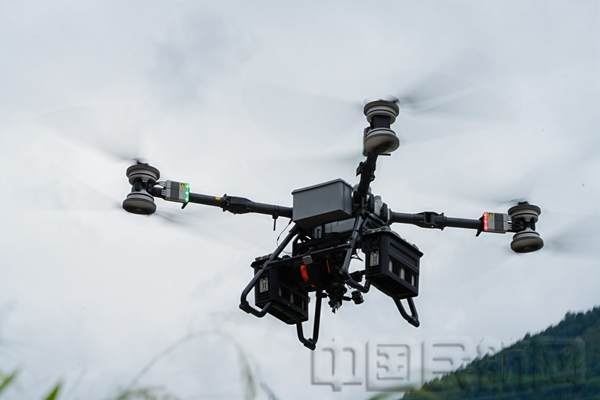
大疆FC30无人机

Search documents
低空行业政策前瞻
2026-01-07 03:05
Summary of Low Altitude Economy Conference Call Industry Overview - The low altitude economy is overseen by the Central Air Traffic Control Commission, the National Development and Reform Commission's Low Altitude Economy Department, and the Ministry of Public Security. The policy documents from Shanghai are considered to be of a lower tier [1][2] - The target for the core industry of the low altitude economy in Shanghai is set at 80 billion yuan by 2028, which requires an investment of 8 billion yuan. This target is viewed with cautious optimism as it currently lacks realistic support [1][2] Core Points and Arguments - The core industries of the low altitude economy include: 1. Physical space release (airspace management) 2. Information platforms supporting industry operations 3. Infrastructure construction 4. Manufacturing and application scenarios [2] - Support for eVTOL drones is capped at 100 million yuan, which is deemed insufficient for large aircraft that require tens of billions for production and airworthiness [1][2] - The development of the low altitude economy is slow due to a lack of understanding among management and industry personnel. The government is committed to promoting this sector, but there are significant cognitive barriers to overcome [1][3] - Public fear regarding the safety of low altitude flights is a major bottleneck, necessitating improved public awareness and psychological readiness [1][5] - The current classification policies for the low altitude industry are temporary and not well understood, which hinders development [5] Important but Overlooked Content - The integration of low altitude data and safety issues should not be the sole focus; instead, the industry must first address flight conditions and locations before discussing data collection and application [6][7] - The application of satellite technology in low altitude economy is currently limited due to technical challenges, and there is a need to rely on other reliable data sources, such as meteorological services [8][9] - The future of the low altitude economy is expected to be driven by the younger generations (post-00s and post-10s), who will bring innovative changes to various industries [14] - The core competitiveness of companies in airspace planning lies in their ability to integrate ground and air planning, which is currently a challenge [15] Future Trends - The low altitude economy is anticipated to transform production and operational modes across various industries, similar to the impact of the internet [13][14] - The development of low altitude insurance is crucial for addressing safety concerns and clarifying liability, which could alleviate pressure on government entities [12] This summary encapsulates the key insights and discussions from the conference call regarding the low altitude economy, highlighting both the potential and the challenges faced in this emerging sector.
跨越山河 大疆运载无人机的甘孜答卷
Zhong Guo Min Hang Wang· 2025-09-13 14:30
Core Viewpoint - The application of DJI's drones in the challenging terrain of the Ganzi region of Sichuan is transforming logistics and emergency response, showcasing the potential of drone technology in overcoming geographical barriers and enhancing operational efficiency [1][6][12]. Group 1: Drone Applications in Remote Areas - DJI has developed a unique "cloud delivery" service to facilitate logistics in remote villages, significantly reducing delivery times from hours to minutes [3][6]. - The FC100 drone has been optimized for high-altitude operations, featuring larger carbon fiber propellers and a battery heating system to ensure performance in harsh conditions [5][12]. - The use of drones has enabled efficient transportation of materials for power line inspections and emergency repairs, improving operational efficiency by over 80% in the Ganzi region [9][12]. Group 2: Economic Impact and Community Engagement - The introduction of drone logistics has revitalized local economies, with increased tourism and investment in rural areas like Jiao Wu Village [6][10]. - The economic value of drone logistics is being validated through diverse applications across urban and mountainous environments, indicating a growing market demand [10][12]. Group 3: Technological Advancements - The FC100 drone is equipped with advanced obstacle detection systems, allowing for safe operations in challenging environments, including areas with poor signal [12][13]. - DJI is committed to continuous innovation and collaboration with industry stakeholders to enhance drone technology and expand its applications across various sectors [10][13]. Group 4: Emergency Response Capabilities - Drones have become essential in emergency situations, providing rapid delivery of critical supplies to isolated areas during natural disasters [11][12]. - The ability of drones to operate in high-risk environments, such as during wildfires or power line maintenance, underscores their role as a vital tool for public safety and disaster response [9][11].