大疆Mini 4 PRO

Search documents
大疆「摔跤」,影石「拱火」
3 6 Ke· 2025-10-15 10:43
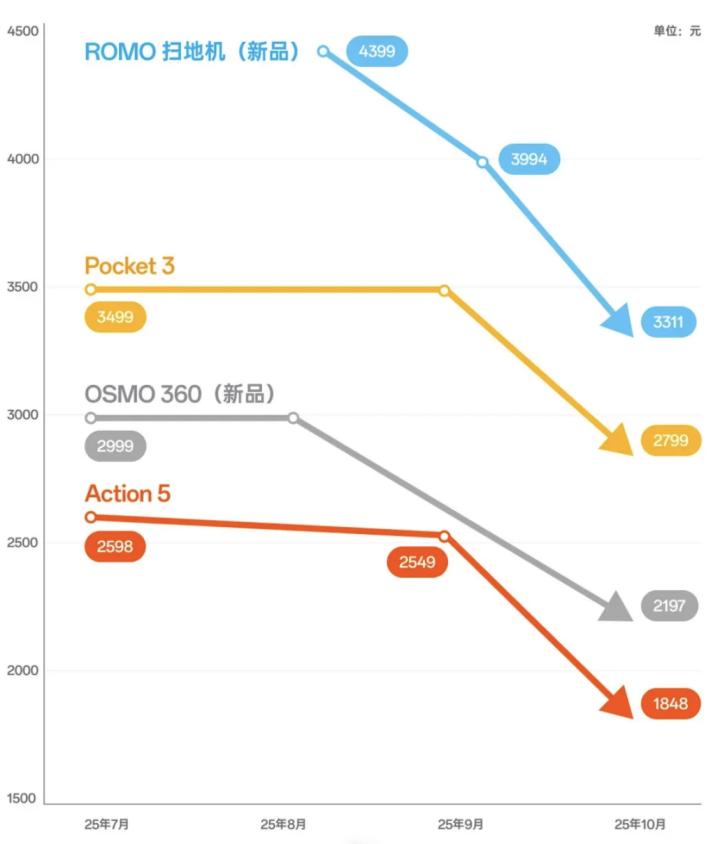
Core Insights - The article discusses the backlash faced by DJI after a sudden price drop of its popular product, the Pocket 3, leading to consumer dissatisfaction and complaints about pricing transparency [1][2][4][9] Group 1: Pricing Strategy and Consumer Reaction - DJI's Pocket 3 was originally priced at 3499 yuan but saw a price drop of 700 yuan shortly before the Double 11 shopping festival, causing frustration among consumers who had recently purchased the product at the higher price [2][4] - Many consumers reported confirming with customer service that there would be no price drop before making their purchases, only to be disappointed when the price was reduced shortly after [2][4] - Complaints related to DJI's price drop have surged, with nearly 1700 complaints registered on the Black Cat Complaints platform, indicating a significant consumer backlash [4] Group 2: Service Experience and Consumer Expectations - The disparity in service levels between online and offline channels has led to confusion and dissatisfaction among consumers, particularly regarding price protection policies [5][6] - Consumers have expressed frustration over the perceived double standards in DJI's pricing and refund policies, especially when purchasing through different channels [5][6] - The article highlights that as DJI transitions from a technology-driven company to a consumer brand, it faces systemic challenges in meeting rising consumer expectations for service and experience [9][10] Group 3: Competitive Landscape - The article notes that DJI is facing increased competition from emerging brands like Yingshi, which has adopted aggressive marketing strategies, including offering compensation to consumers affected by DJI's price drop [6][12] - Traditional smartphone manufacturers, such as Apple, Vivo, and OPPO, are also entering the imaging device market, leveraging their established service networks and consumer familiarity [12][14] - DJI's market share in the global smart imaging device sector is projected to decline from 19.1% in 2023 to 13.2% in 2024, reflecting a significant shift in the industry landscape [14][15] Group 4: Future Outlook - The article suggests that for companies like DJI, succeeding in the competitive landscape of smart imaging devices will require not only strong product offerings but also a focus on providing warm and responsive customer service [15]

“背刺”打工人 大疆也“无奈”?
Bei Jing Shang Bao· 2025-10-09 14:54
Core Viewpoint - DJI is facing backlash from consumers due to significant price reductions on its products shortly after purchase, leading to discussions about consumer rights and company practices [2][5][10]. Group 1: Price Reductions and Consumer Reactions - During the National Day holiday, DJI announced price cuts for several products, including the Pocket 3, which saw a reduction of 700 yuan for the standard version and 900 yuan for the all-in-one kit [2]. - Consumers who purchased products shortly before the price drop expressed feelings of being "betrayed," leading to discussions on social media about returning products and seeking compensation [2][5]. - The Pocket 3, despite its price cut, remains popular, indicating strong demand even after two years since its release, with sales reaching over 10 million units and revenue nearing 20 billion yuan [5][11]. Group 2: Competitive Landscape - DJI is under pressure from competitors, particularly from companies like Insta360, which has a dominant market share in the panoramic camera segment and is now entering the drone market [8][9]. - Other smartphone manufacturers, such as OPPO and vivo, are also developing products that compete directly with DJI's offerings, potentially impacting DJI's market share [9]. - The competitive dynamics are shifting, with traditional brands facing challenges from new entrants that leverage their supply chain advantages [9][12]. Group 3: Market Growth and Concentration - The handheld smart imaging device market is projected to grow at a compound annual growth rate of 12.9%, reaching a market size of 59.2 billion yuan by 2027 [11]. - The market is highly concentrated, with the top three companies expected to hold 78.9% of the market share by 2024, indicating intense competition among leading players [12]. - DJI's market share has declined from 19.1% to 13.2%, highlighting the increasing pressure from competitors and the need for strategic pricing and promotional activities [12][13].
“背刺”打工人,大疆也“无奈”?
Bei Jing Shang Bao· 2025-10-09 14:37
Core Viewpoint - DJI's recent price cuts on its products, particularly the OSMO Pocket 3, have led to significant consumer backlash, with many users feeling "betrayed" after purchasing at full price shortly before the discounts were announced [2][6]. Group 1: Price Cuts and Consumer Reaction - DJI announced substantial price reductions for several products ahead of the "Double 11" shopping festival, including a 700 yuan cut for the Pocket 3 and up to 1478 yuan for the Mini 4 PRO drone [1][2]. - Consumers who purchased products shortly before the price cuts have expressed dissatisfaction, leading to discussions about potential returns and consumer rights [2][5]. - The price cuts are seen as a necessary strategy for DJI to remain competitive in a rapidly changing market, despite the risk of alienating existing customers [2][10]. Group 2: Market Dynamics and Competition - The handheld smart imaging device market is projected to grow significantly, with a market size of 364.7 billion yuan in 2023 and an expected annual growth rate of 12.9% through 2027 [11][12]. - DJI faces increasing competition from both traditional rivals like Insta360, which has a dominant market share in the panoramic camera segment, and new entrants from smartphone manufacturers like OPPO and Xiaomi [7][9]. - The competitive landscape is shifting, with DJI's market share declining from 19.1% to 13.2% as competitors gain ground, highlighting the need for strategic pricing and promotional activities [12][13]. Group 3: Strategic Implications - DJI's price cuts may be a tactical response to both consumer demand and competitive pressures, as the company prepares for the potential launch of new products like the Pocket 4 [6][10]. - The company must balance short-term sales strategies with long-term brand loyalty and market positioning, as the industry undergoes significant changes in technology and consumer preferences [12][13]. - Effective communication and compensation strategies for consumers who feel "betrayed" by the price cuts are essential to mitigate negative sentiment and maintain brand reputation [5][6].