
消费级市场

Search documents
大疆「摔跤」,影石「拱火」
3 6 Ke· 2025-10-15 10:43
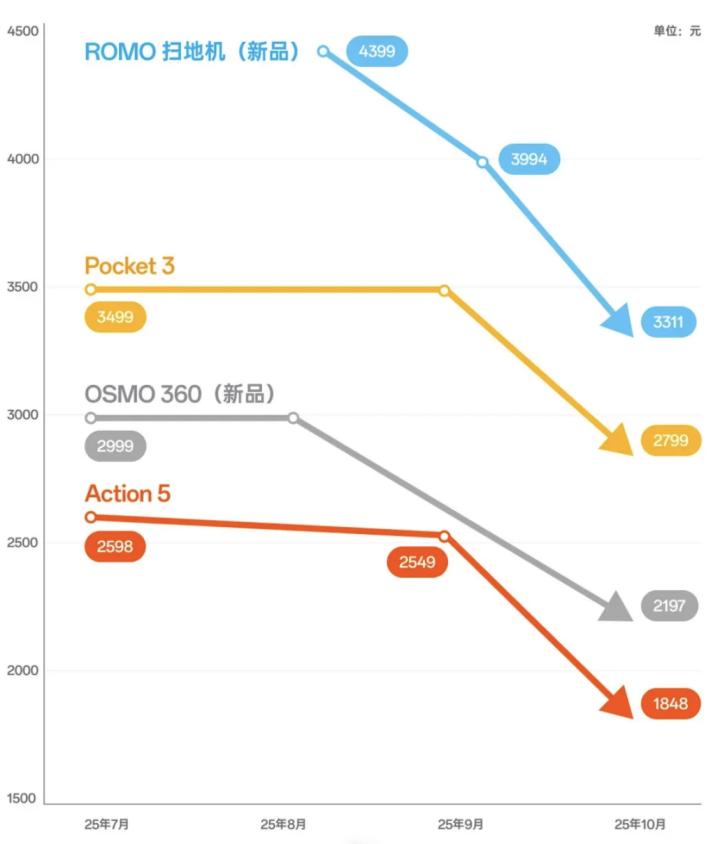
Core Insights - The article discusses the backlash faced by DJI after a sudden price drop of its popular product, the Pocket 3, leading to consumer dissatisfaction and complaints about pricing transparency [1][2][4][9] Group 1: Pricing Strategy and Consumer Reaction - DJI's Pocket 3 was originally priced at 3499 yuan but saw a price drop of 700 yuan shortly before the Double 11 shopping festival, causing frustration among consumers who had recently purchased the product at the higher price [2][4] - Many consumers reported confirming with customer service that there would be no price drop before making their purchases, only to be disappointed when the price was reduced shortly after [2][4] - Complaints related to DJI's price drop have surged, with nearly 1700 complaints registered on the Black Cat Complaints platform, indicating a significant consumer backlash [4] Group 2: Service Experience and Consumer Expectations - The disparity in service levels between online and offline channels has led to confusion and dissatisfaction among consumers, particularly regarding price protection policies [5][6] - Consumers have expressed frustration over the perceived double standards in DJI's pricing and refund policies, especially when purchasing through different channels [5][6] - The article highlights that as DJI transitions from a technology-driven company to a consumer brand, it faces systemic challenges in meeting rising consumer expectations for service and experience [9][10] Group 3: Competitive Landscape - The article notes that DJI is facing increased competition from emerging brands like Yingshi, which has adopted aggressive marketing strategies, including offering compensation to consumers affected by DJI's price drop [6][12] - Traditional smartphone manufacturers, such as Apple, Vivo, and OPPO, are also entering the imaging device market, leveraging their established service networks and consumer familiarity [12][14] - DJI's market share in the global smart imaging device sector is projected to decline from 19.1% in 2023 to 13.2% in 2024, reflecting a significant shift in the industry landscape [14][15] Group 4: Future Outlook - The article suggests that for companies like DJI, succeeding in the competitive landscape of smart imaging devices will require not only strong product offerings but also a focus on providing warm and responsive customer service [15]

中国太阳能风扇帽走俏海外带给我们哪些启示?
Jing Ji Ri Bao· 2025-09-03 06:07
Core Insights - The viral success of a solar fan hat, priced at nearly $40, highlights a significant opportunity in the consumer market for renewable energy products, contrasting with traditional perceptions of the high-end renewable energy industry [1] - The solar fan hat meets consumer needs for portable and effective cooling solutions during hot summer months, showcasing the potential for integrating photovoltaic technology into everyday items [1] - The advancement and cost reduction of solar technology have made it feasible to incorporate renewable energy into consumer products, indicating a growing willingness among consumers to pay for practical and convenient renewable energy solutions [1] Industry Trends - Historically, renewable energy companies have focused on large-scale projects, neglecting the vast consumer market, which presents a potential market size in the trillions [2] - The current low penetration rate of renewable energy products in the consumer market signifies substantial growth opportunities, with potential products including solar-powered umbrellas, portable solar chargers, and solar-powered home devices [2] - Consumer products in the renewable energy sector can enhance public awareness and acceptance of renewable technologies, fostering habits that support the industry's growth and brand evolution [3] Strategic Recommendations - To capitalize on the consumer market, renewable energy companies must adopt a mindset shift towards integrating renewable energy with consumer goods, prioritizing user experience and product design [3] - Effective branding should convey technological innovation, environmental consciousness, and improved quality of life, moving away from the traditional bulky image of renewable products [3] - Companies should leverage e-commerce platforms to enhance product accessibility and reach consumers quickly, adapting to the current market environment [3] Future Outlook - The integration of renewable energy products into daily life could significantly expand the renewable energy industry's scope and promote a broader awareness of green consumption, aiding in achieving carbon neutrality goals [4]

中经评论:中国太阳能风扇帽走俏海外的启示
Jing Ji Ri Bao· 2025-08-21 00:07
Group 1 - The core idea of the article highlights the unexpected success of a solar-powered fan hat, which has become a phenomenon in the overseas market, showcasing the potential of integrating renewable energy technology into consumer products [1][4] - The solar fan hat addresses consumer pain points by providing a portable and efficient cooling solution for outdoor activities, leveraging solar energy to power the fan [1][3] - The success of the product is attributed to advancements in renewable energy technology, including the miniaturization and cost reduction of photovoltaic components, allowing for innovative applications in everyday items [1][2] Group 2 - The renewable energy sector has traditionally focused on large-scale projects, neglecting the vast potential of the consumer market, which could reach a trillion-yuan scale by integrating renewable technologies into consumer electronics and outdoor products [2][3] - The low penetration rate of renewable energy products in the consumer market indicates significant growth opportunities, with potential products including solar-powered umbrellas, portable solar chargers, and solar-powered household items [2][3] - Consumer-grade products play a strategic role in promoting awareness and acceptance of renewable energy technologies among the general public, fostering habits that could lead to market expansion and brand upgrades in the industry [3][4] Group 3 - To successfully navigate the consumer market, renewable energy companies need to adopt a mindset shift towards integrating renewable energy with consumer goods, focusing on user experience and appealing product design [3][4] - Effective brand building should convey values of technology, environmental consciousness, and enhanced quality of life, moving away from the traditional bulky image of renewable energy products [3] - Companies should leverage e-commerce platforms for broader reach and convenience, ensuring that products quickly connect with consumers [3]
80元租“机械腿”火遍景区,外骨骼机器人开启掘金时代?
3 6 Ke· 2025-05-12 01:28
Core Insights - The popularity of exoskeleton robots has surged in the consumer market, particularly in tourist attractions, where they are being used as hiking aids, attracting significant attention from visitors [1][5] - The rental prices for exoskeleton robots have become affordable, with rates around 80 to 200 yuan for a few hours, making them accessible to a broader audience [2][3] - The technology behind exoskeleton robots is evolving, leading to reduced costs and increased availability, which is expected to drive further adoption in the consumer market [4][6] Industry Trends - The exoskeleton robot market is experiencing rapid growth, with projections indicating a rise in global market value from $392 million in 2020 to $6.8 billion by 2030, reflecting a compound annual growth rate of 33% [7] - Companies are shifting their focus towards consumer-grade exoskeleton robots, targeting outdoor enthusiasts, the elderly, and individuals recovering from injuries [6][7] - Investment interest in the exoskeleton sector is increasing, with several companies securing significant funding to enhance their product offerings and market reach [5][6] Product Development - Exoskeleton robots are being designed to be lightweight and user-friendly, with current models weighing around 1 kilogram and providing support for activities like hiking [5][9] - Despite advancements, there are concerns regarding the comfort, portability, and safety of exoskeleton robots, indicating that further improvements are necessary for widespread adoption [9][10] - The lack of industry standards for safety and reliability poses challenges for the market, necessitating rigorous evaluations to ensure consumer trust [9][10]
