
天山号班列

Search documents
“天山号”班列一线观察:驰骋在亚欧大陆上的“新疆名片”
2 1 Shi Ji Jing Ji Bao Dao· 2025-09-12 04:03
Core Insights - The "Tianshan" train, launched in November 2023, has become a significant symbol of trade between Asia and Europe, facilitating efficient logistics and trade in the region [1][11] - The Urumqi International Land Port Area has transformed from a simple transit point to a comprehensive logistics hub, enhancing trade connections with 19 countries and 26 cities [2][9] Group 1: Trade Expansion - The trade volume of the Urumqi Land Port Area has significantly increased, with the annual trade amount rising from 14 million yuan in 2018 to over 1 billion yuan in 2022, and plans to reach 1.5 billion yuan quarterly for copper imports by 2025 [2] - The "Tianshan" train has operated over 1,146 trips, generating a trade value of approximately 25.703 billion yuan, with a regular schedule of two trips per day [1][2] Group 2: Efficiency Improvements - The logistics process has been revolutionized, reducing the booking time from three days to just five minutes through a new digital platform, enhancing operational efficiency [7] - Customs clearance time has been cut down to six hours, showcasing the effectiveness of the "Railway Fast Pass + Smart Port" model [7] Group 3: Industrial Development - The Urumqi International Land Port Area is shifting from a "transit economy" to a "local production economy," with local industries, such as automotive dismantling and renewable energy assembly, establishing operations in the region [8] - The export of local products like tomato paste is contributing to farmers' income, while the planned import of electrolytic copper aims to support the domestic renewable energy supply chain [8] Group 4: Strategic Positioning - The Urumqi Land Port Area is positioned as a key hub for trade, evolving from a "border area" to a "bridgehead" for opening up to Central Asia, with ongoing efforts to enhance cooperation and efficiency among customs, railways, and government [9][11] - The area is actively seeking to import agricultural products and feed from Central Asia to address domestic shortages, indicating a strategic approach to resource allocation and risk management [9]

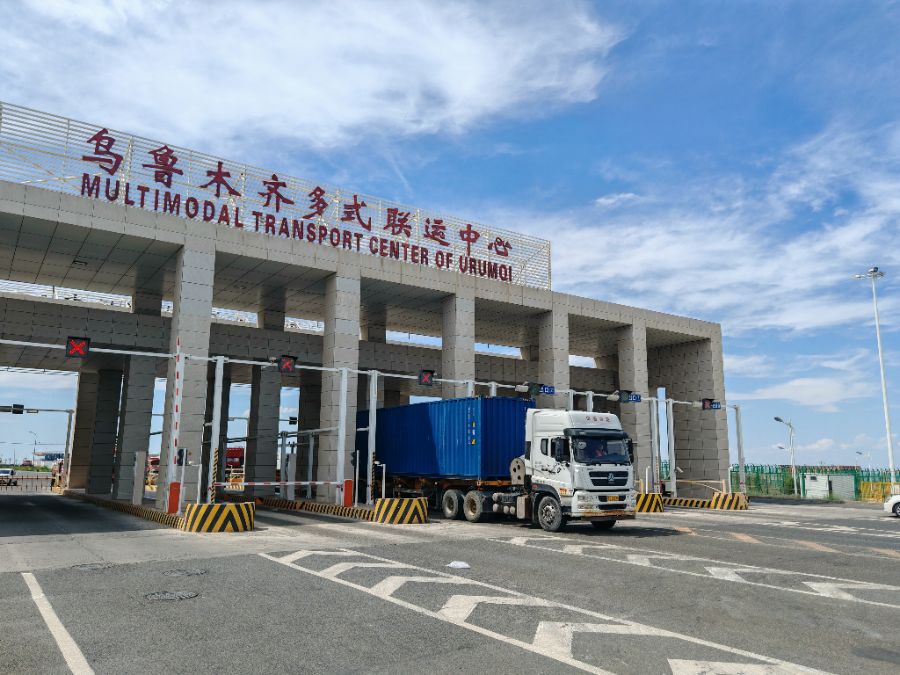
天山号”班列一线观察:驰骋在亚欧大陆上的“新疆名片
2 1 Shi Ji Jing Ji Bao Dao· 2025-09-12 03:55
Core Insights - The "Tianshan" train, launched in November 2023, has become a significant logistics brand for Xinjiang, facilitating efficient trade between Asia and Europe, with over 1,146 trips and a trade value of approximately 25.703 billion yuan by August 2025 [1][2] - The Urumqi International Land Port Area has transformed from a simple trade route to a comprehensive logistics hub, connecting with 19 countries and 26 cities, significantly expanding its trade network [2][4] - The introduction of the new smart port service platform has drastically improved operational efficiency, reducing the booking process from days to minutes and streamlining logistics management [3][4] Trade Expansion - The trade volume of the Urumqi Land Port Area has grown from 14 million yuan in 2018 to over 1 billion yuan in 2022, with plans to reach 150 million yuan quarterly for electrolytic copper imports by 2025 [2] - The area has successfully exported Xinjiang tomato sauce to the Middle East and imported high-quality oil products from Central Asia, expanding its trade radius and partnerships [2][4] Industrial Development - The Urumqi International Land Port Area is shifting from being a transit point for goods to fostering local production, with initiatives like establishing an automotive dismantling factory and attracting renewable energy companies [4][5] - The import of electrolytic copper is aimed at supporting the domestic new energy industry, with a single shipment valued at over 100 million yuan [4] Strategic Positioning - The Urumqi International Land Port Area is evolving from a "transit station" to a "bridgehead" for trade, enhancing its role in the Belt and Road Initiative and promoting open cooperation [5] - The local government and customs are actively supporting trade efficiency, reflecting a shift in perception of Xinjiang from a border region to a central hub for trade with Central Asia [5]