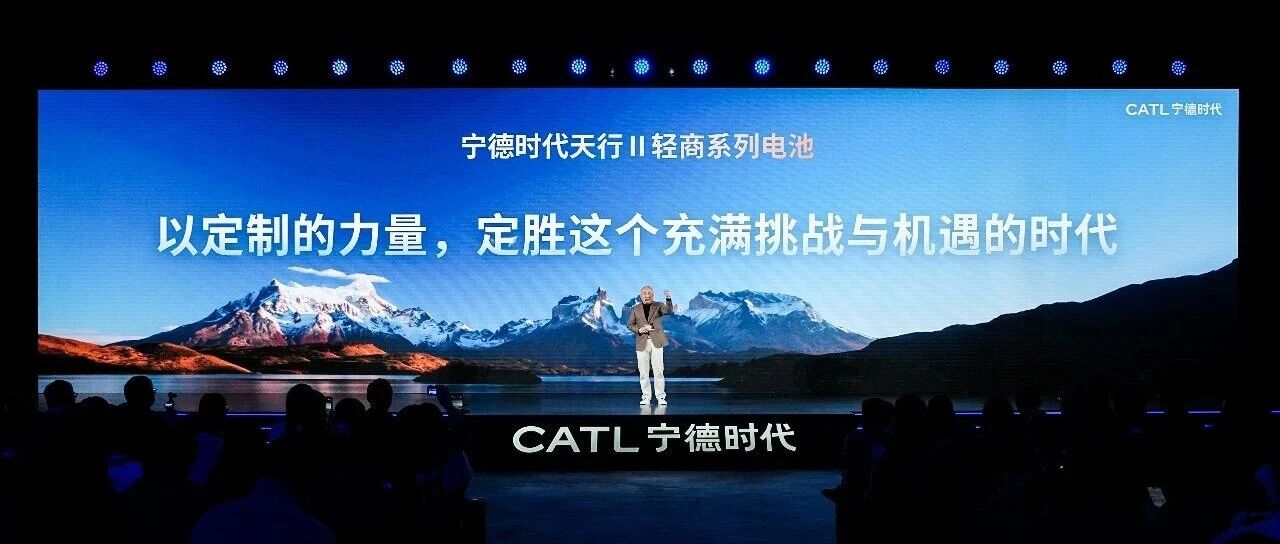
天行II轻商低温版钠电池

Search documents
“目标是大量推广钠电池!”宁德时代CTO释放重要信号
第一财经· 2026-01-28 00:50
Core Viewpoint - Sodium batteries are emerging as a significant alternative to lithium batteries, marking a pivotal point in energy restructuring, with a focus on large-scale promotion of sodium batteries [3]. Group 1: Industry Developments - CATL has launched the Tianxing II light commercial vehicle series, featuring the first mass-produced sodium battery in the light commercial sector [3]. - The sodium battery sector index (BK0988) surged by 3.32% on the second trading day after CATL's announcement, reaching a new high since May 2021, with a cumulative increase of 62% since the launch of the sodium battery brand [3][4]. Group 2: Company Progress - Several listed companies, including Lianying Laser and Huayang Co., have reported advancements in their sodium battery businesses, with collaborations aimed at industrializing key components [4]. - CATL's CTO highlighted the advantages of sodium batteries, such as easier resource acquisition, better low-temperature performance, and higher safety, while acknowledging challenges like industrial costs and energy density compared to lithium batteries [4]. Group 3: Future Outlook - CATL plans to achieve economic viability and energy density of sodium batteries comparable to lithium batteries within three years [5]. - The Tianxing II light commercial vehicle's sodium battery maintains over 92% energy retention at -20°C, outperforming lithium batteries, which typically retain around 80% [5]. - By 2026, CATL anticipates large-scale applications of sodium batteries across various sectors, including battery swapping, passenger vehicles, commercial vehicles, and energy storage [5]. - The sodium battery market is projected to exceed 100 GWh in shipments by 2030, with potential price reductions of over 30% compared to lithium iron phosphate batteries as supply chain capacities improve [6].


宁德时代钠电量产,新能源轻商“南强北弱”的终结者?
中国能源报· 2026-01-26 10:11
Core Viewpoint - The article highlights the significant milestone of mass production of sodium-ion batteries by CATL, marking a shift in the commercial electric vehicle market, particularly in northern China, where cold weather has previously hindered the adoption of electric vehicles [1][5][10]. Group 1: Sodium-Ion Battery Development - CATL has launched the Tianxing II light commercial vehicle with a sodium-ion battery that retains 92% usable capacity at -30°C, with a cycle life exceeding 10,000 times, and a cost reduction of 20%-30% compared to lithium iron phosphate batteries [1][9]. - The introduction of sodium-ion technology is seen as a breakthrough for the electric vehicle industry, particularly in cold climates, enabling stable operation in extreme conditions [6][10]. Group 2: Market Dynamics and Opportunities - In 2024, the sales of new energy light commercial vehicles are expected to exceed 600,000 units, with a penetration rate surpassing 30% for five consecutive months, although sales are heavily concentrated in southern regions like Guangdong [3][5]. - The northern market presents a significant opportunity for growth, as it houses essential logistics networks and agricultural production, with the potential for millions of new energy light commercial vehicles to replace traditional diesel models [5][12]. Group 3: Economic and Operational Advantages - The cost structure of sodium-ion batteries is advantageous due to the abundant availability of sodium compared to lithium, leading to potential savings of several thousand yuan in purchase costs for commercial vehicles [12][15]. - The operational reliability of sodium-ion batteries in winter conditions ensures higher utilization rates and reduced operational losses, further enhancing the economic viability of electric commercial vehicles [12][15]. Group 4: Future Projections - By 2026, the new energy light commercial vehicle market is projected to exceed 900,000 units, with sodium-ion battery production expected to reach 100 GWh by 2028, indicating a significant industry transition [15].