孔雀蓝釉琉璃

Search documents
文化中国行丨每差50℃就得变配方 传承人用26年烧制出孔雀蓝釉
Yang Shi Xin Wen· 2025-05-25 10:43
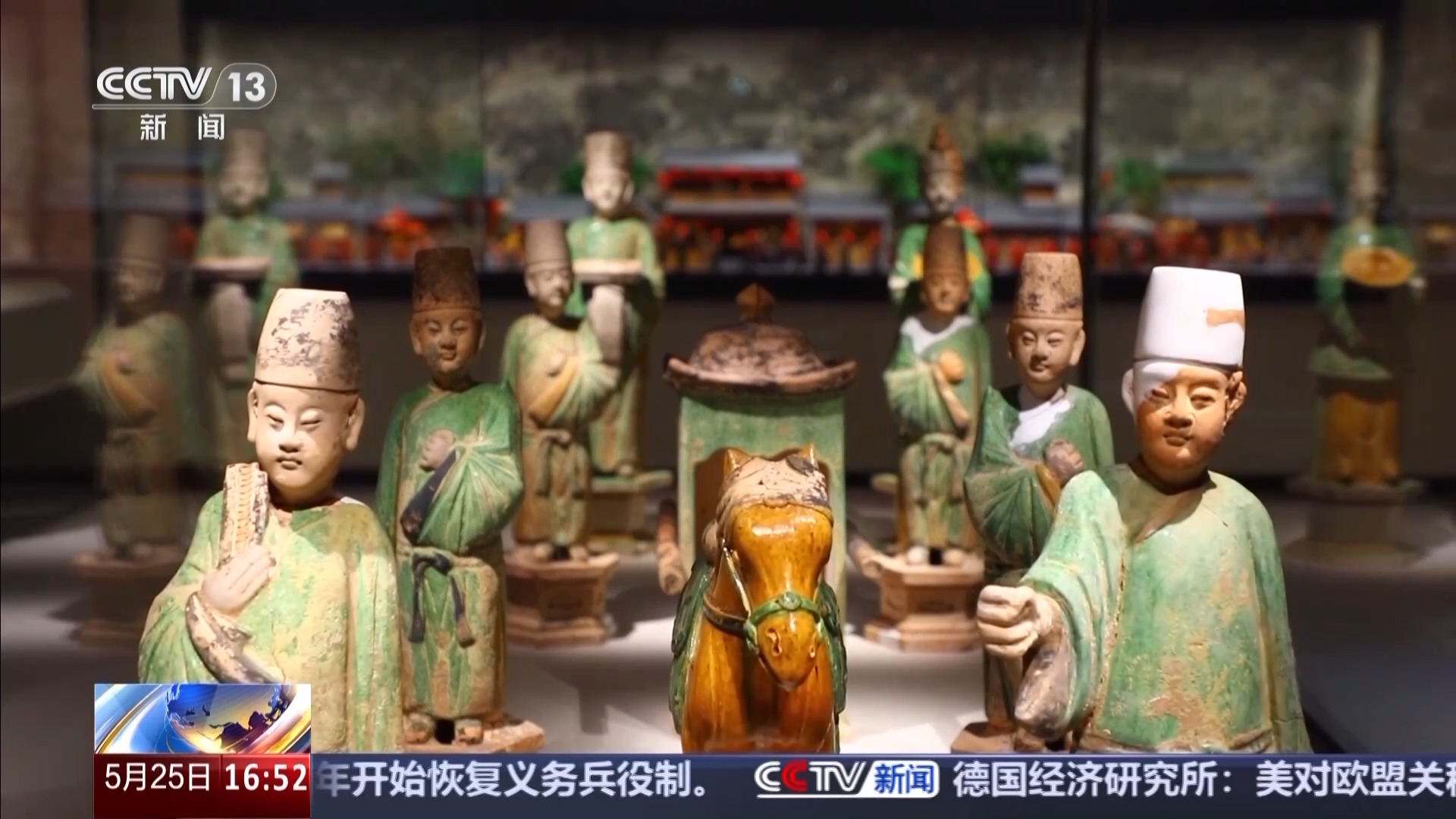
Core Viewpoint - The article highlights the rich history and innovative evolution of glazed pottery (liuli) in Shanxi, China, emphasizing its cultural significance and the efforts to preserve and modernize this traditional craft [1][5][9]. Group 1: Historical Significance - Liuli has been a decorative material used in ancient palaces and pagodas, with Shanxi being the main production area in China [1]. - The technique of liuli production has a long history, being recognized as a national intangible cultural heritage in 2008 [1]. - The production of liuli in Shanxi began during the Northern Wei dynasty and reached its peak during the Ming and Qing dynasties [5]. Group 2: Technical Aspects - The liuli-making process involves multiple stages, including material preparation, shaping, bisque firing, glazing, and final firing, resulting in vibrant colors [5]. - Common glaze colors include yellow, green, blue, purple, black, and white, with the production method requiring a secondary firing process [5]. Group 3: Innovation and Preservation - The technique has been passed down through generations, although the production of peacock blue glaze was lost over time [7]. - In the 1980s, a craftsman named Ge Yuansheng began efforts to restore the peacock blue glaze, successfully achieving this in 2007 after 26 years of experimentation [7][9]. - The application of liuli has expanded beyond traditional architecture to include cultural and creative products, integrating modern design to attract younger generations [9][11].