
宝瓶座η流星雨

Search documents
星空有约丨猎户座流星雨21日迎来极大,观测条件极佳
Xin Hua She· 2025-10-18 07:40
Core Viewpoint - The Orionids meteor shower, associated with Halley's Comet, is expected to peak on October 21, 2023, providing excellent viewing conditions due to the absence of moonlight [1][3]. Group 1: Meteor Shower Characteristics - The Orionids meteor shower is a medium-rate meteor shower observable in both hemispheres, with a zenithal hourly rate (ZHR) of about 20 during its peak [3]. - The radiant point of the Orionids is located between the constellations Orion and Gemini, with an active period from October 2 to early November, peaking around October 21 [5]. - The meteors are characterized by their high speed, brightness, and distinct trails, with occasional bright fireballs [5][7]. Group 2: Observation Conditions - The peak of the Orionids is expected around 21:00 on October 21, with ideal conditions allowing for approximately 20 meteors per hour [5]. - The absence of moonlight on the night of October 21 enhances the viewing experience, making it an optimal time for observation [7]. - Observers are advised to find locations away from city light pollution, such as rural areas or high altitudes, and to use the naked eye for the best experience [7][9].

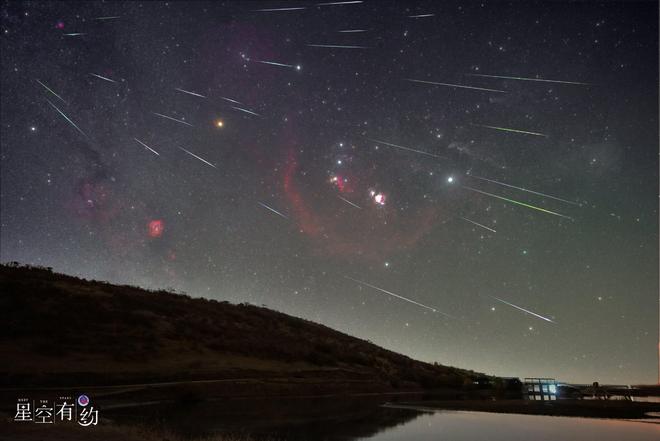
星空有约|浪漫来袭!宝瓶座η流星雨6日迎来极大
Xin Hua She· 2025-05-04 15:52
Core Viewpoint - The Eta Aquariid meteor shower will reach its peak on May 6, providing an opportunity for enthusiasts to observe this celestial event [1][2]. Group 1: Meteor Shower Characteristics - The Eta Aquariid meteor shower is named after its radiant point near the star Eta Aquarii and occurs annually between April 19 and May 28 [1]. - The parent body of the Eta Aquariid meteor shower is the famous Halley's Comet, which also gives rise to the Orionid meteor shower later in the year [1]. - The meteor shower is classified as a medium-rate meteor shower, with a zenithal hourly rate (ZHR) of approximately 50, meaning that seeing three to five meteors per hour is considered good [1]. Group 2: Observation Conditions - For the Eta Aquariid meteor shower, the best observation time in the Northern Hemisphere is between 2:00 AM and 3:30 AM, as the radiant point rises around 2:00 AM [2]. - Despite the moderate meteor rate, the shower is noted for its strong visual appeal, with a higher likelihood of seeing meteors with long tails [2]. - Ideal observation conditions include areas with wide visibility, minimal obstructions, and low light pollution, and observers should not focus solely on the radiant point as meteors can appear in any part of the sky [2].