
山茶油玉米肽

Search documents
常山油茶企业深耕市场快发展
Xin Lang Cai Jing· 2026-01-31 18:30
Core Insights - Zhejiang Changfa Grain and Oil Food Co., Ltd. is experiencing a significant increase in demand for its customized organic camellia oil, with current orders extending to mid-next month [1] - The company has invested approximately 10% of its annual sales into technology upgrades and product research, establishing partnerships with universities for innovation [2] - A new digital pressing production line, costing over 8 million yuan, is set to enhance quality control and traceability of the camellia oil production process [3] Company Overview - Established in 1993, Changfa Grain and Oil is a leading enterprise in the industry, with over 80,000 acres of oil tea bases, including more than 5,000 acres certified organic [1] - The company has an annual production capacity of 3,000 tons of camellia oil, with sales covering major cities in China and exports to international markets like Japan [1] Technological Advancements - The company allocates around 10% of its sales revenue annually for technological improvements and product development [2] - Collaborations with Zhejiang Gongshang University and Zhejiang University have been established to enhance research and development efforts [2] - The introduction of AI technology in the new production line will allow for the selection of high-quality tea seeds and improve the oil's active ingredient content [3] Market Strategy - The company is diversifying its marketing channels by integrating e-commerce, group purchasing, and traditional retail to better meet market demands [3] - Special products such as functional edible oils and cosmetic-grade camellia oil are gaining popularity, especially during festive seasons [2] Industry Outlook - The total output value of the oil tea industry in Changshan County is projected to reach 2.1 billion yuan by 2025, benefiting 90,000 local farmers [3] - Plans are in place to establish high-yield demonstration forests and promote low-yield forest transformation to enhance the overall quality and efficiency of the industry [3]
年产油茶籽9750吨 浙江常山一滴好油榨出全产业链
Xin Lang Cai Jing· 2026-01-10 12:18
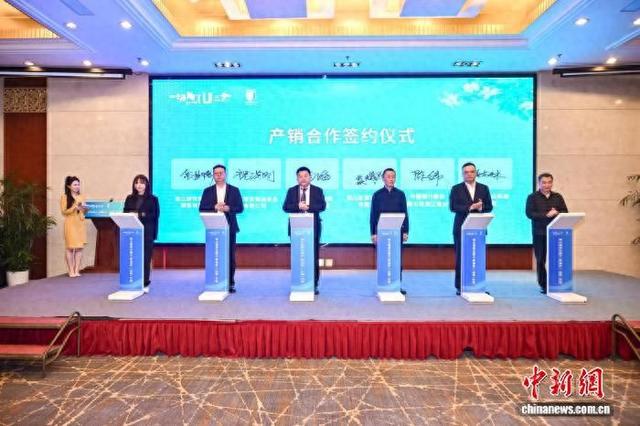
Core Insights - The event "Changyoubao" and "Shanhai" action was held in Hangzhou, focusing on the promotion of Changshan's tea oil industry and its integration into health and wellness sectors [1][3] - Changshan County aims to produce 9,750 tons of tea seeds and over 2,400 tons of tea seed oil by 2025, highlighting its commitment to sustainable and ecological farming practices [1][3] Industry Overview - Changshan County, located in the southwestern part of Zhejiang Province, has a forest coverage rate of 63.2% and is recognized as a core production area for tea oil in Zhejiang [1] - The tea oil cultivation history in Changshan spans over a thousand years, with a current planting area of 300,000 acres and an industry value exceeding 2.1 billion yuan [1] Product Development - Collaborations with research institutions like Zhejiang University are underway to explore the health benefits of Changshan tea oil, leading to the development of new products such as tea flower wine and health supplements [3] - The local government is promoting a "tea oil+" business model, integrating tourism and cultural initiatives, including the establishment of a national tea oil park and the production of themed short dramas [3] Market Expansion - To enhance sales channels, partnerships were formed between Changshan Geological Park and four institutions, along with framework agreements signed with three local tea oil companies [3][4] - The event featured culinary demonstrations using Changshan tea oil, showcasing its versatility and quality, which received positive feedback from attendees [3]

国家储备林建设促进生态共富的浙江经验
Zhong Guo Huan Jing Bao· 2025-06-18 03:05
Core Viewpoint - The construction of national reserve forests in Zhejiang embodies the "Two Mountains" theory, promoting ecological civilization and sustainable development through innovative practices and resource optimization [1][8]. Group 1: Ecological Capital Marketization - The establishment of a market-oriented mechanism for ecological capital aims to unlock the value potential of forestry resources through clear property rights, market transaction systems, and financial innovation [2]. - Zhejiang's "Three Rights Separation" reform addresses the inefficiencies of fragmented collective forests, enabling large-scale integration and efficient utilization of forest resources [2]. - Innovative financial products like "Lin Yi Dai" leverage ecological compensation rights to secure loans, transforming collective forest rights into capital [3]. Group 2: Ecological Industry Collaboration - The core drivers of ecological industry collaboration include resource optimization, technological innovation, and industry integration, leading to high-quality development in forestry [4]. - The promotion of "one acre of mountain, ten thousand yuan" model in the under-forest economy opens new avenues for income generation through diverse agricultural activities [4]. - Collaboration with academic institutions has led to the development of value-added products, significantly increasing the overall industry output [4]. Group 3: Inclusive Ecological Benefits - A multi-entity revenue distribution framework is essential for internalizing the positive externalities of ecological protection, enhancing the economic incentives for conservation [6]. - The concentration of land leasing and the establishment of standard forestry land models ensure stable income for farmers, reinforcing both ecological protection and livelihood security [7]. - The introduction of shareholding cooperative models in forestry has resulted in significant income increases for farmers, with some regions reporting over 50% of farmers' income derived from forestry [7]. Group 4: Three-Dimensional Collaborative Development - The project emphasizes the dialectical unity of ecological value and economic efficiency, ensuring the transformation of forest resources into development capital [8]. - Institutional innovation through the "Three Rights Separation" framework provides systematic solutions for national forestry reform [8]. - The dual empowerment of strategic reserves and livelihood improvement addresses both national timber security needs and rural income enhancement [8].