
生态共富

Search documents
多彩贵州的生态共富路
Xin Hua She· 2026-01-09 04:08
Core Insights - The article highlights the successful transformation of ecological advantages into development momentum in Guizhou, evidenced by the recognition of six new national-level ecological civilization demonstration zones by the end of 2025 [1][10] - Guizhou's ecological civilization construction has evolved beyond mere environmental protection to a system that drives high-quality development and benefits millions of people [2] Economic Performance - During the 14th Five-Year Plan period, Guizhou's ecological industry added value grew at an average annual rate of 12.3%, with the green economy accounting for 45% of the total economy, an increase of 8 percentage points from the end of the 13th Five-Year Plan [1] - Ecotourism revenue exceeded 500 billion yuan, creating over 1.2 million jobs [1] - Clean energy installed capacity reached 52%, and energy consumption per unit of GDP decreased by 18% [1] Innovative Approaches - Six distinct paths for ecological transformation were identified, showcasing innovative methodologies tailored to local resources [3][4][6] - The "judicial escort" model in Libo ensures ecological resource protection through legal frameworks, while cultural empowerment in Leishan integrates local ethnic culture with economic development [3][4] - Jianhe County's "judicial + carbon sink" mechanism allows for voluntary carbon credit purchases by those damaging the environment, creating a market-driven solution for ecological restoration [4] Systematic Evolution - The six new demonstration zones, along with previously recognized areas, form a coherent "Guizhou ecological civilization practice system," indicating a strategic evolution from isolated projects to a comprehensive ecological landscape [7] - The focus has shifted from merely preventing pollution to actively developing and converting ecological resources into economic assets [7] Replicable Wisdom - Guizhou's experience offers valuable governance insights for similar regions, emphasizing the importance of precise transformation and respect for local uniqueness [8] - Strong institutional design is crucial for activating market mechanisms, while shared benefits among communities ensure sustainable ecological development [8] Long-term Strategy - The article underscores the necessity of strategic determination and patience in ecological restoration and value conversion, highlighting Guizhou's consistent "big ecology" strategy from the 13th to the 14th Five-Year Plan [9] - The successful integration of natural, cultural, and institutional elements in Guizhou's development philosophy serves as a model for sustainable development globally [10]


雅安市宝兴县:绿水青山为底 探索从“生态守护”到“价值转化”之路
Si Chuan Ri Bao· 2025-11-26 21:48
Core Insights - The successful sale of 1009 tons of carbon credits in Baoxing County represents a significant step in transforming ecological resources into tangible economic benefits, marking the first carbon trading project in Sichuan Province [1][2] - Baoxing County has implemented a comprehensive development strategy that integrates ecological restoration, high-quality development, and the establishment of a modern ecological industry system, achieving notable progress in various sectors [1][2] Carbon Credit Development - Baoxing County has established a carbon credit development model based on its forest resources, including 36,000 acres of CCER afforestation carbon credits and 12,000 acres of "Panda Carbon Benefits," benefiting over 2,000 households with an estimated value of approximately 28 million yuan [2] - The county has been recognized for its ecological achievements, being awarded the title of "China's Forest Granary County" and establishing the first provincial carbon credit legal practice base in the country [2] Industrial Growth - The "Flying Economy" model in Baoxing County has led to the concentration of industrial projects in the Ya'an Economic and Technological Development Zone, resulting in a significant increase in industrial output value, projected to reach 11 billion yuan in 2024, a 39.4% year-on-year growth [6] - The Flying Industrial Park has achieved comprehensive coverage of material-grade products and has attracted multiple downstream processing enterprises, forming a collaborative industrial cluster [4][6] Urban Development - Baoxing County has initiated a systematic project to upgrade public services and infrastructure, including the construction of a new middle school and various housing and fitness facilities, enhancing the living standards in the region [8] - The county's GDP is projected to grow by approximately 6.8% in 2024, with local public budget revenue expected to increase by 8.25%, reflecting the positive impact of carbon credit trading and industrial development [9]
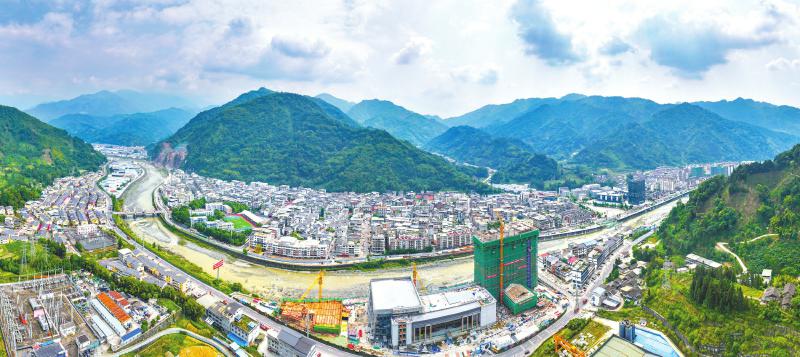
浙江临安:“大树王国”书写生态共富答卷
Zhong Guo Qing Nian Bao· 2025-09-22 22:57
Core Points - The article highlights the ecological and economic development achievements of the Tianmu Mountain National Nature Reserve, emphasizing its role as a biodiversity hotspot and a model for harmonious coexistence between nature and human activities [1][2][3]. Group 1: Ecological Achievements - The Tianmu Mountain Nature Reserve has seen a significant increase in forest coverage, reaching 97.56%, up by 10.6% compared to 20 years ago [2]. - The number of wild animal species has risen from 4,716 to 7,173, marking a growth of 52%, while higher plant species increased from 2,160 to 2,668, a rise of 23.5% [2]. - Five species of nationally protected wildlife have been discovered in the reserve, including the eagle and Ba Mountain yew [2]. Group 2: Legislative and Institutional Support - The implementation of the "Zhejiang Tianmu Mountain National Nature Reserve Regulations" on October 1, 2024, represents the first legislation for a national nature reserve in Zhejiang Province, establishing a comprehensive protection mechanism [2]. - The new regulations promote multi-departmental collaboration in ecological protection, moving away from a single management approach [2]. Group 3: Technological Integration - The reserve has adopted advanced technology for ecological monitoring, including ecological positioning stations and video surveillance platforms, enhancing the precision of conservation efforts [3]. - The "one tree, two managers" mechanism has been introduced, pairing ancient trees with research and protection managers to integrate scientific research with daily care [3]. Group 4: Economic Development and Community Engagement - Local communities are encouraged to develop tourism and eco-friendly agricultural practices, with initiatives like the "Million Project" improving rural environments and attracting visitors [4][5]. - Villagers are establishing businesses such as homestays and cafes, leveraging the area's natural beauty and proximity to the reserve to boost local economies [5]. - The integration of agriculture and tourism is exemplified by innovative farming practices that promote ecological sustainability while generating income [4][5].
践行“两山”理念 促进城乡共富
Zhong Guo Qing Nian Bao· 2025-08-23 23:11
Core Viewpoint - The "Two Mountains" concept, which emphasizes the balance between ecological preservation and economic development, has evolved over the past 20 years, leading to significant changes in ecological civilization construction in China [1][2]. Understanding the Essence of the "Two Mountains" Concept - The "Two Mountains" concept is a theoretical system that critiques traditional economic growth views and narrow environmental protection perspectives, advocating for a balance between ecological and economic systems [2]. - It promotes an ecological priority approach, emphasizing that ecological systems are fundamental to human survival and development, and must not exceed ecological thresholds [2]. - The concept also supports green development, advocating for a transition to a low-carbon economy and the realization of ecological product value [2]. Practical Approaches to Implementing the "Two Mountains" Concept - The practical approach includes prioritizing ecological protection and promoting green development, emphasizing that economic systems are subsystems of ecological systems [3]. - It encourages a comprehensive governance framework for ecological protection, integrating various ecosystems and promoting a green, low-carbon economic transformation [4]. - The concept of ecological economic transformation involves converting ecological advantages into economic benefits, supported by fiscal policies like ecological compensation [5]. Youth Participation in Practicing the "Two Mountains" Concept - The youth are seen as key players in achieving the goals of a beautiful China by 2035, with their involvement crucial in ecological protection and green economic development [6]. - Young individuals are encouraged to engage in ecological governance and participate in decision-making processes related to ecological civilization [7]. - They are also urged to contribute to the development of green economy through innovation and entrepreneurship, leveraging market forces for sustainable growth [8].
“两山”转化涌 “金浪”乡村蝶变焕生机————四川乐山沐川县打造长江上游“生态共富标杆”美丽乡村先行区
Zhong Guo Huan Jing Bao· 2025-08-21 01:39
Core Viewpoint - The article emphasizes the successful implementation of the "Green Water and Green Mountain is Gold Mountain and Silver Mountain" concept in Muchuan County, Sichuan Province, showcasing its ecological achievements and sustainable development strategies [1][16]. Group 1: Strategic Development - Muchuan County has adopted a systematic approach to build a new pattern of green development, focusing on ecological priority and green growth [2]. - The county's strategic layout includes a core urban area, a sub-center, and four growth poles in bamboo, tea, konjac, and cultural tourism, promoting differentiated development [2]. - A three-year action plan for building a beautiful Muchuan has been established, integrating production, living, and ecological spaces while implementing pollution reduction measures [2][3]. Group 2: Ecological Protection Actions - The county has initiated a "Green Water" campaign, establishing a responsibility system for river and lake management, resulting in all monitored water sources meeting quality standards [6]. - Soil remediation efforts have increased the comprehensive utilization rate of industrial solid waste to 23.5%, with a target of over 50% by year-end [7]. - Biodiversity initiatives have led to the establishment of a breeding center for the endangered crested ibis, with successful reintroduction efforts [6][9]. Group 3: Industrial Development - The bamboo industry, leveraging 1.62 million acres of bamboo forest, has achieved a comprehensive output value of 6.8 billion yuan, with significant contributions from bamboo shoots and bamboo products [10]. - The tea industry, particularly the rare "Ziyuan" tea, has reached a comprehensive output value of 3.6 billion yuan, positioning Muchuan as a key player in China's tea market [11]. - The konjac industry has expanded to 30,000 acres, generating an annual export revenue of 22 million USD, showcasing the global reach of Muchuan's agricultural products [12]. Group 4: Rural Development and Community Well-being - The county has improved rural living conditions, achieving 100% compliance in drinking water quality and enhancing waste management across 129 villages [14]. - Employment opportunities have been created through the integration of tourism and agriculture, establishing a 15-minute employment circle for residents [15]. - Cultural initiatives have been developed to enhance community engagement and satisfaction, with a 96% public cultural satisfaction rate reported [15].
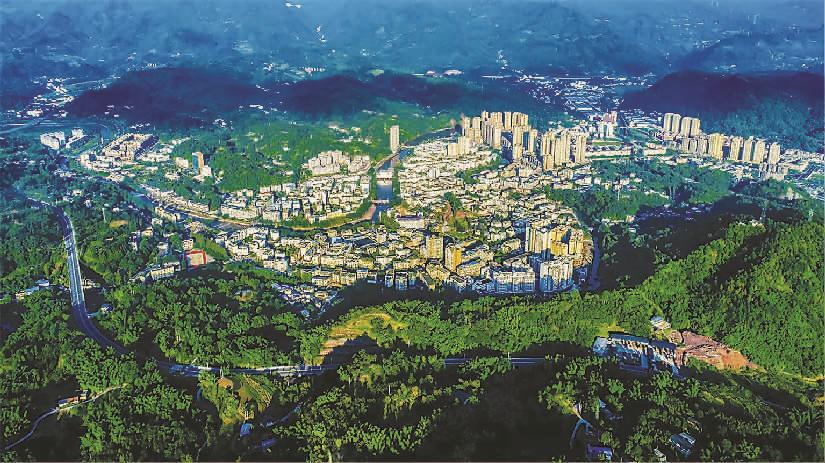
周世锋:统筹做大“蛋糕”与分好“蛋糕”
Jing Ji Ri Bao· 2025-08-13 00:20
Core Insights - Huzhou is implementing the concept of "Green Water and Green Mountains are as Valuable as Mountains of Gold and Silver" through innovative reforms and mechanisms to achieve ecological civilization and common prosperity [1][2] Group 1: Reform Innovations - Huzhou has been exploring reforms to facilitate the transformation of ecological resources, such as initiating pilot reforms for "Two Mountains" cooperatives in 2019, achieving full coverage of cooperatives by June 2023, and generating a cumulative income of 147 million yuan for village collectives [1] - The city is also pioneering property rights reforms for mountain ponds and reservoirs, with the first national ecological product value transformation project set to launch in March 2024 [1] Group 2: Business Model Innovations - Huzhou is transforming ecological resources into vibrant business models, creating new formats like "village coffee + leisure," "village coffee + music," and "camping + cultural tourism," which have attracted youth to rural areas [1] - The "Deep Blue Plan" in Anji set a national record with a single store selling 8,818 cups of coffee in one day, showcasing the potential of the coffee economy and digital nomadism in rural areas [1] Group 3: Benefit Distribution Mechanisms - Huzhou has innovated benefit distribution mechanisms to ensure equitable sharing of ecological wealth, such as the bamboo forest carbon sink trading platform in Anji, which allows villagers to earn stable returns from investments while ensuring collective benefits for the community [2] - The model emphasizes the return of resources and benefits to farmers, promoting a sustainable cycle of investment and profit-sharing that supports both individual and community welfare [2]
为大海美颜 为百姓创富
Jing Ji Ri Bao· 2025-08-11 22:05
Core Viewpoint - The "Blue Cycle" governance system in Taizhou, Zhejiang Province, is transforming marine waste into economic opportunities while enhancing environmental protection, showcasing a model of ecological co-prosperity [1][2]. Group 1: Blue Cycle Governance - The "Blue Cycle" initiative involves local fishermen collecting marine waste, such as plastic bottles and fishing nets, which are then processed and sold to downstream companies for the production of eco-friendly products [1]. - The project has established a complete value chain led by the government, driven by enterprises, and involving public participation, turning marine waste into valuable resources [1]. - In 2023, the "Blue Cycle" project won the United Nations' Earth Guardian Award, highlighting its status as a global benchmark for marine pollution control [2]. Group 2: Marine Resource Management - Zhejiang Province has implemented various actions to enhance marine governance, including a three-year coastal restoration initiative and the establishment of a special fund for ecological protection and restoration [3]. - The province's new regulations on marine plastic waste management represent a significant step towards institutionalizing the "Blue Cycle" model, providing a legal framework for coastal cities to combat marine pollution [3]. - The province has improved the proportion of good water quality in nearshore waters by an average of 18.6 percentage points compared to the previous five-year plan [3]. Group 3: Blue Carbon Resources - The coastal areas of Ningbo City are rich in blue carbon resources, with seaweed like Sargassum playing a crucial role in carbon absorption [4]. - A recent auction for blue carbon resulted in the sale of 2,340.1 tons at a price of 106 yuan per ton, with proceeds reinvested into seaweed cultivation and carbon sequestration research [4]. - The demand for blue carbon products is high, indicating a growing market for marine resource development that aligns with carbon neutrality goals [5]. Group 4: Economic and Ecological Benefits - The protection of marine ecosystems is proving to be economically beneficial, with increased income from sustainable marine resource management [5]. - The continuous exploration of innovative marine ecological governance models aims to enhance the quality of life for local communities while achieving dual benefits of ecological and economic improvement [5].
国家储备林建设促进生态共富的浙江经验
Zhong Guo Huan Jing Bao· 2025-06-18 03:05
Core Viewpoint - The construction of national reserve forests in Zhejiang embodies the "Two Mountains" theory, promoting ecological civilization and sustainable development through innovative practices and resource optimization [1][8]. Group 1: Ecological Capital Marketization - The establishment of a market-oriented mechanism for ecological capital aims to unlock the value potential of forestry resources through clear property rights, market transaction systems, and financial innovation [2]. - Zhejiang's "Three Rights Separation" reform addresses the inefficiencies of fragmented collective forests, enabling large-scale integration and efficient utilization of forest resources [2]. - Innovative financial products like "Lin Yi Dai" leverage ecological compensation rights to secure loans, transforming collective forest rights into capital [3]. Group 2: Ecological Industry Collaboration - The core drivers of ecological industry collaboration include resource optimization, technological innovation, and industry integration, leading to high-quality development in forestry [4]. - The promotion of "one acre of mountain, ten thousand yuan" model in the under-forest economy opens new avenues for income generation through diverse agricultural activities [4]. - Collaboration with academic institutions has led to the development of value-added products, significantly increasing the overall industry output [4]. Group 3: Inclusive Ecological Benefits - A multi-entity revenue distribution framework is essential for internalizing the positive externalities of ecological protection, enhancing the economic incentives for conservation [6]. - The concentration of land leasing and the establishment of standard forestry land models ensure stable income for farmers, reinforcing both ecological protection and livelihood security [7]. - The introduction of shareholding cooperative models in forestry has resulted in significant income increases for farmers, with some regions reporting over 50% of farmers' income derived from forestry [7]. Group 4: Three-Dimensional Collaborative Development - The project emphasizes the dialectical unity of ecological value and economic efficiency, ensuring the transformation of forest resources into development capital [8]. - Institutional innovation through the "Three Rights Separation" framework provides systematic solutions for national forestry reform [8]. - The dual empowerment of strategic reserves and livelihood improvement addresses both national timber security needs and rural income enhancement [8].
淳安渔业探路“陆基养鱼”新赛道
Hang Zhou Ri Bao· 2025-05-16 03:14
Core Insights - The article discusses the development of a 1,500-acre ecological "land-based fish farming" base in Chun'an, aiming to transform traditional aquaculture into a modern, ecological industry, targeting an annual output value of over 3 billion yuan [1] - Chun'an is facing a dual dilemma of low total output and slow growth in fishery production value, prompting the shift towards "land-based fish farming" as a solution to reconcile ecological protection and economic development [1] - The initiative is supported by experts who emphasize that "land-based fish farming" can achieve water recycling with minimal usage and zero pollution discharge, thus promoting sustainable and green aquaculture [1] Industry Developments - Currently, there are 500 acres of "land-based fish farming" bases under construction in Chun'an, utilizing intelligent, high-density recirculating aquaculture systems combined with fish-vegetable symbiosis to meet environmental standards [1] - The Chun'an Agricultural Development Group plans to collaborate with specialized investment and operation companies in the smart fishery sector to develop a complete industrial chain encompassing breeding, feed, and deep processing [1] - The establishment of four research institutes focusing on fish species, recirculating aquaculture equipment, seafood processing, and aquaculture wastewater treatment is part of the strategy to create a new highland for China's freshwater fish industry [2] Innovations - Chun'an will soon introduce a traceability mechanism called "one fish, one code" for the freshwater fish from Qiandao Lake, enhancing transparency in production, visualization in circulation, and interaction in consumption [2] - A star rating system for Qiandao Lake freshwater fish will also be established to support high-quality development in the local fishery sector [2]
市委常委会召开会议学习贯彻习近平总书记重要讲话精神
Hang Zhou Ri Bao· 2025-04-14 02:49
Group 1 - The meeting emphasized the importance of implementing Xi Jinping's recent speeches, particularly regarding ecological civilization and environmental protection, to enhance the execution of the central government's decisions [1][2] - The city aims to strengthen problem rectification and improve the tracking and management of issues raised by the central ecological and environmental protection inspections, ensuring timely and efficient completion of rectifications [1] - A long-term mechanism will be established to enhance ecological governance capabilities and maintain the city's reputation as an "Ecological Civilization Capital" [1] Group 2 - The meeting highlighted the need to promote high-level opening-up and increase overseas investment attraction, positioning the city as a leader in economic development [2] - There is a focus on improving both the "hardware" of open infrastructure and the "software" of service environments to expand institutional openness [2] - The city aims to create a first-class business environment that is market-oriented, law-based, and internationalized, supporting foreign investment and trade [2] Group 3 - The meeting reiterated the commitment to the "Green Mountains and Clear Water are Gold and Silver Mountains" philosophy, marking the 20th anniversary of this concept, to promote ecological development [2] - The city plans to actively explore new models for "ecological common prosperity" and encourage societal participation in environmental protection initiatives [2] - Efforts will be made to enhance the ecological landscape of the city, contributing to the vision of a beautiful and sustainable Hangzhou [2]