工业级焊接大模型

Search documents
智能特种机器人研发商博清科技完成数亿元B轮融资
机器人圈· 2025-12-15 08:48
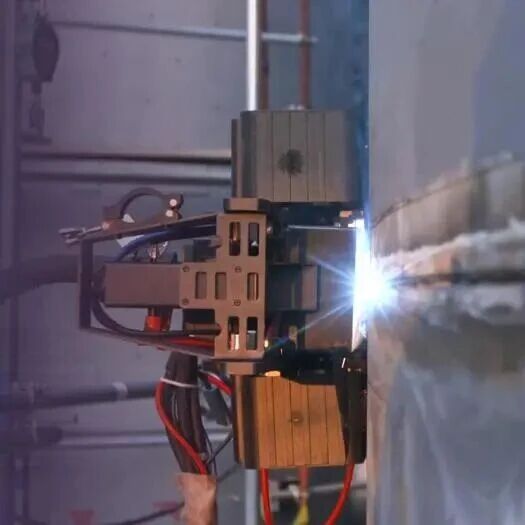
Core Viewpoint - Boqing Technology has completed a multi-billion B-round financing led by various institutions, indicating strong investor confidence in its innovative technology [2]. Group 1: Company Overview - Boqing Technology specializes in the development of a trackless all-position welding robot, which can move freely on large and complex workpieces, achieving high-quality welding through advanced laser and molten pool visual sensors [2]. - The technology originates from research by academician Pan Jilian's team in 1997 and was commercialized in 2017 by his disciple Feng Xiaobing, marking a significant milestone in the industry [2]. Group 2: Technological Advancements - The welding technology has passed rigorous validation, with 100% of the welded joints in products exported to Japan meeting the highest level of X-ray inspection standards, showcasing that the Chinese solution has reached international advanced levels [2]. - Feng Xiaobing stated that the breakthrough in core technology serves as a reusable automation base, allowing for rapid extension to adjacent processes such as cutting and assembly, thus opening up broader market opportunities [2]. Group 3: Future Plans - Boqing Technology has released an industrial-grade welding model that significantly shortens the process development cycle and reduces costs, with plans to open access by 2026 to further advance welding intelligence [2].

万亿机器人市场新入口:命脉工程开启智能化突围
3 6 Ke· 2025-11-19 08:04
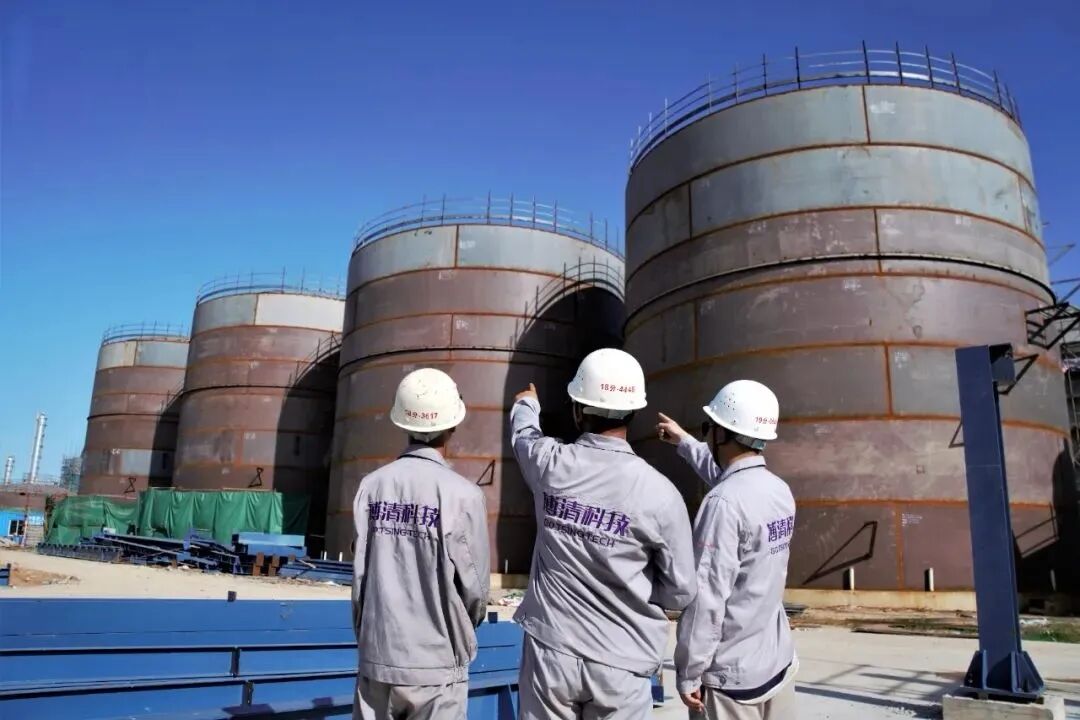
Core Insights - The automation penetration rate in China's welding scene is only about 30%, despite welding being a critical process in various infrastructure projects such as shipbuilding, energy, and rail transportation [1][2] - The low automation level in key engineering processes is attributed to complex working environments that require advanced robotic capabilities [1][3] - The intelligent transformation of core processes in vital engineering is seen as the "last mile" for industrial automation in China, serving as a test for the country's smart manufacturing system [1][7] Group 1: Challenges in Automation - Welding environments are hazardous, with labor shortages and rising costs being persistent issues; by 2025, there will be a shortage of over 5 million welders in China [2][3] - The complexity of workpieces, such as large oil storage tanks and bridge structures, poses significant challenges for robotic applications in welding [4][6] - Non-standard components in large infrastructure projects complicate the automation process, making it difficult for robots to operate effectively [6][8] Group 2: Industry Responses and Innovations - Companies like Boqing Technology are pioneering solutions for intelligent welding, focusing on adapting robots to complex environments and enhancing their operational capabilities [12][14] - Boqing Technology has developed a unique systematic approach to address the challenges of automation in welding, including advanced perception systems and autonomous movement capabilities [14][15] - The company has successfully implemented its solutions in various scenarios, even exporting its technology to Japan, indicating a growing market for intelligent welding solutions [15][17] Group 3: Market Potential and Policy Support - The market for automation in vital engineering is projected to be worth trillions, with significant investments in sectors like shipbuilding and nuclear power [18][20] - Recent policies are promoting the acceleration of automation in infrastructure projects, with a target of increasing industrial equipment investment by over 25% by 2027 [20][21] - The convergence of technological breakthroughs and policy support is bringing the trillion-dollar market for intelligent automation closer to realization [20][22] Group 4: Future Developments - The emergence of industrial-grade models for welding is expected to enhance the capabilities of robots, allowing for autonomous decision-making and operational efficiency [21][23] - Boqing Technology's development of an industrial-grade welding model aims to reduce the traditional welding process development cycle by approximately 60% and lower costs by over 40% [21][23] - The intelligent transformation of core engineering processes is not only about improving safety and efficiency but also about creating valuable data assets for future industrial applications [23]