工银文体产业A

Search documents
8000亿巨头的困局:工银瑞信规模停滞、业绩疲软与人才出走 |基金观察
Sou Hu Cai Jing· 2026-01-19 09:33
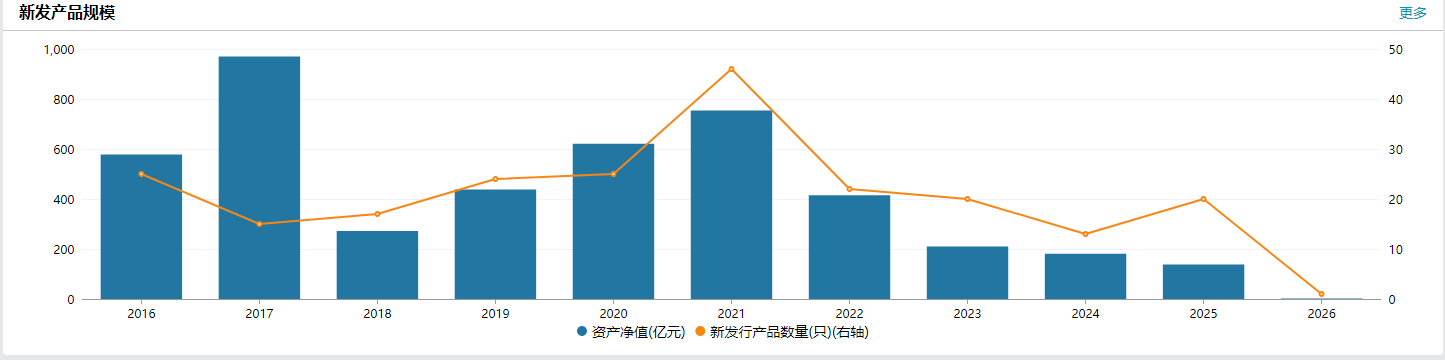
Core Insights - ICBC Credit Suisse Asset Management Co., Ltd. (ICBC Credit Suisse) has faced significant challenges, including stagnation in growth, weak equity performance, and talent loss, despite having over 800 billion in assets under management [1] Group 1: Stagnation in Scale - ICBC Credit Suisse's asset management scale reached a peak of 800 billion in 2021 but has seen minimal growth since, projected to only increase to 864.2 billion by the end of 2025, while the overall public fund industry grew by 42% during the same period [2] - The company's ranking in the industry has dropped from 9th in 2021 to 14th by the end of 2025, indicating a loss of competitive edge [2] - New product launches have declined since 2021, with active equity business shrinking significantly, which is critical for assessing the company's research and investment capabilities [2][3] Group 2: Performance Weakness - From 2022 to 2023, ICBC Credit Suisse's funds experienced substantial losses totaling 45.016 billion, with 36.541 billion in 2022 and 8.575 billion in 2023, marking a period of severe scale reduction [4] - In 2024, the company managed to recover with a profit of 25.755 billion, but its equity products still lagged behind industry averages, ranking 53rd and 33rd for stock and mixed funds respectively during the market rebound [4] - The performance of star fund managers has diminished, with notable figures like Zhao Bei seeing significant reductions in managed assets and poor rankings in recent years [5] Group 3: Talent Loss - Since 2022, ICBC Credit Suisse has lost 18 fund managers, including key figures, leading to a significant gap in its research and investment capabilities [6] - The company has attempted to fill this gap by hiring 50 new fund managers from within, but these individuals lack experience, resulting in missed investment opportunities in critical sectors like technology and new energy [7] - The company's administrative management approach contrasts with industry practices that typically use incentives to retain talent, contributing to the ongoing challenges in maintaining a robust investment team [7]
8000亿巨头的困局:工银瑞信规模停滞、业绩疲软与人才出走
Zhong Guo Neng Yuan Wang· 2026-01-19 09:21
Core Insights - ICBC Credit Suisse Asset Management Co., Ltd. (ICBC Credit Suisse) has faced significant challenges, including stagnation in growth, weak equity performance, and talent loss, despite its rapid rise in the past [1] Group 1: Scale Challenges - ICBC Credit Suisse's asset management scale reached 800 billion yuan in 2021 but has seen minimal growth since, projected to only increase to 864.2 billion yuan by the end of 2025, while the overall public fund industry grew by 42% during the same period [2] - The company's ranking in the industry has dropped from 9th in 2021 to 14th by the end of 2025, indicating a diminishing competitive edge [2] - New product launches have declined since 2021, with active equity business shrinking significantly, which is critical for assessing the company's investment research capabilities [2][4] Group 2: Performance Issues - From 2022 to 2023, ICBC Credit Suisse's funds incurred substantial losses totaling 45.016 billion yuan, with 36.541 billion yuan in 2022 and 8.575 billion yuan in 2023, marking a period of severe scale contraction [5] - In 2024, the market recovery allowed the company to achieve a profit of 25.755 billion yuan, leading to a slight rebound in scale [5] - The long-term performance of equity products has been underwhelming, with annualized returns for stock and mixed funds ranking 53rd and 33rd in the industry, respectively, during the market recovery in 2024 [5] Group 3: Talent Loss - Since 2022, 18 fund managers have left ICBC Credit Suisse, including key figures, leading to a significant talent drain [7] - The departure of prominent managers has resulted in a gap in the investment research system, particularly affecting the company's ability to capitalize on key investment opportunities in sectors like technology and new energy [7][8] - The company has attempted to fill the talent gap by hiring 50 new fund managers, primarily from within, but these individuals lack the experience needed to quickly replace the lost expertise [7][8]

不负起风季!工银瑞信“双面镜”透视
Sou Hu Cai Jing· 2025-08-28 06:18
Core Insights - The article discusses the performance and challenges faced by the company, ICBC Credit Suisse Asset Management, highlighting its recent growth in assets and the competitive landscape of the fund management industry [2][3][4]. Group 1: Market Performance - As of June 30, 2025, the North Securities 50 Index showed a strong performance with a cumulative increase of 39.45% in the first half of the year, while the Hang Seng Index rose by 20%, ranking third among major global indices [3]. - The fund market is experiencing a recovery, with ICBC Credit Suisse's funds receiving high ratings, including 17 funds rated as three-year five-star funds [3][4]. Group 2: Fund Management and Performance - ICBC Credit Suisse reported a net profit of 2.11 billion yuan for 2024, with total assets of 25.106 billion yuan and net assets of 20.836 billion yuan [5]. - As of August 5, 2025, the total scale of ICBC Credit Suisse funds reached 782.333 billion yuan, with bond funds accounting for 200.740 billion yuan, ranking 15th among 171 similar funds [5][6]. - The ICBC Convertible Bond Preferred Fund achieved a one-year growth rate of 24.60%, leading all bond funds under the company [5][6]. Group 3: ETF Growth and Challenges - The total scale of ETFs in the market surpassed 4.8 trillion yuan as of August 21, 2025, marking a growth of 1.04 trillion yuan, or 27.88%, since the end of 2024 [9][11]. - ICBC Credit Suisse's index funds reached a scale of 101.673 billion yuan as of August 1, 2025, nearly doubling from 36.117 billion yuan at the end of 2023 [9][10]. Group 4: Internationalization and QDII Strategy - ICBC Credit Suisse has been a pioneer in QDII products since 2007, offering a diversified range of investment options across various international markets [14][15]. - The company ranks 96th in the "2025 Global Asset Management Top 500" list, reflecting its growing influence in the global asset management space [15]. Group 5: Challenges and Strategic Focus - The company faces challenges in scale growth, profitability, and talent retention, with its asset management scale slightly decreasing from 2021 to 2025 [17][19]. - The profitability of the company has been inconsistent, with net profits showing significant fluctuations over the past three years [20]. - The company is focusing on enhancing its research and development capabilities and improving compliance management to address these challenges [22][23].