左心室辅助装置(LVAD)

Search documents
35岁女子患“心脏病绝症”,医生为其植入“终极救命武器”
Xin Lang Cai Jing· 2026-01-01 11:33
Core Viewpoint - The article highlights a significant medical advancement in treating end-stage dilated cardiomyopathy through the implantation of a left ventricular assist device (LVAD), which has dramatically improved the patient's quality of life and heart function [3][10]. Group 1: Patient Condition and Treatment - A 35-year-old woman suffering from end-stage dilated cardiomyopathy faced severe limitations in her daily life due to heart failure, which is often referred to as the "terminal illness of heart disease" [3][4]. - Traditional treatments were ineffective, and heart transplantation faced challenges due to donor shortages, leaving the patient with little hope [3][4]. - The medical team at Tsinghua University First Affiliated Hospital, led by Professor Zhang Mingkui, performed a critical surgery to implant an LVAD, providing the patient with a chance for recovery [3][5]. Group 2: Surgical Procedure - The LVAD implantation is described as a "last-resort lifesaving weapon" for end-stage heart failure patients, requiring high technical skill and coordination among the surgical team [5][6]. - The procedure involved precise placement of inflow and outflow conduits within the heart while it continued to beat, ensuring long-term patency with the aorta [5][6]. - The surgery utilized a third-generation magnetic levitation LVAD, which is smaller and less invasive, promoting better postoperative recovery [5][6]. Group 3: Postoperative Care and Recovery - After surgery, the patient was closely monitored in the cardiac intensive care unit, focusing on managing circulation, respiration, coagulation, and infection prevention [7][9]. - The patient transitioned to a regular ward for individualized anticoagulation therapy and gradual rehabilitation training [7][9]. - Follow-up three months post-surgery showed significant improvements in heart function, with the left ventricular end-diastolic diameter reducing by 15mm and ejection fraction increasing from 25% to 50% [10]. Group 4: Impact on Quality of Life - Six months after the surgery, the patient experienced a remarkable transformation, regaining independence and the ability to engage in daily activities [10]. - The LVAD not only supported her heart function but also restored her quality of life, allowing her to plan for a future not dominated by illness [10]. - Professor Zhang Mingkui emphasized the importance of ensuring that every end-stage heart failure patient can live with quality, reflecting a commitment to both technological advancement and respect for life [10].


心血管最后的战场,心衰治疗技术大爆发
3 6 Ke· 2025-07-28 01:04
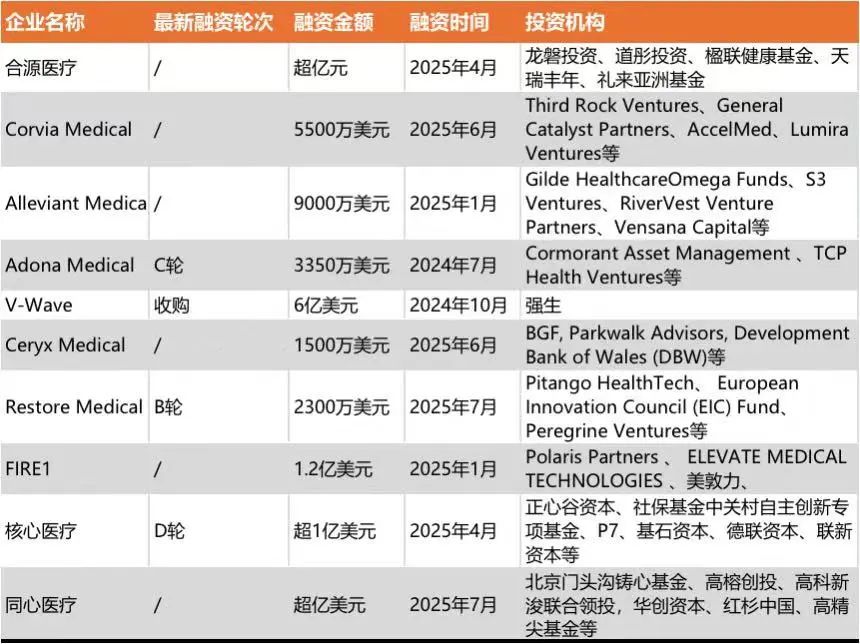
Core Insights - Heart failure (HF) is increasingly recognized as a critical area in cardiovascular medicine, with numerous companies making advancements in treatment technologies [1] - The prevalence of heart failure in developed countries is 1%-2%, while in China, it has reached 1.3% among individuals over 35, totaling approximately 13.7 million patients [1] - Current first-line medications only alleviate symptoms without halting disease progression, highlighting the urgent need for innovative treatments [1] Financing Events - Recent financing activities in the heart failure sector include companies like Alleviant Medical raising $90 million, and V-Wave being acquired for $600 million by Johnson & Johnson [2] - A total of over $1 billion has been raised across various companies in the heart failure treatment space, indicating strong investor interest [2] Innovation Directions - The innovation in heart failure treatment can be categorized into four main directions: reducing cardiac load, improving cardiac efficiency, promoting cardiac repair and regeneration, and preventing fluctuations in cardiac load [6][7] - Multiple innovative products are being developed to address different stages of heart failure, including left ventricular assist devices (LVADs) which have seen rapid adoption in recent years [6] Breakthrough Technologies - The FDA's "Breakthrough Devices" designation has been granted to over ten products in the heart failure space, reflecting the clinical demand for innovative therapies [3] - Notable products include Alleviant Medical's atrial shunt device for heart failure with preserved ejection fraction, and various monitoring systems aimed at managing heart failure [4][5] iPSC Cell Therapy - Induced pluripotent stem cell (iPSC) technology is emerging as a promising avenue for heart regeneration, with companies like Alleviant and Heartseed leading the way in clinical trials [8][11] - Alleviant's iPSC-derived cardiac cells have shown safety and potential efficacy in early trials, with plans for further studies and potential commercialization by 2028 [11][13] Atrial Shunt Devices - Atrial shunt devices have gained attention as a viable treatment option, with significant financing activity in this area, although they are still considered a palliative rather than a curative solution [14][16] - The market for atrial shunt devices is evolving, with ongoing clinical trials and a focus on improving patient outcomes through innovative designs [18] Future Directions - The heart failure treatment landscape is shifting from symptomatic management to addressing underlying causes, with a focus on personalized and multimodal approaches [18] - The ultimate goal is to achieve a state where heart failure is preventable, controllable, and potentially curable, driven by advancements in cell and gene therapies, monitoring technologies, and device innovations [18]


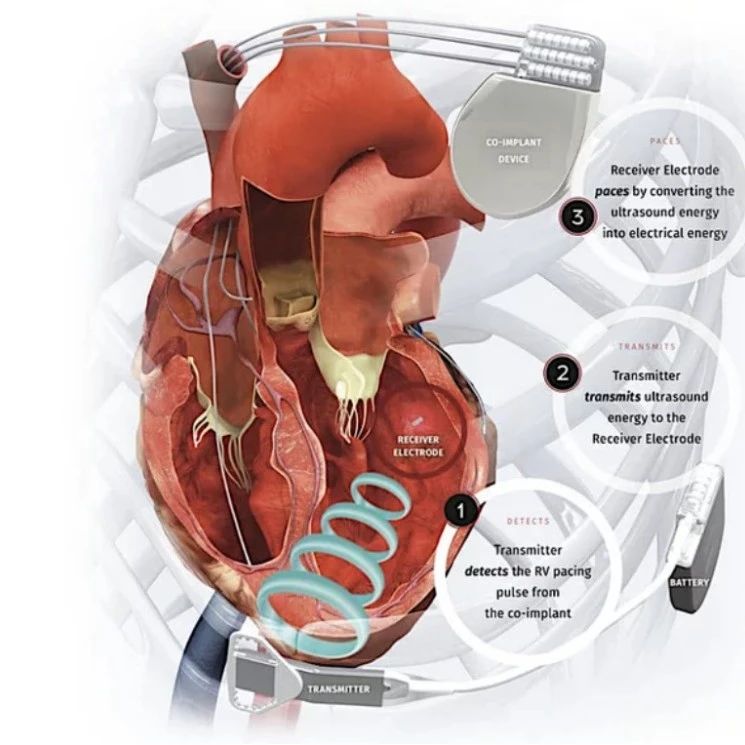
进入创新通道!经导管植入式无导线心脏起搏器
思宇MedTech· 2025-06-05 10:08
Company Overview - Dunbo Medical, established in 2018 and headquartered in Xi'an, Shaanxi Province, is a high-tech company focused on the research and production of Class III active implantable medical devices [26] - The company has developed key medical and semiconductor technologies, including proprietary mixed-signal chips, hardware circuits, software applications, and structural materials [26] - Dunbo Medical has completed four rounds of financing to support its growth and product development [26] Product Highlights - Dunbo Medical's core product is a leadless cardiac pacemaker, which integrates the pulse generator and pacing electrode into a compact capsule that can be directly implanted into the heart [12][14] - The leadless pacemaker has advantages such as a smaller size (only 0.8cc), ease of use, and enhanced safety, eliminating risks associated with lead damage and pocket infections [10][14] - The product's design allows for a significant reduction in complications compared to traditional pacemakers, which rely on leads that can cause infections and displacements [8][10] Market Context - The prevalence of heart failure in China is increasing, with approximately 13.7 million patients aged 35 and older, and an annual increase of around 3 million new cases [15] - The cardiac pacemaker market in China is projected to reach 6.8 billion yuan by 2024, with imported products holding a market share of 89%, indicating a significant opportunity for domestic alternatives [15] - Despite the absence of successful domestic CRT products, there have been notable advancements in other innovative devices for heart failure treatment, such as left ventricular assist devices and cardiac contractility modulation devices [15][16][24] Innovations in Heart Failure Treatment - The left ventricular assist device (LVAD) market is maturing, with four domestic systems approved for sale, each offering unique market advantages [16] - The D-shant atrial shunt device has entered the "national innovative medical device" green channel and is undergoing clinical trials, positioning it competitively against international players [22][23] - The cardiac contractility modulation (CCM) device, developed by Lepu Medical, has passed the special review application and is expected to receive approval soon, marking a significant milestone for domestic innovation in heart failure treatment [24]