巴士管家

Search documents
研判2025!中国定制客运行业相关政策、市场现状、运行模式及未来趋势分析:定制客运迈入规模化“快车道”,服务供给不断丰富[图]
Chan Ye Xin Xi Wang· 2026-01-05 00:57
Core Viewpoint - The customized passenger transport industry is experiencing significant growth, driven by changing public travel preferences and the need for more flexible and comfortable transportation options. The number of customized transport routes and passenger volume is increasing rapidly, indicating a shift from traditional transport methods to more tailored services [1][5]. Group 1: Industry Overview - Customized passenger transport refers to operators with road passenger transport licenses using e-commerce platforms to publish route information and sell tickets online, allowing for flexible scheduling based on passenger demand [2][5]. - The industry is seeing a transformation as traditional passenger transport struggles to meet the demand for convenience and comfort, leading to a sharp decline in passenger flow on conventional routes [1][5]. Group 2: Market Status - In 2024, there are 9,073 customized transport routes in China, an increase of 2,542 routes from 2023, with an average annual growth rate of 40.8% over three years. The total number of passengers transported is projected to reach 130 million, a year-on-year increase of 29.7% [1][6]. - The majority of routes (6,087) are under 200 kilometers, accounting for 67.1% of the total, highlighting the service's effectiveness in urban commuting needs [6][9]. Group 3: Network Platform Development - By the end of 2024, the number of customized transport network platforms is expected to reach 302, an increase of 47 from 2023. Key platforms include "Travel 365," "Bus Butler," and "Didi Station Bus," which enhance service through data mining and smart algorithms [1][9]. - The platforms provide essential functions such as online ticket sales, vehicle scheduling, and service evaluation, contributing to continuous product upgrades [1][9]. Group 4: Operational Models - Customized transport operators can choose from various service models, including door-to-door, fixed-point pick-up, and short-distance transfer, with fixed-point pick-up being the most common, accounting for 72.3% of services [10][12]. - The operational flexibility allows for tailored services that meet diverse passenger needs, enhancing overall customer experience [10][12]. Group 5: Industry Trends - The competition in the customized transport market is intensifying as more companies enter the field, leading to fierce competition in pricing, service quality, and vehicle configuration [14]. - The industry is moving towards greater intelligence in operations, with advanced navigation, monitoring, and scheduling systems being implemented to enhance service delivery [15]. - Customized transport services are expanding into diverse scenarios, including airport shuttles, tourism lines, and medical transport, to meet the varied needs of different passenger groups [16].


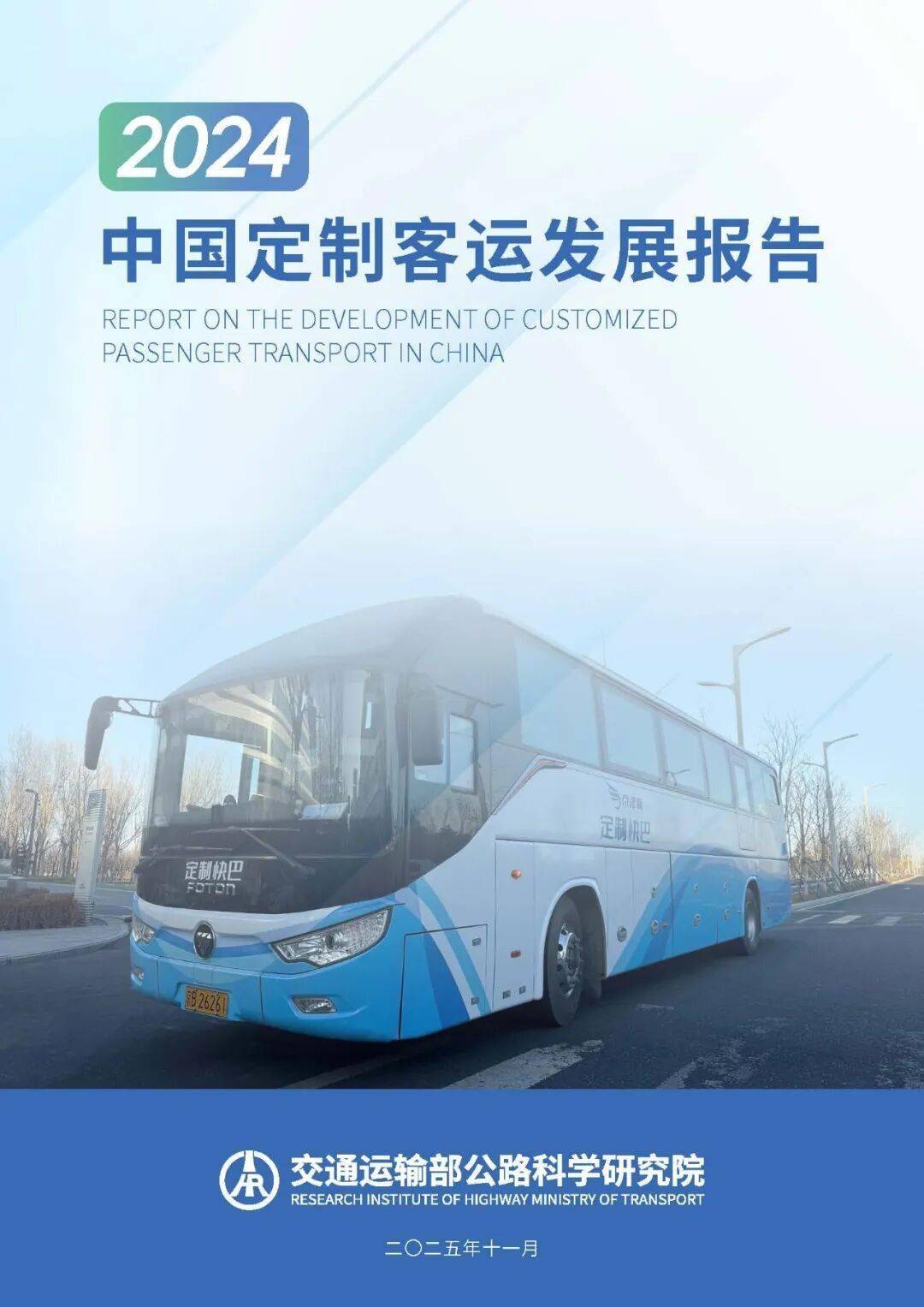
公路院:2024中国定制客运发展报告 2025
Sou Hu Cai Jing· 2025-12-17 03:44
Overview of Development - The customized passenger transport industry in China is entering a rapid development phase, with the number of routes increasing significantly and contributing to the transformation of the road passenger transport sector [1][20] - By the end of 2024, there will be 9,073 customized passenger transport routes, an increase of 2,542 routes from 2023, with an average annual growth rate of 40.8% over the past three years [20][21] - The total passenger transport volume for the year is projected to reach 130 million, representing a year-on-year increase of 29.7% [20] - The top ten provinces account for 75.4% of the total routes, with Jiangsu, Sichuan, and Shandong leading [21] Operational Characteristics - Seven major platforms serve 84.8% of the customized passenger transport routes, covering 1,042 operators and achieving a total passenger volume of 63.76 million [42][43] - The main service model is point-to-point pickup, accounting for 72.3%, while door-to-door and a mix of both account for 15.7% and 12% respectively [51] - The average daily departures for 43.3% of routes are three or fewer, while 22.8% have more than ten departures [57] - Vehicle types show a distribution of 43.7% for 7-9 seat vehicles, 20% for 10-19 seat vehicles, and 36.2% for vehicles with 20 seats or more [58] Industry Practices - Provinces like Zhejiang, Jilin, and Gansu are actively innovating in customized passenger transport, focusing on convenience and integration with other transport modes [69][70] - Zhejiang has established a "Zhe Ke Xing" brand and a passenger transport alliance, significantly increasing passenger flow and improving service quality [71][72] - Jilin has integrated customized transport services with direct routes to airports and tourist attractions, enhancing travel convenience [79][80] - Gansu is upgrading vehicle technology and standardizing services to improve operational efficiency and customer satisfaction [87][88] Service Brands - A variety of distinctive customized passenger transport service brands have emerged, including national and regional leaders like Bus Butler and Tianfu Travel, which focus on digital ecosystems and specialized routes [94][96] - Innovative brands like Convenient Fast Bus emphasize low fares and high capacity, while Didi Station Bus leverages digital advantages to offer themed routes across multiple provinces [96]