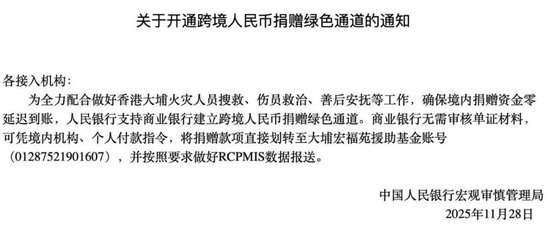
应急金融服务

Search documents
央行、工行、农行、中行、建行、交行等集体出手,全力支持救灾及灾后重建工作
2 1 Shi Ji Jing Ji Bao Dao· 2025-11-29 07:04
Core Viewpoint - Several major banks in China, including Industrial and Commercial Bank of China (ICBC), Agricultural Bank of China (ABC), Bank of China (BOC), China Construction Bank (CCB), and others, have collectively mobilized to provide financial support and aid for disaster relief following a significant fire incident in Hong Kong's Tai Po district, demonstrating a strong commitment to corporate social responsibility and community support [1][3][6][9][12][14][17][18]. Group 1: Donations and Financial Support - ICBC announced a donation of HKD 10 million to support disaster relief and reconstruction efforts, coordinating with its Hong Kong branches to provide emergency financial services and support for affected customers [3][12]. - ABC pledged HKD 10 million for fire rescue and post-disaster recovery, organizing volunteer teams and financial support for affected families [6][12]. - BOC committed HKD 20 million, establishing a dedicated donation account for public contributions and offering expedited banking services for affected clients [9][12]. - CCB also donated HKD 10 million, facilitating cross-border donations and providing emergency services for affected residents [12][14]. - Bank of Communications announced a donation of HKD 10 million, setting up emergency service stations and providing immediate cash support for affected customers [14][18]. Group 2: Collective Efforts from Other Banks - Other banks, including Shanghai Bank, Spdb Bank, and Minsheng Bank, collectively donated nearly HKD 100 million, with Spdb Bank and Minsheng Bank each contributing HKD 10 million and HKD 5 million respectively for emergency aid [17][18]. - Foreign banks such as HSBC and Hang Seng Bank jointly donated HKD 30 million, while Standard Chartered and DBS Bank each contributed HKD 10 million to support the affected residents [18].


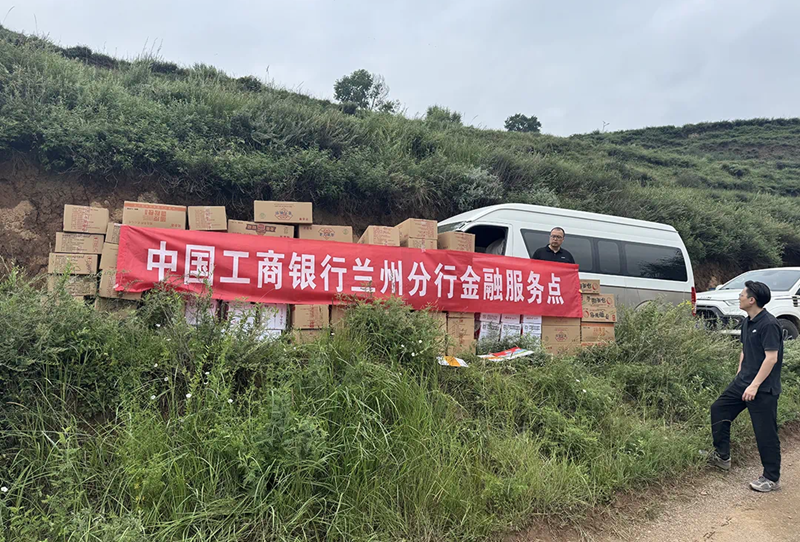
六大银行紧急驰援榆中灾区
Jin Rong Shi Bao· 2025-08-13 01:18
Core Viewpoint - The severe rainstorms in Gansu Province led to significant flooding, prompting major state-owned banks to activate emergency plans and provide financial support to affected areas [1] Group 1: Industrial Response - Industrial and Commercial Bank of China (ICBC) quickly formed an emergency support team to collaborate with local authorities, ensuring smooth financial services and support for disaster relief efforts [3] - Agricultural Bank of China (ABC) established a "green channel" for emergency fund transfers to key disaster response units, becoming the first commercial bank to assist in government disaster relief funding [4] - China Bank initiated emergency measures, providing essential supplies to frontline workers and ensuring 24/7 claims service through its insurance arm [6] - China Construction Bank (CCB) opened a financial service green channel to meet the needs of disaster-affected clients and efficiently responded to emergency fund requests [7] - Postal Savings Bank of China (PSBC) activated an emergency response mechanism and established a communication system to assist clients facing repayment difficulties due to the disaster [9] Group 2: Financial Services and Support - ICBC utilized portable smart devices to offer various financial services, including fund transfers and loan adjustments, to support affected individuals and businesses [3] - ABC's rapid response included a specialized team to manage government disaster relief funds, ensuring timely distribution of aid to affected communities [4] - CCB's proactive measures included understanding the operational status of disaster-affected clients and providing tailored financial services [7] - PSBC's customer managers reached out to clients in severely affected areas to assess their needs and provide financial assistance, including loan repayment adjustments [9] Group 3: Safety and Coordination - Traffic Bank conducted safety inspections of its facilities to ensure the safety of staff and the public while facilitating emergency financial services [8] - All banks emphasized collaboration with local government and emergency services to ensure a coordinated response to the disaster [6][8]