
度小满借款

Search documents
离大谱!360借条的签名,出现在度小满合同上?用户:那我问你?平台:那你问我
Xin Lang Cai Jing· 2026-01-21 10:25
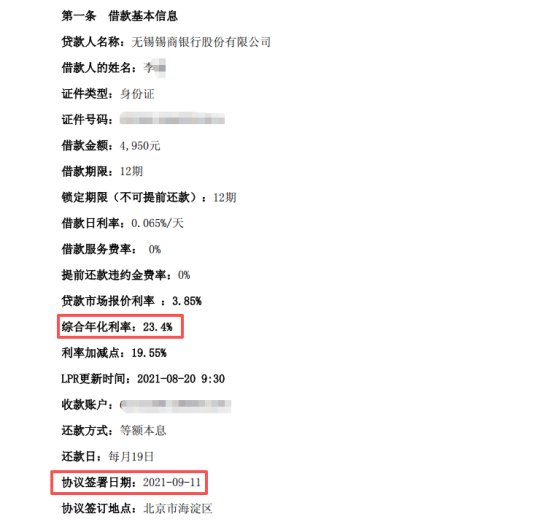
Core Viewpoint - The article discusses a case involving a user, Mr. Li, who applied for a loan through the Du Xiaoman platform and discovered that his electronic signature was improperly used from the "360 Borrow" platform, raising legal concerns about the validity of the loan contract [1][9]. Group 1: Loan Application and Terms - Mr. Li applied for a loan of 5,000 yuan with an annualized interest rate of 23.4% through the Du Xiaoman platform, experiencing issues with violent debt collection after defaulting on payments [1][9]. - Between September 2021 and May 2022, Mr. Li took out four loans, each with a repayment term of 12 installments, leading to complications when he defaulted on the first loan [1][9]. Group 2: Signature and Legal Concerns - Upon reviewing the loan agreement, Mr. Li found that the electronic signature used was sourced from the 360 Borrow platform, which raises questions about the legitimacy of the contract [4][10]. - Legal experts assert that the electronic signature must be controlled solely by the signer at the time of signing, which was not the case here, indicating that the loan contract may not be legally binding [16]. Group 3: Identity Verification Process - During the loan application process, Du Xiaoman did not prompt Mr. Li for identity verification methods such as facial recognition or SMS verification, which is unusual and raises further concerns [6][13]. - Du Xiaoman's representatives stated that they utilized an existing electronic signature from the certification authority, which was valid at the time of the loan application [15]. Group 4: Potential Legal Implications - The use of Mr. Li's electronic signature from another platform without consent could be classified as "misappropriation of another's electronic signature," potentially leading to civil liability for Du Xiaoman [8][16]. - Despite the lack of a valid written contract, a factual borrowing relationship may still exist between the parties, which complicates the legal landscape [8][16].

降息潮下的经营百态:个体户贷款有需求,度小满推新客福利
Bei Jing Shang Bao· 2025-05-21 01:56
Group 1 - The People's Bank of China has lowered the Loan Prime Rate (LPR) by 10 basis points, with the 1-year LPR now at 3% and the 5-year LPR at 3.5%, which is expected to reduce borrowing costs for businesses and individuals [1] - Financial support policies announced on May 7 include a 0.5 percentage point reduction in the reserve requirement ratio and a decrease in the 7-day reverse repurchase rate from 1.50% to 1.40%, which are aimed at stabilizing the market and boosting consumption [1] - Individual business owners report improved customer traffic and operational performance, particularly in the clothing and restaurant sectors, indicating a recovery in consumer demand [2] Group 2 - Despite improved business conditions, cash flow remains a critical issue for individual entrepreneurs, with many focusing on cost control to ensure profitability [2] - There is a mixed response regarding the consideration of loans, with some business owners expressing concerns about the reliability of loan products and the potential for fraud [3] - Small and micro enterprises are seen as vital to the economy, and financial policies are increasingly tailored to support their specific financing needs, emphasizing low-interest and accessible loan products [3][4] Group 3 - Consumers prefer loan products that are low-interest, provided by reputable financial institutions, and free of hidden fees, indicating a demand for transparent and affordable financing options [5] - Financial institutions are responding to consumer needs by launching promotional campaigns and innovative loan products, such as low-interest rates for first-time borrowers [5] - The ongoing financial support for consumption is expected to continue evolving, with financial institutions enhancing their product offerings and services to better integrate with the real economy [6]