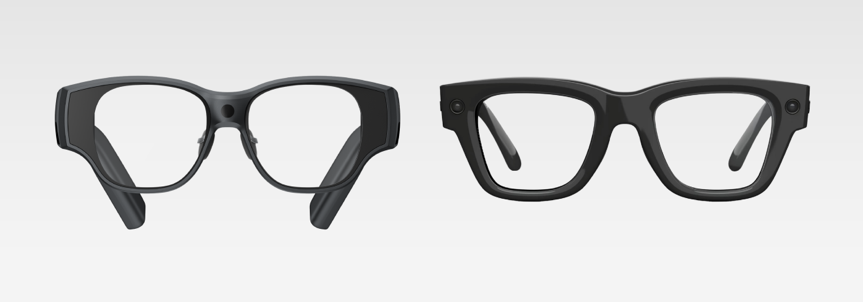
影目INMO GO3

Search documents
“百镜大战”2025年全面打响 AI眼镜距离“随身终端”还有多远?
Shen Zhen Shang Bao· 2026-01-01 21:54
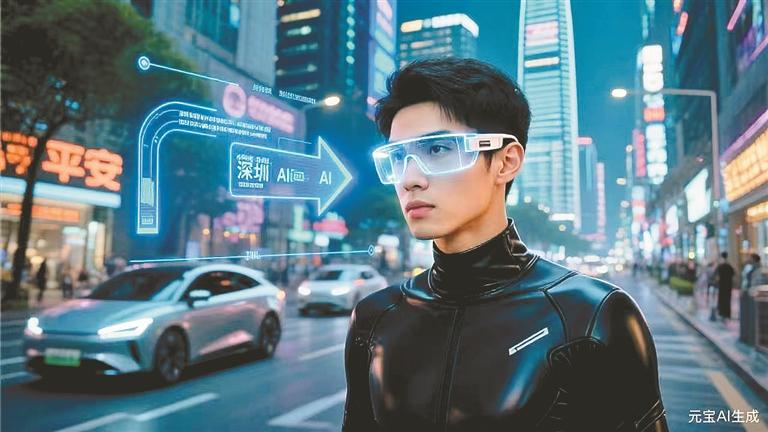
Core Insights - The article discusses the rising trend of AI glasses, which are expected to become a significant consumer product by 2026, transitioning from concept to practical demand in 2025 [2][3] - The competition in the AI glasses market, referred to as the "Hundred Glasses War," involves major tech companies and startups, indicating a robust ecosystem development [2][9] Industry Overview - The AI glasses market is experiencing rapid growth, with a 110% year-on-year increase in global shipments in the first half of 2025 [5] - Major players include tech giants like Meta, Samsung, Xiaomi, and Alibaba, as well as specialized XR companies, all launching various AI glasses products [3][4] Technological Advancements - Significant improvements in display technology are noted, with many AI glasses featuring high-resolution and high-refresh-rate displays to enhance user experience [6] - Innovations in interaction methods, such as Meta's "Neural Band" for gesture control and various voice and touch interfaces, are transforming user engagement [7] Market Dynamics - The demand for AI glasses is driven by advancements in AI capabilities and consumer needs for hands-free information access, including real-time translation and health monitoring [4][10] - The competitive landscape is not only about hardware but also about creating a cohesive ecosystem that integrates AI glasses with other devices and services [9][10] User Experience - Comfort and weight are critical factors for user acceptance, with many companies striving to make their products lightweight and comfortable to wear [7][8] - The core positioning of AI glasses is as a "wearable service entry point," which directly influences user adoption [8] Ecosystem Development - The integration of AI glasses with various services, such as navigation and payment systems, is essential for creating a seamless user experience [10][11] - Establishing standardized communication protocols and security measures is crucial for ensuring interoperability and data safety within the AI glasses ecosystem [9]




Meta新品发布,技术路线与影目INMO“撞车”,中国智造先行优势凸显
Cai Fu Zai Xian· 2025-09-19 07:57
Core Insights - Meta has launched its first AR glasses, Meta Ray-Ban Display, featuring full-color monocular display and LCoS+ array waveguide optical display technology, marking a significant development in the global AR industry [1] - The array waveguide technology, which enables a lightweight design, immersive visuals, and privacy protection, has been adopted by domestic brand INMO since its inception, showcasing its strategic foresight and technological leadership [2] Group 1: Product Comparison - Meta Ray-Ban Display introduces full-color monocular display in the right eye, while INMO AIR3, a dual-color AR glasses pioneer, has undergone three years of technological iterations and features a self-developed IMOS 3.0 spatial operating system [3] - Both products utilize array waveguide technology, but INMO AIR3 offers 1080P full-color dual display, with more mature production, brightness control, and light transmittance, providing clearer virtual images in bright outdoor conditions [3] Group 2: Interaction Methods - Meta's approach to AR interaction involves a neural wristband, contrasting with INMO AIR3's ring interaction, highlighting the diversity in AR interaction solutions based on product positioning and user habits [4] - The launch of Meta's new product signifies a step towards mainstream AR glasses, while INMO is recognized as a pioneer in making this technology practical and usable [4] Group 3: Future Developments - INMO is set to redefine smart glasses with the upcoming GO3 launch on October 16, focusing on various user face shapes and aesthetics, moving beyond the current "big black frame" design [7] - The new product aims to address industry concerns regarding battery life, positioning INMO as a standard setter for "all-day" wear in smart glasses [7] - This event represents INMO's commitment to leading the future development of AR technology, showcasing its strategic vision and innovative capabilities [7]