
房山石经

Search documents
房山石经刻石书风探析
Xin Lang Cai Jing· 2026-01-17 20:47
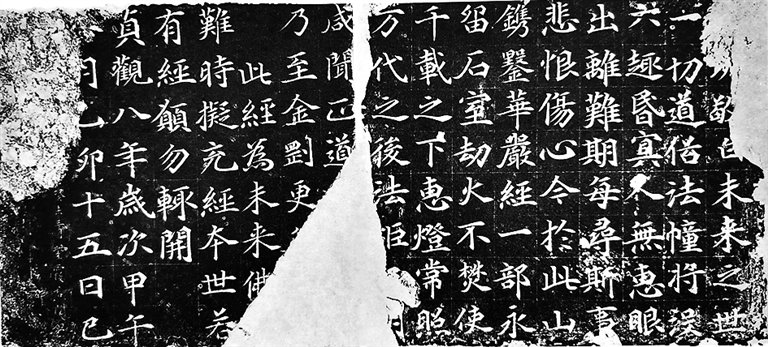
Core Viewpoint - The article highlights the historical and cultural significance of the Fangshan Stone Sutras, often referred to as "Beijing's Dunhuang," emphasizing its extensive collection of stone-carved Buddhist scriptures and its role in the evolution of Chinese calligraphy [1][8]. Group 1: Historical Significance - The Fangshan Stone Sutras, established during the Sui Dynasty, have been continuously inscribed over various dynasties, making it the largest and oldest collection of stone-carved Buddhist texts in China, with 14,278 stone tablets inscribed, containing 1,122 Buddhist texts and over 35 million characters [1][7]. - The inscriptions reflect a systematic evolution of calligraphy styles, primarily using regular script, which has remained dominant throughout the centuries, showcasing the internal requirements of religious texts for neatness and solemnity [2][7]. Group 2: Calligraphy Evolution - The calligraphy of the Fangshan Stone Sutras evolved significantly from the Sui to the Ming Dynasty, with notable influences from famous calligraphers such as Ouyang Xun and Yan Zhenqing, resulting in a blend of styles that reflect both the historical context and the artistic aspirations of the time [3][4][5]. - The Tang Dynasty marked a peak in the development of regular script, with the inscriptions from this period exhibiting a trend towards standardization and formalization, as seen in the works of the monk Jingwan [2][3]. Group 3: Preservation and Future Research - The preservation of the Fangshan Stone Sutras has improved through modern technology, including digital scanning and environmental monitoring, although challenges such as stone weathering and humidity control remain [7][8]. - Future research could leverage advanced techniques like multispectral imaging and micro-trace analysis to further explore the relationship between inscription techniques and stone material properties, as well as the broader implications for calligraphy history and cultural exchange [7][8].

云居寺藏经从地方遗产走向世界舞台
Bei Jing Qing Nian Bao· 2025-12-07 00:13
Group 1 - The Beijing Municipal Committee has published suggestions for the 15th Five-Year Plan, emphasizing the importance of cultural innovation and the protection of historical culture, including the application for World Heritage status for the Liuli River site and the Yunju Temple's scriptures for the World Memory Heritage list [1] - The Yunju Temple, known as "Beijing's Dunhuang," has a rich history of producing stone scriptures from the Sui to Ming dynasties, with a total of 14,278 stone scriptures, making it the largest and longest-lasting collection of stone-carved Buddhist texts in the world [1] - The Yunju Temple scriptures were successfully included in the "China Archives Document Heritage List" in 2025, which reflects the historical significance of the Buddhist texts and provides a basis for applying to UNESCO's World Memory Heritage list [2] Group 2 - In recent years, Beijing has increased efforts to protect the Yunju Temple scriptures, including reinforcing and waterproofing the stone scripture caves and digitizing many scriptures for archival purposes [3] - The temple has also enhanced public access, allowing more visitors to experience the ancient stone carvings, with the completion of a connecting trail that integrates the temple and the surrounding mountain [3] - A new digital project has been initiated to enhance the recognition of micro-traces on the stone carvings, allowing for a more detailed understanding of the artifacts in the digital realm [3]