世界记忆遗产

Search documents
北京提出的云居寺藏经“申忆”,是什么意思?
Xin Jing Bao· 2026-01-25 23:15
Core Viewpoint - The Beijing government aims to promote the "Cloud Dwelling Temple Stone Sutra Application" to include it in the UNESCO World Memory Register, highlighting its unique cultural significance and historical value [1][2]. Group 1: Cultural Heritage Significance - The Cloud Dwelling Temple, located in the Beijing Xishan Yongding River Cultural Belt, is recognized as a key national cultural relic since 1961 and is noted for having the largest collection of stone sutras in the world [2]. - The stone sutras at Cloud Dwelling Temple, which began engraving in the Sui Dynasty (605 AD) and continued until the Ming Dynasty (1691 AD), consist of 14,278 pieces totaling approximately 35 million characters, making it the largest and longest-lasting "stone library" globally [2]. Group 2: Unique Value Proposition - The core value of the Cloud Dwelling Temple's stone sutras lies in the over 10,000 pieces of Liao and Jin stone sutras, which serve as the only physical evidence to restore the lost "Khitan Canon," showcasing their irreplaceable and unique nature [2]. - Compared to the Korean "Goryeo Canon" (which is made of wood and easily damaged) and the dispersed Dunhuang manuscripts, the Cloud Dwelling Temple's stone sutras benefit from their solid material (stone) and original site preservation [2]. Group 3: Academic and Global Impact - Successful application for the World Memory Register will establish Beijing as a center for East Asian Buddhist literature, promoting global sharing of lost classics and revitalizing the cultural significance of this "Beijing's Dunhuang" on the world stage [3].
云居寺藏经从地方遗产走向世界舞台
Bei Jing Qing Nian Bao· 2025-12-07 00:13
Group 1 - The Beijing Municipal Committee has published suggestions for the 15th Five-Year Plan, emphasizing the importance of cultural innovation and the protection of historical culture, including the application for World Heritage status for the Liuli River site and the Yunju Temple's scriptures for the World Memory Heritage list [1] - The Yunju Temple, known as "Beijing's Dunhuang," has a rich history of producing stone scriptures from the Sui to Ming dynasties, with a total of 14,278 stone scriptures, making it the largest and longest-lasting collection of stone-carved Buddhist texts in the world [1] - The Yunju Temple scriptures were successfully included in the "China Archives Document Heritage List" in 2025, which reflects the historical significance of the Buddhist texts and provides a basis for applying to UNESCO's World Memory Heritage list [2] Group 2 - In recent years, Beijing has increased efforts to protect the Yunju Temple scriptures, including reinforcing and waterproofing the stone scripture caves and digitizing many scriptures for archival purposes [3] - The temple has also enhanced public access, allowing more visitors to experience the ancient stone carvings, with the completion of a connecting trail that integrates the temple and the surrounding mountain [3] - A new digital project has been initiated to enhance the recognition of micro-traces on the stone carvings, allowing for a more detailed understanding of the artifacts in the digital realm [3]
一财全球人文沙龙特别场:狮城循迹,侨批银信联通世界记忆
Di Yi Cai Jing· 2025-09-23 10:39
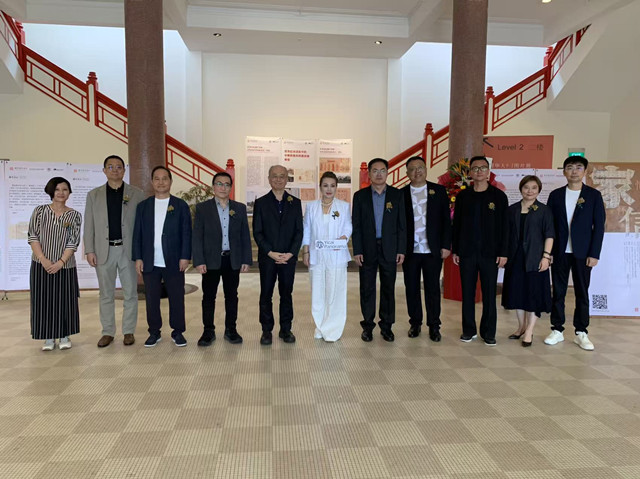
Core Viewpoint - The news highlights the significance of "Qiaopi" (overseas remittance letters) in documenting the struggles and emotional ties of Chinese immigrants, while also promoting cultural exchange through the Yicai Panorama salon and related exhibitions [1][2]. Group 1: Cultural Exchange Initiatives - The Yicai Panorama salon aims to gather global cross-disciplinary individuals to share cultural wealth and historical memories, with its first event scheduled for September 2025 at Nanyang Technological University in Singapore [1]. - The exhibition "Qiaopi Silver Letters: World Memory Heritage Exhibition," co-hosted by Guangdong University of Foreign Studies and Nanyang Technological University, seeks to enhance the social impact of the National Art Fund and promote the values of overseas Chinese [2]. Group 2: Historical Context of Qiaopi - Qiaopi, also known as silver letters, served as a unique postal medium for overseas Chinese to send remittances and messages back home, reflecting their deep emotional connections to their homeland [1][6]. - The history of Qiaopi dates back to the mid-19th century, primarily flourishing in coastal regions of China and among overseas communities in Southeast Asia and North America, with a significant rise in the establishment of Qiaopi offices by the late 19th century [6]. Group 3: Academic Contributions and Discussions - A seminar focusing on Qiaopi research was held, featuring presentations from experts who discussed the historical evolution, cultural significance, and contemporary relevance of Qiaopi [4]. - The contributions of overseas Chinese to their hometowns, including infrastructure development and economic transformation, were emphasized as a unique aspect of rural development during the Republican era in China [6]. Group 4: Donations and Cultural Preservation - During the exhibition, a significant donation of Qiaopi artifacts was made to Guangdong University of Foreign Studies, enhancing its collection and supporting research in overseas Chinese culture [7]. - The ongoing dialogue and collaboration between institutions in different countries aim to preserve the memories and connections of overseas Chinese, ensuring that their stories continue to be told in the modern era [7].