
手势识别技术

Search documents
顺藤摸瓜!深圳“科创青藤成果转化服务体系”赋能硬科技转化
Yang Shi Xin Wen Ke Hu Duan· 2025-12-09 02:17
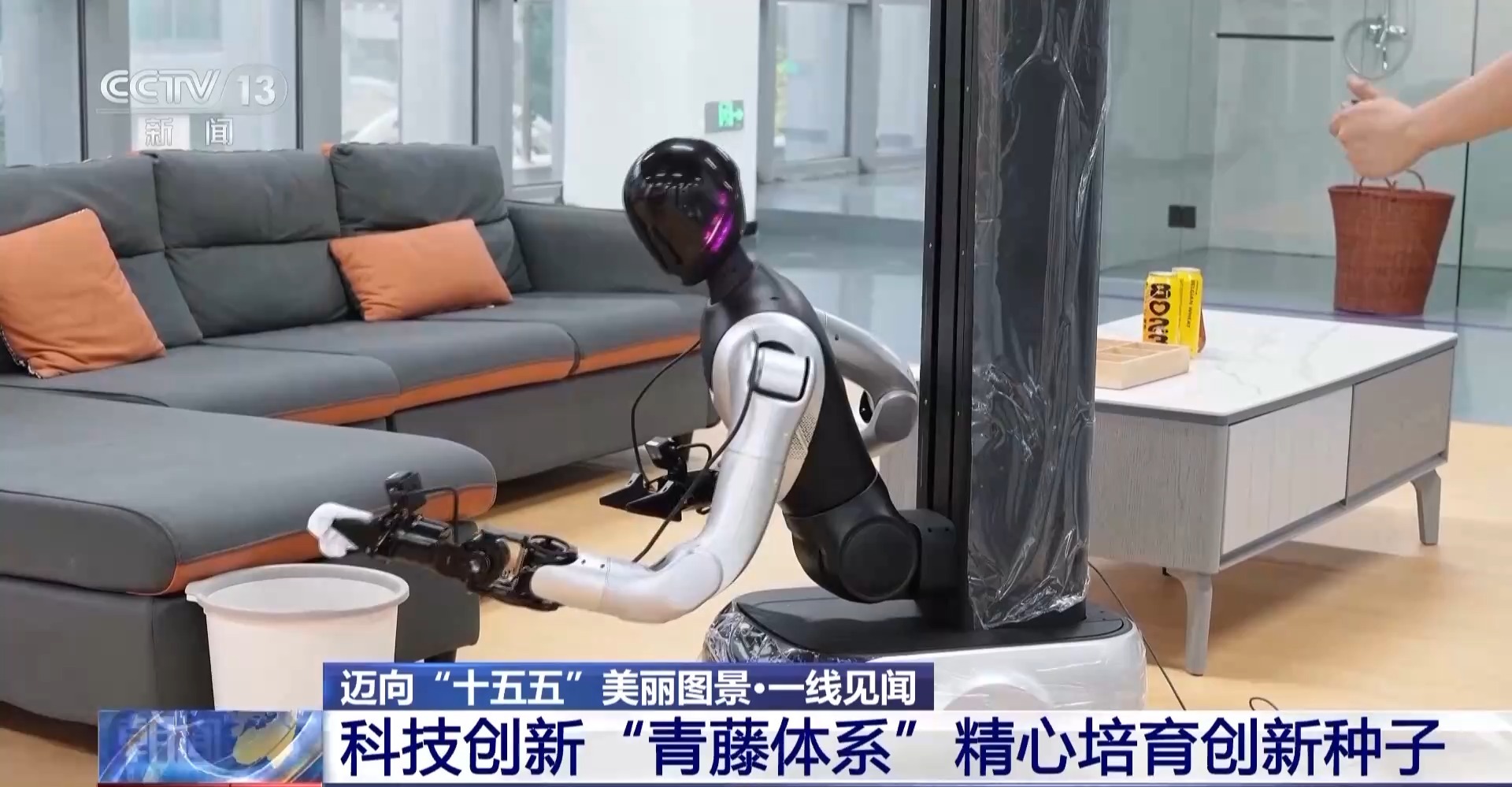
Group 1 - The core idea of the article emphasizes the integration of technological innovation and industrial innovation, aiming to accelerate the efficient transformation and application of major scientific achievements, and to create a globally competitive open innovation ecosystem [1] - Shenzhen has initiated the "Science and Technology Innovation Green Vine Achievement Transformation Service System," which is a systematic and organized ecosystem for achievement transformation covering the entire city [1] - The "Moli Camp," a vertical incubator focused on large model fields in the Guangdong-Hong Kong-Macao Greater Bay Area, has attracted over 140 AI and robotics companies, primarily in their early stages, facing challenges such as funding and resource allocation [3][5] Group 2 - The "Moli Camp" nurtures potential innovative "seeds" in the AI field, with many coming from key scientific competitions and universities, and provides professional empowerment including resources for computing, data, financing, and legal support [5] - Shenzhen's "Six Ones" policy offers comprehensive support for entrepreneurs, including housing, workspace, funding, and operational assistance, facilitating their transition from technical talent to management roles [5][9] - The establishment of a pilot base for mRNA innovation drugs and vaccines in Shenzhen aims to break the bottleneck of transforming samples into practical products, providing a platform for new drug development teams [11][13] Group 3 - The "Advanced Professional Technical Manager" recognition system has been established to facilitate the transformation of achievements, with over 300 active managers in Shenzhen who understand both technology and industry [17][24] - These managers play a crucial role in providing comprehensive support to teams, from funding to clinical resources, significantly aiding in the development of innovative projects [19][21] - The article highlights the importance of talent in the transformation process, with a focus on the continuous expansion of the pool of advanced professional technical managers during the "14th Five-Year Plan" period [24][26]

将虚拟现实技术深度嵌入动画设计
Xin Hua Ri Bao· 2025-07-09 22:53
Core Viewpoint - Virtual reality technology is one of the most transformative technologies of the 21st century, experiencing explosive growth due to advancements in computer graphics and sensor technology. The animation industry can leverage virtual reality to enhance immersive experiences and user engagement, driving innovation and transformation in the digital age [1]. Group 1: Enhancing Immersive Experience - The integration of various virtual reality technologies can create highly immersive animation experiences for users. High-resolution display technology serves as the foundation for immersive visual experiences, reducing graininess and enhancing clarity in virtual scenes [2]. - Real-time ray tracing technology simulates the real propagation paths of light in virtual scenes, achieving precise rendering of light reflection, refraction, and shadows, thereby enhancing the realism and immersion of animated scenes [2]. - Spatial audio technology simulates sound propagation characteristics in the real world, creating a realistic three-dimensional sound field that allows viewers to perceive the location and dynamics of sound sources within the animation [2]. - Multi-sensory collaboration technology integrates visual, auditory, tactile, and olfactory experiences, breaking the limitations of traditional animation that relies solely on visual and auditory elements, allowing viewers to engage with the virtual animation world from multiple dimensions [2]. Group 2: Enhancing User Engagement - Virtual reality innovation in animation interaction design optimizes user experience by utilizing gesture recognition technology, enabling natural and intuitive human-computer interaction without complex controllers [3]. - Emotion recognition technology analyzes users' facial expressions, voice tones, and physiological signals to dynamically adjust animation content and interaction methods based on users' emotional states, enhancing emotional resonance and participation willingness [3]. - Multi-user shared space technology allows multiple users to enter the same virtual animation world simultaneously, facilitating real-time interaction and collaboration, thus creating a unique social animation ecosystem [3].