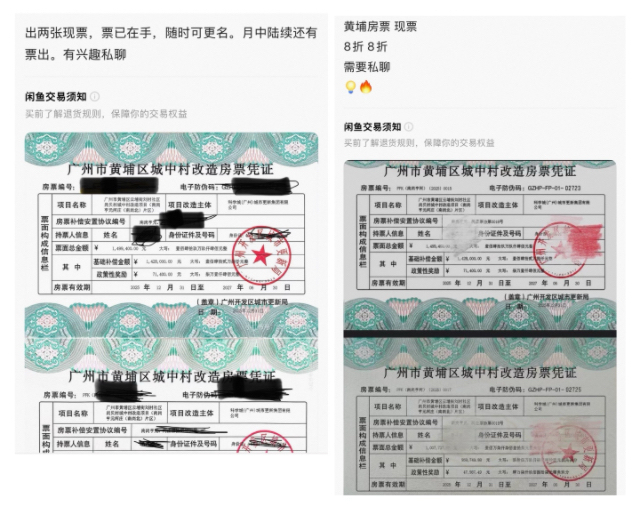
拆迁房票

Search documents
闲鱼平台成灰产聚集地!百万元拆迁房票6折甩卖,中介狂赚差价
Sou Hu Cai Jing· 2026-01-17 11:44
Core Viewpoint - The article discusses the dual exploitation of both demolition households and homebuyers through a system of housing vouchers, which were intended to protect the rights of demolition households while helping to reduce inventory in the real estate market. However, intermediaries have turned this system into a profit-making tool, leading to a gray market that benefits them at the expense of both parties [6][9][30]. Group 1: Housing Voucher System - Housing vouchers are essentially a form of compensation for demolition households, allowing them to purchase properties within specified timeframes and areas instead of receiving direct cash payments [4]. - The original intention of the housing voucher policy was to safeguard the rights of demolition households while assisting in the reduction of housing inventory, but it has been exploited by intermediaries [6][8]. - In Guangzhou, the housing voucher system has become a significant market, with over 6,000 vouchers being subscribed between April 2024 and December 21, 2025, indicating a highly active trading environment [15]. Group 2: Intermediary Exploitation - Intermediaries have taken advantage of the situation by purchasing vouchers from demolition households at a discount (8.2% to 8.3% off) and reselling them to homebuyers at a higher price, while also earning commissions from developers [9][11]. - The profit margins for intermediaries can be substantial, with potential earnings of 20,000 to 60,000 yuan per voucher, depending on transaction volume [11]. - The perceived discounts offered to homebuyers are often just remnants of the policy benefits that have been appropriated by intermediaries, who retain the core profits [13]. Group 3: Market Dynamics in Different Regions - The housing voucher market in Guangzhou operates under a relatively fixed set of rules, with stable discount rates and a clear policy framework, while Suzhou's market is characterized by chaos and price fluctuations due to a lack of regulation [16][20]. - In Suzhou, the flexibility of the housing voucher system allows for both new and second-hand property purchases, making them more attractive, but this has also led to a chaotic pricing environment where prices vary widely [21][23]. - The ongoing urban renewal projects in Suzhou, involving over 22,000 households and nearly 200 billion yuan in total investment, are expected to further increase the volume of housing vouchers in circulation [27]. Group 4: Regulatory Concerns - There are significant regulatory challenges in both Guangzhou and Suzhou, with warnings issued about the risks associated with low-priced vouchers, which may indicate fraudulent activities or multiple sales [30][32]. - The official stance in both cities emphasizes the need for compliance with regulations, including the prohibition of cashing out housing vouchers, which could lead to legal repercussions for developers and intermediaries [32][39]. - As the housing voucher market becomes more active with ongoing urban renewal, regulatory scrutiny is expected to tighten, potentially limiting the space for gray market operations [39].

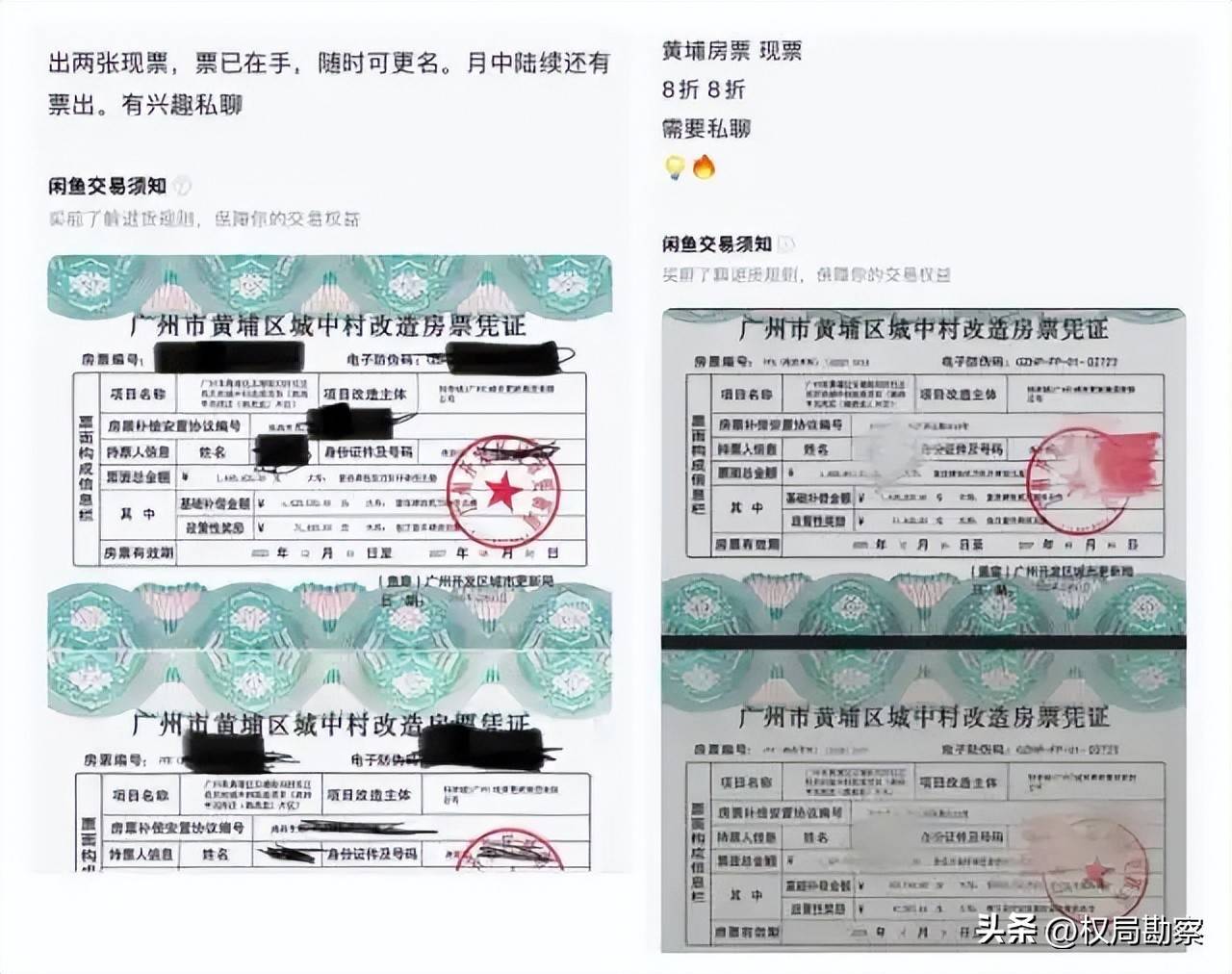
百万元拆迁房票被摆上货架,闲鱼、小红书成交易场
Di Yi Cai Jing· 2026-01-16 06:33
Core Viewpoint - The emergence of a secondary market for housing vouchers in cities like Guangzhou and Suzhou has been noted, where intermediaries profit from the transfer of these vouchers, despite the associated risks and regulatory challenges [3][4][10]. Group 1: Market Dynamics - A significant number of housing vouchers, valued from millions to tens of millions, are being traded on social media platforms like Xianyu and Xiaohongshu, primarily in cities with concentrated demolition activities [4][8]. - Intermediaries are actively involved in the purchase and resale of housing vouchers, often offering discounts to buyers, with reported margins of 1-3% per transaction [6][10]. - In Guangzhou, the housing voucher system allows for a one-time transfer, with specific regulations governing the process, which has led to a surge in voucher transactions [11][12]. Group 2: Buyer Incentives - Buyers can save significantly when purchasing housing vouchers; for instance, a 200 million yuan voucher can be acquired for approximately 166 million yuan, allowing for substantial savings [5][6]. - Certain new housing projects offer additional discounts for buyers using housing vouchers, enhancing the attractiveness of this purchasing method [5][6]. Group 3: Regulatory Environment - The Guangzhou government has issued guidelines for the housing voucher system, emphasizing the importance of compliance with regulations to avoid risks associated with illegal transfers [11][12]. - Recent announcements from local authorities have clarified that while the transfer of housing vouchers is permitted, it must adhere to strict guidelines to protect the rights of the voucher holders [10][12]. - In Suzhou, the housing voucher market is less organized, with varying discount rates and some instances of inflated pricing, indicating a need for clearer regulatory oversight [9][10].