
拜糖平

Search documents
中成药大洗牌 天然药物“桑枝总生物碱片” 以化药级标准提供转型范本
Sou Hu Wang· 2026-02-04 07:53
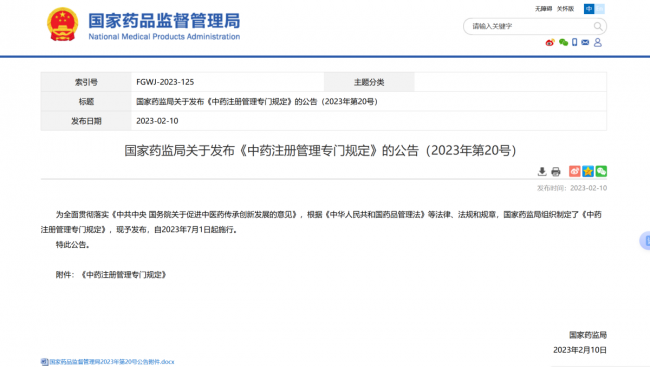
Core Viewpoint - The recent news about a large number of traditional Chinese medicines being withdrawn from the market is due to new regulations from the National Medical Products Administration, which will impact over 70% of existing traditional Chinese medicine approvals by 2026 [1][2]. Group 1: Regulatory Changes - The National Medical Products Administration issued the "Special Regulations on the Registration of Traditional Chinese Medicines" in February 2023, which states that any unclear safety information in the drug registration application will lead to non-renewal after three years [1]. - As of July 1, 2023, this regulation has been in effect, leading to significant concerns in the industry regarding the future of traditional Chinese medicines lacking clinical data and clear safety descriptions [1]. Group 2: Product Highlight - The product "Sangzhi Total Alkaloid Tablets," approved under the Z category, stands out as a benchmark for innovation in traditional Chinese medicine, demonstrating strong clinical efficacy and clear indications [1][2]. - This product is based on 21 years of research by a team led by Professor Liu Yuling from the Chinese Academy of Medical Sciences and has received significant national project support [2]. Group 3: Clinical Evidence - Sangzhi Total Alkaloid Tablets underwent a head-to-head clinical trial against first-line chemical drugs, showing a reduction in glycated hemoglobin by 0.93% and superior postprandial blood glucose control compared to the chemical drug Baidu [2]. - The clinical trial results were published in the prestigious journal "Diabetes Care," providing high-level evidence for the efficacy of this traditional medicine [2]. Group 4: Industry Impact - The product's clear labeling of indications, adverse reactions, and precautions based on clinical data sets a new standard for traditional Chinese medicine, aligning with the new regulatory requirements [3]. - As the industry faces a significant transformation, Sangzhi Total Alkaloid Tablets exemplify a successful model of integrating traditional and modern medicine, emphasizing efficacy and safety [9].

抗“糖”药箱中的“医”靠保障
Jing Ji Guan Cha Bao· 2025-11-13 08:25
Core Insights - The article discusses the evolution of diabetes management in China, highlighting the financial and emotional burdens faced by patients like Sun Jingxian over the years [2][4][11] - It emphasizes the improvements in medical insurance and drug pricing policies that have significantly alleviated the economic pressures on chronic disease patients [3][4][7][11] Group 1: Historical Context of Diabetes Management - Sun Jingxian was diagnosed with diabetes over 30 years ago, leading to a significant increase in her monthly medical expenses, which at one point consumed 25% of her salary [2][3] - Initially, the lack of medical insurance for chronic diseases forced patients to bear high costs for medications and regular medical check-ups [2][3] Group 2: Policy Changes and Their Impact - The establishment of the urban employee basic medical insurance system in the late 1990s aimed to reduce the financial burden on patients, although initial reimbursement rates were low [3][4] - The introduction of the national centralized drug procurement policy in 2018 has led to a 55% reduction in drug costs for chronic diseases, with out-of-pocket expenses dropping from 30% to 10% [4][7] Group 3: Current Developments in Diabetes Treatment - Recent policies have included insulin treatment for diabetes patients under basic medical insurance, with annual subsidies of up to 2400 yuan, significantly reducing the cost of insulin [7][8] - The price of diabetes medications has decreased dramatically, with some essential drugs now costing only a few cents per dose [4][5] Group 4: Broader Implications for Public Health - The article highlights the increasing prevalence of diabetes among younger populations, emphasizing the need for preventive measures and public health initiatives [9][10] - The "Weight Management Year" initiative aims to address obesity, a key risk factor for diabetes, by promoting healthier lifestyles and reducing the long-term burden on the healthcare system [10][11] Group 5: Future Outlook - The ongoing reforms in the medical insurance system are expected to enhance the quality of life for chronic disease patients, reducing their financial and psychological burdens [11][12] - The focus on preventive healthcare is seen as a strategic investment for sustainable healthcare financing and improving the overall health of the population [11][12]