数字营销系统

Search documents
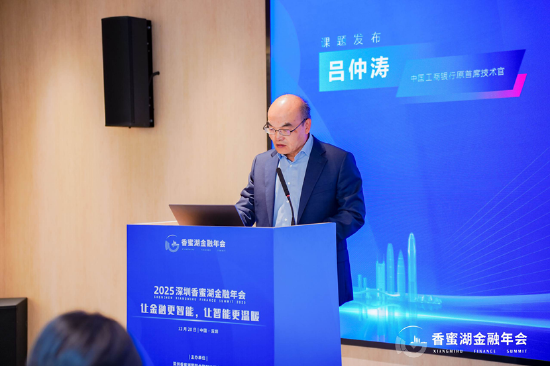
中国工商银行原首席技术官吕仲涛:智能金融进入普惠发展新阶段,推理成本降低助力中小机构转型升级
Xin Lang Zheng Quan· 2025-12-20 14:00
Core Insights - The second "Shenzhen Xiangmi Lake Financial Annual Conference" was held on December 20-21, 2025, focusing on promoting a virtuous cycle of technology, industry, and finance in the Guangdong-Hong Kong-Macao Greater Bay Area [1] Group 1: AI Technology in Finance - The development of open-source large model ecosystems, represented by DeepSeek, and the maturity of technologies like "slow thinking distillation" have significantly lowered the deployment threshold for high-performance AI systems [3] - This breakthrough allows financial institutions to apply AI technology across more business scenarios, expanding from core business to various long-tail scenarios [3] - Cost reductions are evident not only in technology deployment but also in the expansion of intelligent financial services coverage, enabling small and medium-sized banks and local financial institutions to utilize lightweight and efficient AI solutions [3] Group 2: Case Studies and Innovations - Examples such as Shanghai Bank's AI mobile banking service replacing traditional interfaces with conversational services and WeBank's digital marketing system reducing customer acquisition costs illustrate how smaller institutions are innovating service models and improving operational efficiency through AI technology [3] Group 3: Future Directions in Intelligent Finance - The development of intelligent finance must remain business scenario-oriented, emphasizing the need for forward-looking technology and the construction of resilient infrastructure driven by both "general computing and intelligent computing" [3] - It is essential to maintain risk control and ethical compliance, ensuring algorithm interpretability and data trustworthiness [3] - Building a platform for large-scale application of intelligent agents, creating a digital-native architecture and security governance system, and establishing a specialized AI talent team are crucial for deep integration of technical capabilities with business needs [3]


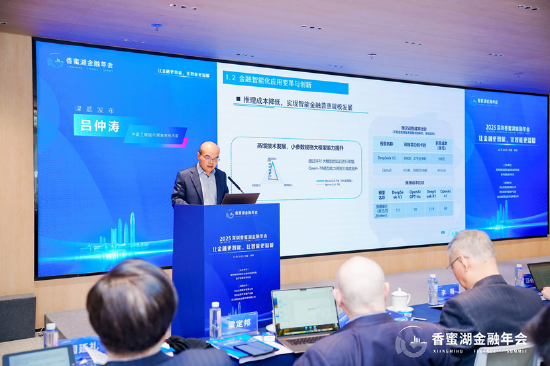
中国工商银行原首席技术官吕仲涛:展望智能金融五大趋势,开源生态与成本降低推动行业普惠化变革
Xin Lang Cai Jing· 2025-12-20 13:34
Core Viewpoint - The financial industry is entering a new phase of AI innovation, characterized by the emergence of open-source large models, which promotes a more inclusive and accessible AI ecosystem [3][8][10]. Group 1: Key Trends in Intelligent Finance - Trend 1: "Slow Thinking" technology expands complex business scenarios, enhancing logical reasoning capabilities and enabling innovations in credit decision-making, sales identification, customer demand insights, and public opinion analysis [3][9]. - Trend 2: Reduced inference costs facilitate the widespread development of inclusive intelligent finance, allowing small and medium-sized financial institutions to apply AI technology across various business scenarios [4][9]. - Trend 3: The evolution of financial intelligent agents from "reasoners" to "intelligent agents" enhances their ability to perform complex financial tasks, significantly improving service efficiency and convenience [4][9]. - Trend 4: Breakthroughs in multimodal large model capabilities revolutionize intelligent finance, integrating various types of information for new solutions in anti-money laundering, invoice recognition, and collaborative analysis [4][9]. - Trend 5: The steady advancement of large model applications empowers five key areas in finance: technology finance, green finance, inclusive finance, pension finance, and digital finance, contributing to the construction of a strong financial nation [4][9]. Group 2: Implications for Financial Institutions - The development of the open-source large model ecosystem, represented by DeepSeek, significantly lowers the deployment threshold for high-performance AI systems, enabling financial institutions to expand AI applications from core to long-tail business scenarios [5][10]. - Cost reductions in technology deployment not only enhance the coverage of intelligent financial services but also allow previously constrained small banks and local financial institutions to leverage lightweight and efficient AI solutions for improved customer service, risk management, and operational automation [5][10]. - The focus on business scenarios is essential for the future of intelligent finance, emphasizing the need for resilient infrastructure and ensuring algorithm transparency and data trustworthiness [6][11].