智能金融

Search documents
赞助第十五届全国运动会 + 亮相央视,海豚APP开启智能金融品牌新篇章!
Sou Hu Wang· 2026-02-04 07:53
Core Viewpoint - The collaboration between Dolphin Technology and the 15th National Games represents a significant step in promoting the "Sports + Finance" strategy, enhancing brand influence while integrating intelligent financial services into everyday life [4][9]. Group 1: Brand Integration and Promotion - The mascots of the National Games, "Xi Yang Yang" and "Le Rong Rong," symbolize unity and progress, aligning closely with the brand image of Dolphin APP [1]. - Dolphin Technology utilizes the authoritative platform of "Sports Zero Distance" on CCTV to deeply convey its brand philosophy, resonating with the spirit of athletes striving for excellence [1][4]. Group 2: Intelligent Financial Services - The slogan "Dolphin Understands Hearts, Intelligent Finance Accompanies You" encapsulates the core brand philosophy of Dolphin APP, emphasizing the integration of cutting-edge AI technology with warm, personalized service [6]. - Dolphin Technology has innovated traditional financial service models by offering 24/7 online intelligent customer service, supporting multilingual voice interactions for a natural communication experience [6]. - The service scope extends beyond finance to include health, lifestyle, and sports, aiming to provide comprehensive support and companionship to users [6]. Group 3: Future Vision and Commitment - Dolphin Technology aims to continue empowering finance through technology, deepening the application of AI, and expanding service scenarios to enhance user experience [9]. - The company is committed to delivering smarter, more personalized, and safer financial experiences, ensuring that every user feels understood and supported by Dolphin APP [9].


AI+金融如何落地?深圳香蜜湖金融年会详解融合路径与治理挑战
2 1 Shi Ji Jing Ji Bao Dao· 2025-12-23 13:24
Group 1: Financial Conference Insights - The second "Shenzhen Xiangmi Lake Financial Annual Conference" was successfully held, focusing on promoting a virtuous cycle of technology, industry, and finance in the Guangdong-Hong Kong-Macao Greater Bay Area [1] - Keynote speakers emphasized the need for financial reforms based on rule of law and innovation to support high-quality development, with three main goals: risk prevention, wealth management market construction, and building an international financial center [1] Group 2: Macroeconomic Trends - China's GDP grew by 5.2% year-on-year in the first three quarters of 2025, showing an acceleration of 0.4 percentage points compared to the previous year [2] - Experts discussed the challenges of insufficient domestic demand and overcapacity, while highlighting the need for reforms and technological advancements to drive economic recovery [2] Group 3: Manufacturing and Export Strategies - China's manufacturing sector has achieved significant high-quality development, with industrial added value accounting for 32% globally [3] - Recommendations for optimizing export structures include promoting reasonable appreciation of the RMB and enhancing labor productivity [3] Group 4: Technology-Finance Integration - The integration of artificial intelligence (AI) into the financial sector is transforming service models and enhancing operational efficiency [5][7] - The "Xiangmi Lake Intelligent Finance Development Report (2025)" outlines the current state and challenges of AI in finance, emphasizing the need for a supportive financial ecosystem [6] Group 5: Future of Intelligent Finance - The upcoming "15th Five-Year Plan" is expected to focus on the integration of AI technology with financial industry transformation, presenting new opportunities for intelligent finance [9][10] - Experts suggest that the financial sector must enhance its operational efficiency and adapt to market demands while expanding internationally [10][11]
香蜜湖智能金融发展报告发布
Zhong Zheng Wang· 2025-12-23 11:59
Core Insights - The second "Shenzhen Xiangmi Lake Financial Annual Conference" was held with a focus on promoting a virtuous cycle of technology, industry, and finance in the Guangdong-Hong Kong-Macao Greater Bay Area [1] - The "Xiangmi Lake Intelligent Financial Development Report (2025)" was released, emphasizing the need for enhanced financial support for artificial intelligence (AI) technology and industry development [1][2] Group 1: Financial Support for AI - Financial systems have increased support for AI technology and industry, providing comprehensive financial services throughout the lifecycle, achieving significant results [1] - There are unique challenges in financing AI compared to other technological innovations, including difficulties in technology maturation and stability, which impact traditional valuation systems and investment decisions [1][2] Group 2: Recommendations for Financial Support System - A financial support system tailored for AI development is needed, including specialized service models, customized investment and financing plans, and a layered capital operation system [2] - Recommendations include enhancing the adaptability of financial products, increasing early-stage investments, and improving risk management capabilities and post-investment service quality [2] Group 3: Data Governance in the Intelligent Era - The rapid evolution of large models is reshaping the data ecosystem, presenting new opportunities for traditional data governance challenges [3] - Financial institutions are exploring various practices from business scenarios to data innovation, establishing a tiered path for data governance that releases new value and drives efficiency [3] - Key challenges in data governance include technology adaptation, ownership definition, privacy protection, ethical issues, and governance cost pressures [3] Group 4: Challenges for Small Financial Institutions - Small financial institutions are experiencing disparities in the application of large financial models, with issues such as unclear strategic planning, limited resource investment, weak data foundations, and insufficient ecosystem collaboration [3]
香蜜湖金融年会凝聚行业共识 擘画智能金融高质量发展新蓝图
Zheng Quan Shi Bao· 2025-12-21 18:23
Group 1 - The Shenzhen Xiangmi Lake Financial Annual Conference focused on promoting a virtuous cycle of technology, industry, and finance in the Guangdong-Hong Kong-Macao Greater Bay Area, emphasizing the theme of making finance smarter and more humane [1] - The "Xiangmi Lake Intelligent Finance Development Report (2025)" was released, highlighting the development trajectory of intelligent finance in China and featuring a new "Hong Kong and Macao" section to reflect regional collaboration [1][2] - The report was compiled by over 30 experts, led by former China Securities Regulatory Commission Chairman Xiao Gang, and aims to provide important references for the region's financial development [1] Group 2 - Xiao Gang emphasized the significance of technology finance in promoting self-reliance and strength in technology, noting the challenges posed by rapid advancements in AI and the need for tailored financial support measures [2] - Five new trends in intelligent finance were identified, including the expansion of complex business scenarios and the enhancement of service efficiency through AI models [2] - The transition from traditional data governance to intelligent governance in the financial sector was highlighted, with a focus on the need for a new governance framework to address the challenges posed by AI-generated data [3] Group 3 - The Hong Kong Securities and Futures Commission's former chairman, Liang Dingbang, discussed the importance of consumer protection in innovation, particularly in the context of AI and blockchain technology [3] - The need for a lightweight governance system for small and medium-sized financial institutions was emphasized, addressing their strategic and resource limitations [3] - The conference underscored the role of intelligent finance as a core link for high-quality development in the Greater Bay Area, aiming to propel China from a "financial power" to a "financial strong power" [4]
步入深水区,智能金融迎模型迭代等多重挑战
Bei Jing Shang Bao· 2025-12-21 15:08
Core Insights - The development of smart finance is characterized by a dual advancement of technology-driven innovation and deepening application scenarios, supported by policy initiatives and increasing investment in AI [1][3] - The financial industry is transitioning from a "seller's market" to a more competitive landscape, necessitating a strategic shift towards smart finance as a core strategy for managing complex risks and competition [1] - Experts emphasize the importance of integrating AI technology into traditional business processes to realize its full potential, while also addressing the challenges posed by data governance and risk management [4][5] Group 1: Trends and Opportunities - Smart finance is evolving based on two significant trends: the rapid democratization of AI technology and a fundamental shift in the macro landscape of the financial industry [3] - The "15th Five-Year Plan" presents opportunities for the financial sector to accelerate market-oriented, digital, and international transformations, with a focus on smart technology as a critical choice for enhancing resource allocation efficiency [3] - The efficiency revolution in AI, driven by innovations in model training and resource utilization, significantly enhances the "energy efficiency ratio" of AI technologies, providing a solid foundation for the smart finance sector [3] Group 2: Challenges and Risks - Despite the promising outlook, the deepening application of smart finance faces complex challenges, particularly in the integration of technology with traditional business processes [4] - A significant percentage of AI projects in the U.S. fail to deliver substantial returns due to difficulties in effectively integrating AI systems with existing workflows [4] - Emerging risks such as model hallucinations, algorithmic opacity, and information pollution complicate the risk landscape, necessitating a robust approach to risk governance [4][5] Group 3: Data and Technological Hurdles - The depletion of public data for training large models poses a significant challenge, while valuable private data remains underutilized due to inadequate governance and compliance mechanisms [5] - The rapid pace of technological iteration leads to a phenomenon where the market value of AI models depreciates quickly, complicating investment decisions and increasing the difficulty of financial support for new ventures [5] - The need for a well-structured technical and management framework is essential for advancing risk management in smart finance, requiring a balance between speed, efficiency, and professional expertise [7] Group 4: Regulatory and Ethical Considerations - The development of smart finance must align with the principle of "financial for the people," emphasizing the importance of consumer protection and the human element in technology [8] - Regulatory frameworks should keep pace with technological advancements, ensuring a balance between oversight and innovation without overstepping boundaries [6][7] - The ultimate goal is to create a financial ecosystem that is not only intelligent but also warm and inclusive, ensuring that the benefits of smart finance reach a broader audience [8]
2025深圳香蜜湖金融年会召开 擘画智能金融新蓝图
Zheng Quan Shi Bao· 2025-12-21 09:16
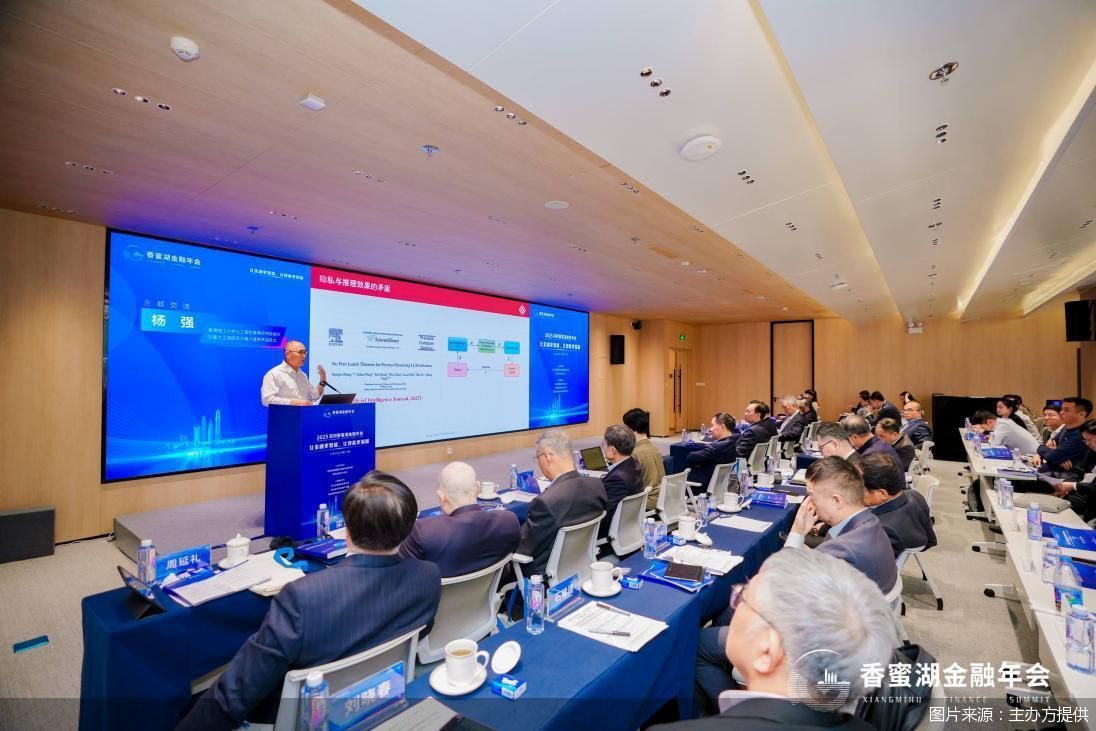
Core Insights - The 2025 Shenzhen Xiangmi Lake Financial Annual Conference focused on promoting a virtuous cycle of technology, industry, and finance in the Guangdong-Hong Kong-Macao Greater Bay Area, emphasizing the theme of making finance smarter and more humane [1][3] Report Overview - The "Xiangmi Lake Intelligent Finance Development Report (2025)" was released, led by former China Securities Regulatory Commission Chairman Xiao Gang, featuring contributions from over 30 experts. The report includes six chapters: technology, application, special topics, exploration, Hong Kong-Macao, and governance, providing a comprehensive view of China's intelligent finance development [3][4] Technological Developments - The report highlights significant achievements in the financial system's support for artificial intelligence (AI) and related technologies, while also addressing challenges such as the rapid depreciation of existing technologies and the impact on traditional valuation systems [3][4] Financial Support System - Xiao Gang proposed a financial support system tailored for AI development, which includes enhancing product adaptability, increasing early-stage investment, improving risk management capabilities, and enhancing post-investment services [4] AI Industry Landscape - As of November 1, 2025, China has registered 611 generative AI services, with 306 applications or functions documented. However, the AI sector faces challenges such as governance difficulties, a shortage of skilled professionals, weak intellectual property protection, and funding issues for startups [5] Application Trends - The report identifies five key trends in intelligent finance applications for 2025, including the expansion of complex financial business scenarios, reduced reasoning costs, automation of financial services, breakthroughs in multi-modal capabilities, and the role of AI models in supporting financial development [6] Data Governance Transformation - The transition from traditional data governance to intelligent governance is emphasized, with a focus on adapting to the increasing volume of heterogeneous real-time data. The need for a new governance framework that prioritizes value creation over cost is highlighted [7] Regulatory Framework - The Hong Kong-Macao section of the report discusses the importance of a regulatory framework that balances innovation and safety, with a focus on using AI for risk management rather than front-end services [8] Global Governance and Opportunities - The governance chapter outlines the need for a balanced approach to innovation and regulation, with specific recommendations for small and medium-sized financial institutions to enhance their AI capabilities through collaboration and resource allocation [10] Industry Consensus - The conference concluded with a call for collaboration among government, industry, academia, and research sectors to address challenges in intelligent finance development, aiming to transition China from a "financial power" to a "financial stronghold" [11]

金融智能体迭代升级,超三分之一使用慢思考技术
Di Yi Cai Jing· 2025-12-21 07:21
Group 1 - The core viewpoint of the articles highlights the transformation of intelligent finance from "tool application" to "system reconstruction," driven by advancements in artificial intelligence technology and its integration into the financial industry [1][2][4] - The "slow thinking" technology is identified as a key innovation, enhancing the reasoning quality of large language models by extending inference processes, which reduces error accumulation and improves output accuracy [1][2] - The report indicates that approximately 50% of the 82 cases surveyed involve intelligent agent paradigms, over 33% report improvements in multimodal capabilities, 32% utilize slow thinking technology, and 23% mention significant reductions in reasoning costs [1] Group 2 - A series of technological trends are leading to profound changes in business operations, including AI-driven investment research, proactive customer service, and the restructuring of organizational operations through systematic management of knowledge assets [2] - The financial data governance system is under unprecedented pressure due to the surge in AI-generated data, which has increased by 470% globally since three years ago [2][3] - Challenges in data governance include difficulties in technical adaptation, defining ownership, ensuring data security and privacy, addressing ethical issues, and managing high governance costs [3] Group 3 - The emergence of Data Governance Agents (DGA) is proposed as a solution to the limitations of manual governance, evolving into Multi-Agent Systems (MAS) for more efficient data governance through distributed collaboration [4]
《香蜜湖智能金融发展报告》重磅发布!聚焦粤港澳大湾区特色与金融支持新路径
Zheng Quan Shi Bao· 2025-12-21 04:36
Core Insights - The "Xiangmi Lake Intelligent Finance Development Report (2025)" highlights the unique characteristics of the Guangdong-Hong Kong-Macao Greater Bay Area and proposes new financial support pathways for artificial intelligence technology and industry development [1][4]. Group 1: Report Structure and Content - The report is divided into six sections: Technology, Application, Special Topic, Exploration, Hong Kong and Macao, and Governance, providing a comprehensive overview of intelligent finance and its applications [2]. - The Technology section focuses on the latest developments in AI technology and its financial support for industry growth by 2025 [2]. - The Application section showcases new trends and case studies in intelligent finance across various sectors, including banking, insurance, and regulatory bodies [2]. - The Special Topic section analyzes the opportunities and challenges of AI and data governance, along with strategies for addressing them [2]. - The Exploration section discusses cutting-edge topics such as AI technology architecture and solutions for large model hallucinations [2]. - The newly added Hong Kong and Macao section details the policies, practices, and future plans for intelligent finance in these regions, contributing to the collaborative development of financial technology in the Greater Bay Area [2]. - The Governance section reviews domestic and international policies and regulatory actions related to intelligent finance, focusing on the challenges faced by small financial institutions and providing recommendations [2]. Group 2: Financial Support for AI Development - The report emphasizes the need for a financial support system tailored to the unique characteristics of the AI industry, addressing challenges such as rapid technological iteration and traditional valuation system disruptions [3]. - Recommendations include enhancing the adaptability of financial products, such as fixed asset loans and specialized bonds, to align with AI model training cycles [3]. - It suggests increasing early-stage investments through government venture capital guidance and optimizing foreign investment facilitation [3]. - The report calls for improved risk management capabilities, including a comprehensive assessment system and lifecycle risk management mechanisms [3]. - It advocates for enhanced post-investment service quality, shifting focus from individual enterprises to activating the entire industry chain [3]. Group 3: Implications for Intelligent Finance Development - The report provides a clear pathway to address financing challenges in the AI industry and improve the financial support system [4]. - Implementation of the proposed policy recommendations is expected to further promote the integration of intelligent finance technology innovation and industry application [4]. - The findings aim to inject new momentum into the development of intelligent finance in the Guangdong-Hong Kong-Macao Greater Bay Area, contributing to high-quality growth in China's intelligent finance sector [4].
《香蜜湖智能金融发展报告》重磅发布!聚焦粤港澳大湾区特色与金融支持新路径
证券时报· 2025-12-21 04:06
Core Viewpoint - The report emphasizes the importance of financial support for the development of artificial intelligence (AI) technology and its integration with the industry, highlighting the unique challenges and opportunities presented by the AI sector [2]. Group 1: Report Structure and Content - The report is divided into six sections, including a new "Hong Kong and Macau" section, which highlights the unique characteristics of the Guangdong-Hong Kong-Macau Greater Bay Area [1]. - The sections cover AI technology trends, applications in various financial sectors, challenges in data governance, and future outlooks on AI in finance [1]. Group 2: Financial Support Recommendations - The report suggests building a financial support system tailored to AI development, including enhancing product adaptability and creating innovative financing models [3]. - It advocates for increasing early-stage investments and optimizing foreign investment facilitation to stimulate long-term capital [3]. - The report calls for improved risk management capabilities and post-investment services to foster a collaborative financing model among industry players [3]. Group 3: Implications for the Greater Bay Area - The implementation of the report's policy recommendations is expected to drive innovation in smart finance technology and deepen industry applications, providing new momentum for the development of smart finance in the Greater Bay Area [3].

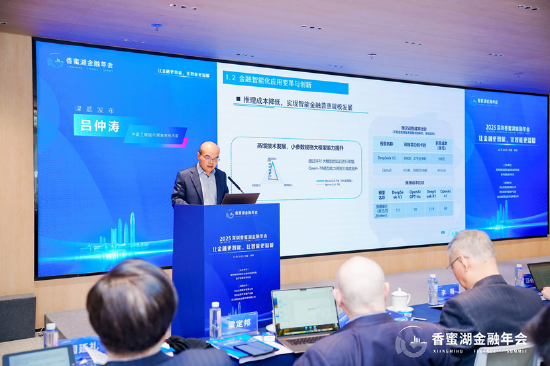
中国工商银行原首席技术官吕仲涛:智能金融进入普惠发展新阶段,推理成本降低助力中小机构转型升级
Xin Lang Zheng Quan· 2025-12-20 14:00
Core Insights - The second "Shenzhen Xiangmi Lake Financial Annual Conference" was held on December 20-21, 2025, focusing on promoting a virtuous cycle of technology, industry, and finance in the Guangdong-Hong Kong-Macao Greater Bay Area [1] Group 1: AI Technology in Finance - The development of open-source large model ecosystems, represented by DeepSeek, and the maturity of technologies like "slow thinking distillation" have significantly lowered the deployment threshold for high-performance AI systems [3] - This breakthrough allows financial institutions to apply AI technology across more business scenarios, expanding from core business to various long-tail scenarios [3] - Cost reductions are evident not only in technology deployment but also in the expansion of intelligent financial services coverage, enabling small and medium-sized banks and local financial institutions to utilize lightweight and efficient AI solutions [3] Group 2: Case Studies and Innovations - Examples such as Shanghai Bank's AI mobile banking service replacing traditional interfaces with conversational services and WeBank's digital marketing system reducing customer acquisition costs illustrate how smaller institutions are innovating service models and improving operational efficiency through AI technology [3] Group 3: Future Directions in Intelligent Finance - The development of intelligent finance must remain business scenario-oriented, emphasizing the need for forward-looking technology and the construction of resilient infrastructure driven by both "general computing and intelligent computing" [3] - It is essential to maintain risk control and ethical compliance, ensuring algorithm interpretability and data trustworthiness [3] - Building a platform for large-scale application of intelligent agents, creating a digital-native architecture and security governance system, and establishing a specialized AI talent team are crucial for deep integration of technical capabilities with business needs [3]