新疆油画

Search documents
油画里的大美新疆
Ren Min Ri Bao· 2025-10-11 21:53
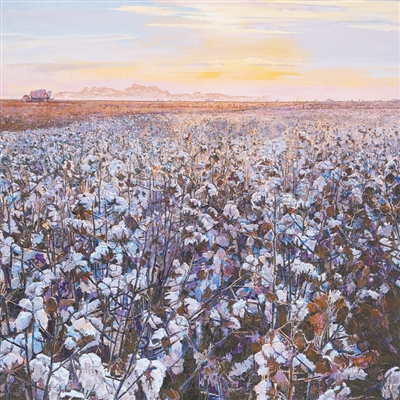
Core Perspective - The evolution of Xinjiang oil painting reflects a dual exploration of contemporary relevance and regional identity, transitioning from static depictions of ethnic customs to dynamic narratives that capture the region's socio-economic transformations [2][5]. Group 1: Artistic Development - Xinjiang oil painters have shifted focus from merely recording ethnic customs to becoming witnesses of historical changes and builders of cultural identity, using their art to narrate the profound transformations in Xinjiang [2]. - Contemporary works emphasize dynamic development, showcasing the vibrant changes in Xinjiang through industrial themes and agricultural advancements, as seen in works like Fu Jianfeng's "Backlight - National Heavy Equipment Series" and Ma Yong's "Xinjiang Cotton - Fertile Fields" [2][3]. Group 2: Micro-Narratives - Newer artworks capture the warmth of everyday life, with artists drawing inspiration from domestic scenes and daily objects to reflect significant societal changes, such as Liu Jianxin's "Sweet Tea" series, which connects past and present living conditions [3]. - The use of traditional colors and modern themes in works like Mai Erdan's "Proposal" illustrates the continuity of cultural practices in contemporary settings, linking traditional customs with modern life [3]. Group 3: Cultural Integration - The expression of Xinjiang's "multi-ethnic unity" has evolved from mere symbolic representation to a deeper cultural dialogue, as seen in Zhang Leizhen's "Kizil Stories" and Nurmaimaiti's "Work Team," which blend policy practices with the daily lives of various ethnic groups [4]. - This artistic approach emphasizes the natural flow of cultural traits through daily interactions, highlighting the essence of China's multi-ethnic culture without focusing solely on regional characteristics [4]. Group 4: Historical Documentation - Xinjiang oil paintings serve as living historical records, documenting significant developments such as high-speed railways and renewable energy projects, while also acting as cultural bridges that convey the beauty and vitality of the region to a broader audience [5]. - The transformation of Xinjiang oil painting represents a broader artistic revolution, where artists aim to depict the aspirations and progress of the local populace under the leadership of the Party, showcasing the vibrant expression of China's multi-ethnic unity in the contemporary era [5].