
无人机集群系统

Search documents
无人机集群“画出”千亿基建赛道!低空视觉经济如何重构传媒与城市空间
Hua Xia Shi Bao· 2026-01-06 03:16
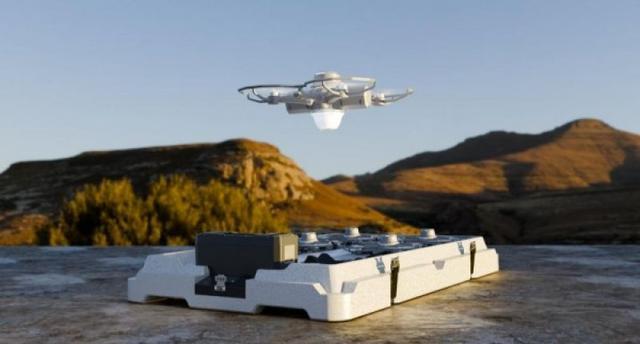
Core Viewpoint - The development of China's low-altitude economy is accelerating from policy framework establishment to industrial implementation, driven by national guidelines and local policies, with a focus on unmanned transportation and low-altitude security [1][11]. Group 1: Policy and Market Dynamics - The National Development and Reform Commission has outlined core principles for low-altitude economic development, emphasizing a phased approach starting with cargo transport before moving to passenger transport and expanding from suburban to urban areas [1]. - Cities like Chongqing and Shenzhen are actively implementing industrial policies and capital is increasingly directed towards low-altitude security and unmanned transportation sectors [1][10]. - The first China Low-altitude Media Conference highlighted the transition of low-altitude technology from performance tools to integral components of urban digital infrastructure [1][4]. Group 2: Technological Advancements - Shenzhen Damo Dazhi Control Technology Co., Ltd. has evolved its drone technology from manual performances in 2016 to a semi-automated drone in 2022, with plans for a fully automated system by 2025 [2]. - The V4 system is designed to automate the entire process from transportation to charging, achieving a reliability rate close to 99.999% [5][8]. - The industry is moving towards a collaborative development model characterized by safety, automation, intelligence, and networking [2][4]. Group 3: Business Model Exploration - The future revenue model for low-altitude visual economy is expected to be a composite of hardware, software, content, and operations, with a focus on sustainable operational and revenue-sharing models [9]. - Successful case studies in Shenzhen and Chongqing demonstrate the potential for creating a commercial ecosystem that integrates aesthetic appeal with significant advertising value [9][10]. - The shift from project-based income to a sustainable urban media network is seen as crucial for the long-term viability of low-altitude media [9][10]. Group 4: Industry Challenges and Future Outlook - The transition from temporary flight management to regular usage poses challenges, particularly in terms of safety and the need for multi-departmental collaboration [4][11]. - The industry must address structural barriers related to airspace management, safety standards, and the validation of business models to fully realize the potential of low-altitude technology [11]. - The next three years may see breakthroughs in establishing city-level, regular low-altitude digital media systems, which could redefine advertising and urban information dissemination [10][11].

深企大漠大刷新吉尼斯世界纪录 11787架无人机点亮重庆夜空
Shen Zhen Shang Bao· 2025-06-19 20:35
Core Viewpoint - The successful performance of 11,787 drones in Chongqing has set a new Guinness World Record for the "most drones forming an aerial pattern," showcasing significant advancements in drone technology and market potential for the industry [1][2]. Group 1: Company Achievements - The achievement not only highlights the product and technological innovations of the company, but also confirms the vast market prospects for drone cluster performances, indicating continued rapid growth in the industry [2]. - The performance involved overcoming multiple technical challenges, including "negative altitude flight," "760 meters long-distance," "surface-level flight," and "distributed site collaborative operation," demonstrating the company's capability to conquer significant technical barriers [2]. Group 2: Industry Insights - The event featured a meticulously designed show that presented the beauty of Chongqing's landscape and culture through seven thematic chapters, emphasizing the integration of technology and art in drone performances [1]. - The company is committed to deepening research and development in the field of automated drone cluster systems, focusing on safety, automation, intelligence, and networking to build a solid technological barrier [3].