无人驾驶播种机

Search documents
多举措协同全力推进秋收 高科技农机与时间“赛跑”抢收抢种
Yang Shi Wang· 2025-10-19 06:11
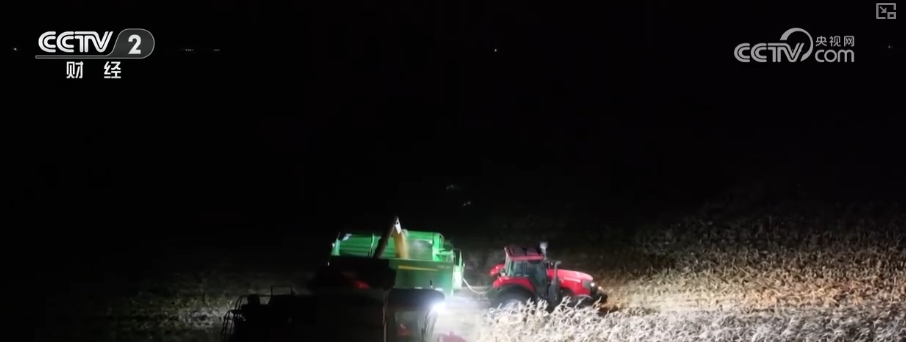
Core Viewpoint - The recent rain and snow in Heilongjiang have impacted the autumn grain harvest, prompting farmers to accelerate their harvesting efforts to complete the collection before the weather worsens [1][3][5]. Group 1: Harvest Progress - As of October 17, Heilongjiang has harvested 189 million acres of crops, exceeding 80% of the total [7]. - In Shandong, the autumn harvest has progressed over 70%, with areas like Heze and Yuncheng facing significant challenges due to continuous rain [10]. - The Huang-Huai-Hai region has also reported over 70% completion of the autumn harvest, despite difficulties caused by persistent rain [8]. Group 2: Technological Assistance - In Henan, new mobile drying equipment and unmanned sowing machines are being utilized to combat the challenges posed by the weather, allowing for efficient harvesting and sowing [19][21]. - The integration of advanced technologies, such as the Beidou navigation system in agricultural machinery, has improved operational efficiency and reduced soil compaction during wet conditions [23]. Group 3: Regional Specifics - In Liaoning, the harvest progress has reached 76.1%, with 40.98 million acres harvested, and specific training for machine operators has been implemented to minimize losses [28]. - The province is promoting high-quality soybean varieties that require less nutrients and have increased planting density, resulting in over 30% yield improvement without compromising protein and fat content [29].

果树“打吊瓶”、无人驾驶播种机……科技“金钥匙”解锁乡村振兴新图景
Yang Shi Wang· 2025-04-27 11:55
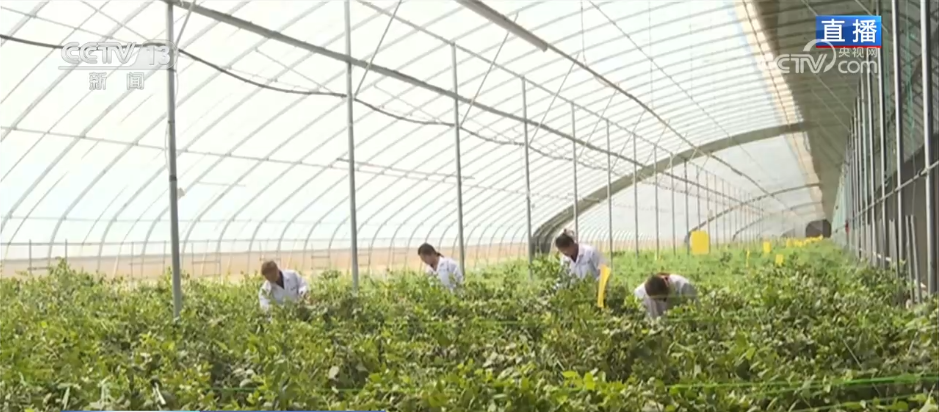
Group 1: Agricultural Innovation in Aral City - The Aral National Agricultural Science and Technology Park is a new efficient water-saving fruit and vegetable production base located at the northern edge of the Taklamakan Desert [1][5] - The park utilizes advanced technologies such as smart irrigation and environmental monitoring systems to overcome the challenges of desert agriculture [1][5] - Blueberry trees have been successfully cultivated for the first time in the region, showcasing the potential of modern agricultural practices in arid climates [3][5] Group 2: Water-Saving Techniques - The modern greenhouses employ innovative irrigation methods like "drip arrow," which delivers water and soluble fertilizers directly to the roots, reducing evaporation and pest proliferation [7] - The reduction in humidity within the greenhouses minimizes the need for pesticides, promoting organic fruit and vegetable production [7] Group 3: Environmental Contributions - The greenhouses also contribute to desertification control by successfully nurturing Hu Yang tree seedlings, which are crucial for combating desert expansion [9][11] - The controlled environment in the greenhouses significantly increases the germination rate of Hu Yang seeds, which typically have a low natural germination success [11] Group 4: Broader Agricultural Developments - In the wider Xinjiang region, 120,000 acres of chickpeas are being planted, with advanced sowing techniques ensuring optimal planting conditions [12][15] - In Liaoning Province, corn planting has commenced with the use of advanced machinery, including autonomous seeders that enhance efficiency and reduce labor [16][18] - Inner Mongolia is focusing on recycling old agricultural films to prevent soil pollution, with a robust collection system in place [23][27]