
时空道宇星座

Search documents
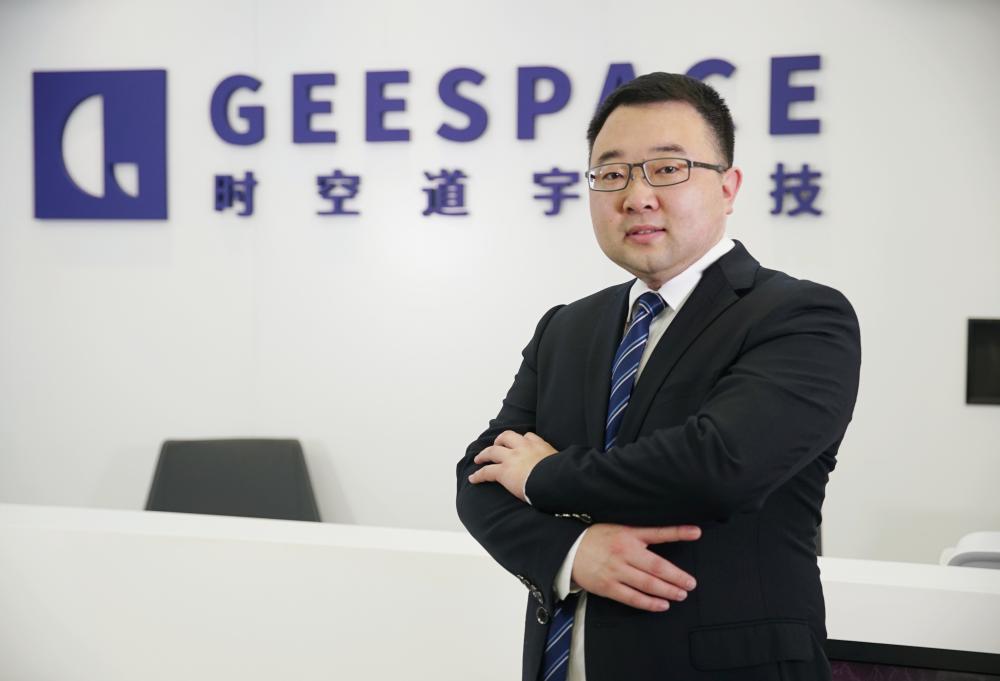
时空道宇王洋:提前十二年布局,终成低轨卫星商用“第一人”
2 1 Shi Ji Jing Ji Bao Dao· 2026-02-10 05:23
Core Insights - The article highlights the significant milestone achieved by Zhejiang Space-Time Daoyu Technology Co., Ltd. in completing the first phase of its low Earth orbit satellite communication constellation, enabling global real-time communication coverage, excluding the polar regions, by September 2025 [1][2]. Group 1: Company Background and Development - Zhejiang Space-Time Daoyu Technology Co., Ltd. was founded in 2018 by Wang Yang, an entrepreneur with over a decade of experience in the aerospace and communication sectors [1][4]. - Wang Yang's journey began in 2008 at the Shanghai Academy of Microelectronics, where he worked on satellite systems and software engineering, focusing on national tasks rather than commercial applications [4][5]. - The turning point for Wang came in 2014 when the Chinese government encouraged private capital in the aerospace sector, leading him to recognize the potential of low Earth orbit communication as a new industry path [5][6]. Group 2: Challenges and Resilience - The company faced significant challenges, including a failed launch of its first two experimental satellites, which Wang described as a moment of humiliation, yet the team continued to advance the development of the satellite constellation [15][16]. - Wang's perspective on failure is that it should not be an excuse for inaction but rather a signal to accelerate system capability development [16]. Group 3: Engineering and Competitive Advantage - Wang believes that the core difference between Chinese commercial aerospace and international giants lies not in singular technologies but in large-scale manufacturing and system operation capabilities [18][19]. - The establishment of the Taizhou satellite super factory in 2021 introduced automotive industry practices into aerospace manufacturing, significantly reducing satellite production time and costs [20]. Group 4: Strategic Focus on IoT - Wang emphasizes the distinction between broadband satellite constellations and satellite IoT, stating that they address fundamentally different problems and are not compatible [21][22]. - The global satellite IoT user base is projected to reach 26.7 million by 2028, with a compound annual growth rate (CAGR) of 39.2%, indicating a booming market for satellite IoT services [22]. Group 5: Business Model Innovation - Unlike Iridium, which focused on voice communication, Space-Time Daoyu aims to reconstruct the satellite IoT ecosystem from the ground up, emphasizing high concurrency connection capabilities and low-power, low-maintenance terminal designs [23][24]. - The company’s business model extends beyond merely providing connectivity; it aims to create a sustainable operational service system that integrates communication capabilities with industry applications [25]. Group 6: Global Expansion and Future Goals - Space-Time Daoyu has established partnerships with over 20 global telecom operators, focusing on emerging markets in Asia, Africa, and Latin America to expand its service coverage [27]. - The company is transitioning from a project-based approach to becoming a global satellite communication service provider, with a target of reaching 2 million users within the next three years [28][30]. Group 7: Long-term Vision - Wang Yang's strategic approach is characterized by patience and foresight, focusing on building a replicable and sustainable engineering system rather than chasing immediate scale [31][32]. - The company is positioning itself for long-term success in the commercial aerospace sector, with a vision that extends beyond immediate market trends [33].

时空道宇:让卫星应用从“天边”走向“身边”
Mei Ri Shang Bao· 2025-12-24 22:16
Core Viewpoint - The successful launch of the sixth orbital plane of the Time-Space Dao Yu constellation marks a significant milestone in China's commercial aerospace sector, with the constellation now comprising 64 satellites providing global communication coverage, excluding the polar regions [5][6]. Group 1: Satellite Launch and Capabilities - The Time-Space Dao Yu constellation, developed by Zhejiang Time-Space Dao Yu Technology Co., has completed its first phase of network deployment with the launch of 12 satellites [5]. - The satellite system can handle approximately 340 million communication requests daily, serving around 20 million users, and offers reliable data transmission for various types of information [6]. Group 2: Applications in Various Industries - The low Earth orbit satellite communication plays a crucial role in the automotive industry, supporting smart vehicle upgrades and providing stable data transmission for autonomous driving and connected vehicles [7]. - The constellation's technology is being applied in multiple sectors, including marine fisheries, smart travel, intelligent manufacturing, and logistics, enhancing operational efficiency and safety [8]. Group 3: Global Competition and Technological Innovation - There are over 15,000 satellites currently in orbit, with global plans exceeding 100,000 satellites, where the U.S. leads with about 60% of the total, while China holds approximately 6% [9][10]. - Time-Space Dao Yu employs a fully autonomous R&D model, achieving significant breakthroughs in satellite manufacturing, reducing production costs, and increasing efficiency [10]. Group 4: Future Goals and Strategic Vision - The company aims to expand the scale of satellite applications and integrate satellite communication with ground networks, 5G, and future 6G technologies to achieve "global communication without dead zones" [11]. - The role of private enterprises in technological innovation is emphasized, showcasing their ability to quickly translate technological advancements into practical applications, which is vital for China's "Aerospace Power" strategy [12].
