
卫星物联网

Search documents
Globalstar(GSAT) - 2025 Q4 - Earnings Call Transcript
2026-02-27 15:00
Financial Data and Key Metrics Changes - Total revenue for 2025 reached a record $273 million, a 9% increase over 2024, marking the fourth consecutive year of record revenue [3] - Service revenue was $257.3 million, up 8%, primarily driven by increased wholesale capacity services [3] - Adjusted EBITDA reached a record $136.1 million, representing a 50% margin, in line with guidance [5] - Net loss improved to $7.6 million from $63.2 million in 2024, largely due to non-recurring, non-cash losses in the prior year [4] - Operating cash flows during 2025 were $621.7 million, including $430.6 million from infrastructure prepayment [8] Business Line Data and Key Metrics Changes - Subscriber equipment revenue was $15.7 million, up 24%, reflecting higher volume of commercial IoT device sales [3] - Q4 total revenue was $72 million, with service revenue increasing 17% and equipment revenue increasing 31% compared to Q4 2024 [5] - Average commercial IoT subscribers increased 6% year-over-year, while IoT hardware sales revenue grew 50% year-over-year [16] Market Data and Key Metrics Changes - The revenue increase in Q4 was driven by wholesale capacity services, performance bonuses, and additional service fees [6] - Contributions from growth in commercial IoT subscribers and device sales were noted, although there was some churn in Duplex and SPOT subscribers [6] Company Strategy and Development Direction - The company focused on scaling the core business while laying the foundation for the next phase of growth, emphasizing product innovation, infrastructure expansion, and market diversification [11] - Significant milestones included the launch of two-way satellite IoT capabilities and the completion of the commercial rollout of the RM200M module [12] - The diversification strategy aims to reduce reliance on any single market and position the company to serve a broad range of customers [12] Management Comments on Operating Environment and Future Outlook - Management expressed confidence in the continued growth trajectory of the business, expecting total revenue between $280 million and $305 million for 2026 [10] - The company highlighted the importance of proprietary, globally harmonized spectrum as a core differentiator in the evolving market [18] - Management noted steady demand for products and services, with new customers and emerging use cases coming online [14] Other Important Information - Capital expenditures for 2025 were $550.4 million, primarily related to commitments under updated service agreements for satellite deployment [9] - The principal debt balance was $410 million at year-end, reflecting scheduled recoupments and new issuances [10] Q&A Session Summary Question: Thoughts on data centers in space - Management acknowledged excitement but stated the focus remains on direct-to-device and IoT, not data centers [21][22] Question: Next milestones for C3 constellation - Management mentioned the completion of the Critical Design Review and ongoing work on network build-out and regulatory discussions [24][25] Question: Customer KPIs for XCOM RAN - Management highlighted the ability to increase capacity in dense environments and the system's readiness for commercial deployment [27][28] Question: Utility of MSS and terrestrial 5G flexibility - Management discussed the synergy between satellite IoT and terrestrial capabilities, emphasizing global spectrum allocation [35][36] Question: Targeted launch windows for replenishment satellites - Management confirmed the first launch is expected in the second quarter of the year [38] Question: Government pipeline and contributions - Management indicated ongoing validation of new opportunities and the importance of expanding to other regions for revenue [51][52]

时空道宇王洋:提前十二年布局,终成低轨卫星商用“第一人”
2 1 Shi Ji Jing Ji Bao Dao· 2026-02-10 05:23
Core Insights - The article highlights the significant milestone achieved by Zhejiang Space-Time Daoyu Technology Co., Ltd. in completing the first phase of its low Earth orbit satellite communication constellation, enabling global real-time communication coverage, excluding the polar regions, by September 2025 [1][2]. Group 1: Company Background and Development - Zhejiang Space-Time Daoyu Technology Co., Ltd. was founded in 2018 by Wang Yang, an entrepreneur with over a decade of experience in the aerospace and communication sectors [1][4]. - Wang Yang's journey began in 2008 at the Shanghai Academy of Microelectronics, where he worked on satellite systems and software engineering, focusing on national tasks rather than commercial applications [4][5]. - The turning point for Wang came in 2014 when the Chinese government encouraged private capital in the aerospace sector, leading him to recognize the potential of low Earth orbit communication as a new industry path [5][6]. Group 2: Challenges and Resilience - The company faced significant challenges, including a failed launch of its first two experimental satellites, which Wang described as a moment of humiliation, yet the team continued to advance the development of the satellite constellation [15][16]. - Wang's perspective on failure is that it should not be an excuse for inaction but rather a signal to accelerate system capability development [16]. Group 3: Engineering and Competitive Advantage - Wang believes that the core difference between Chinese commercial aerospace and international giants lies not in singular technologies but in large-scale manufacturing and system operation capabilities [18][19]. - The establishment of the Taizhou satellite super factory in 2021 introduced automotive industry practices into aerospace manufacturing, significantly reducing satellite production time and costs [20]. Group 4: Strategic Focus on IoT - Wang emphasizes the distinction between broadband satellite constellations and satellite IoT, stating that they address fundamentally different problems and are not compatible [21][22]. - The global satellite IoT user base is projected to reach 26.7 million by 2028, with a compound annual growth rate (CAGR) of 39.2%, indicating a booming market for satellite IoT services [22]. Group 5: Business Model Innovation - Unlike Iridium, which focused on voice communication, Space-Time Daoyu aims to reconstruct the satellite IoT ecosystem from the ground up, emphasizing high concurrency connection capabilities and low-power, low-maintenance terminal designs [23][24]. - The company’s business model extends beyond merely providing connectivity; it aims to create a sustainable operational service system that integrates communication capabilities with industry applications [25]. Group 6: Global Expansion and Future Goals - Space-Time Daoyu has established partnerships with over 20 global telecom operators, focusing on emerging markets in Asia, Africa, and Latin America to expand its service coverage [27]. - The company is transitioning from a project-based approach to becoming a global satellite communication service provider, with a target of reaching 2 million users within the next three years [28][30]. Group 7: Long-term Vision - Wang Yang's strategic approach is characterized by patience and foresight, focusing on building a replicable and sustainable engineering system rather than chasing immediate scale [31][32]. - The company is positioning itself for long-term success in the commercial aerospace sector, with a vision that extends beyond immediate market trends [33].


山东推动航空航天产业跨越式发展
Da Zhong Ri Bao· 2026-02-09 00:55
Group 1 - Shandong is striving to build a commercial aerospace industry hub, aiming for leapfrog development in the sector [1] - The province has included deep-sea and aerospace in 19 key industrial chains, establishing a relatively complete industrial system covering rocket and satellite manufacturing, aerospace launches, and satellite applications [1] - By October 2025, 14 local units are expected to have launched a total of 96 satellites, with the "satellite IoT" initiative by Geely aiming for global real-time communication coverage, excluding the polar regions [1] Group 2 - Recent policies, such as the "Measures for Accelerating the High-Quality Development of the Commercial Aerospace Industry in Shandong Province," aim to cultivate competitive enterprises and innovation platforms, targeting an industry scale of 50 billion yuan by 2027 [2] - The provincial government plans to enhance satellite design, system development, and testing efficiency through the establishment of satellite manufacturing and public service platforms [2] - The government report emphasizes the growth of four emerging industries, including aerospace, and supports major projects in rocket and satellite manufacturing across cities like Jinan, Qingdao, and Tai'an [2]
瑞士初创公司将物联网传输成本降低90%!卫星物联网成最大受益者?
3 6 Ke· 2026-01-30 12:09
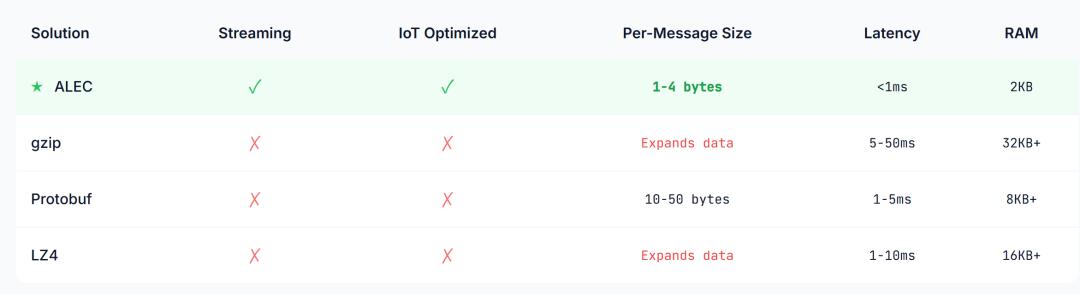
Core Insights - The report from IoT Analytics predicts that the number of IoT device connections will reach 21.1 billion by 2025, 39 billion by 2030, and 50 billion by 2035, indicating a significant shift in the IoT landscape where data becomes a fundamental "digital raw material" rather than a scarce resource [1] - The core challenge for enterprises managing large-scale sensor devices is shifting from "how to connect" to "how to sustainably connect," with data transmission costs, battery life, and network expansion costs becoming critical economic constraints [1] ALEC's Innovations - ALEC (Adaptive Lazy Evolving Compression) is a Swiss IoT startup that has developed a codec specifically designed for IoT sensor data streams, claiming to reduce data transmission volume by up to 90%, which could significantly lower bandwidth costs and reshape device lifespan models [2][3] - ALEC's approach is based on the observation that most IoT data is predictable, allowing for a more efficient compression method that prioritizes the transmission of critical data while compressing routine data [3] Technical Features - ALEC introduces three key innovations: - Lazy Compression: Transmits encoding decisions first, preparing the receiver before data arrival [4] - Evolving Context: Shares a time-evolving dictionary between encoder and decoder to learn specific data patterns from each sensor [5] - Priority System: Classifies messages from P1 (critical) to P5 (routine) to ensure timely delivery of critical alerts [6] Industry Applications - In agriculture, ALEC has achieved an 83% compression rate for soil sensors, extending battery life from 6 months to over 3 years, significantly reducing operational costs [7] - In manufacturing, ALEC's technology has reached a 97% compression rate for vibration monitoring systems, enabling the deployment of up to 2000 sensors without network upgrades [7] - In smart city applications, ALEC has demonstrated an 86% reduction in data volume for parking sensors, air quality monitoring, and traffic management systems, providing a more sustainable data collection and analysis solution [7] Cost Savings - ALEC's technology can lead to substantial cost savings; for example, a user with 10,000 sensors transmitting 10 messages per hour could see monthly data transmission costs drop from approximately $500-2000 to $50-200, achieving savings of up to 90% [8] Targeted Use Cases - ALEC is particularly beneficial for LoRaWAN, battery-powered devices, and emerging satellite IoT scenarios, maximizing message compression to enhance network efficiency and device longevity [9] - In satellite IoT, where transmission costs can be 100 to 1000 times higher than cellular networks, ALEC's compression can reduce data transmission volume by up to 90%, making satellite IoT economically viable for broader applications [10] Business Strategy - ALEC employs a dual strategy of "open source + commercial licensing," allowing developers and startups to use the open-source version for free while offering a commercial version for enterprise applications, promoting widespread adoption and innovation in IoT compression technology [10]
美格智能(002881.SZ):公司有支持卫星物联网的模组及解决方案产品
Ge Long Hui· 2026-01-27 14:22
Core Viewpoint - The company, Meige Intelligent (002881.SZ), is actively developing products that support satellite IoT and has recently launched terminal products that integrate satellite communication with AI-assisted positioning [1] Group 1: Product Development - The company offers modules and solution products that support satellite IoT and 5G NTN two-way satellite communication technology [1] - It has also developed terminal products that integrate 4G all-network communication with Tiantong satellite network, which have been shipped in small batches to customers [1] - Recently, the company introduced terminal products that combine satellite communication with AI-assisted positioning, indicating a continuous expansion of application scenarios for satellite communication technology [1] Group 2: Industry Context - Satellite communication and satellite IoT are emerging industries, and the implementation of related technologies and products is influenced by multiple factors such as technological iteration, market environment, and customer demand [1]

3家股份银行的卫星先后上天 有什么神通?
Mei Ri Jing Ji Xin Wen· 2026-01-26 00:56
Core Viewpoint - The recent launch of satellites by three banks marks a significant step in integrating satellite technology into financial services, enhancing risk monitoring and operational efficiency in various sectors [1][2]. Group 1: Satellite Launches and Applications - China Merchants Bank's "Zhaoyin Jinkui" and Pudong Development Bank's "Puyin Shuzhi" satellites were successfully launched, contributing to the "Tianqi Constellation," China's first global low-orbit satellite IoT network [1][2]. - Previous satellite launches include Ping An Bank's "Ping An 1" and "Ping An 2," which focus on supply chain finance and operational data collection from remote areas [2][3]. - The "Zhaoyin Jinkui" satellite enhances the existing satellite communication matrix of China Merchants Bank, enabling better data transmission and coverage [3]. Group 2: Risk Monitoring and Financial Services - China Merchants Bank utilizes high-resolution satellite imagery for real estate risk monitoring, achieving over 95% accuracy in construction progress tracking [4][5]. - The bank has established partnerships with over 20 key institutional clients for large-scale application of satellite-based risk monitoring services [5]. - Ping An Bank's satellites serve as data transfer stations, helping to bridge information gaps in supply chain financing and improve credit access for small and medium enterprises [3][6]. Group 3: Emergency Communication and Disaster Recovery - The banks emphasize the importance of satellite communication for emergency scenarios, ensuring data transmission even in areas without ground signal coverage [6][7]. - China Merchants Bank has initiated tests for low-orbit satellite communication in financial disaster recovery systems, enhancing business continuity in extreme situations [6][7]. - Pudong Development Bank plans to leverage the "Tianqi Constellation" for comprehensive financial asset management and rapid recovery during natural disasters [6]. Group 4: Industry Trends and Future Directions - The growing commercial space industry in China is prompting banks to invest in satellite technology to innovate financial service models and reduce costs for clients [7][8]. - Other banks, such as Industrial and Commercial Bank of China and Xinyu Bank, are also exploring satellite remote sensing for agricultural applications and asset monitoring [8].



广和通:公司有支持卫星通信的无线通信模组产品,主要用于卫星物联网领域,目前对公司业绩影响较小
Mei Ri Jing Ji Xin Wen· 2026-01-22 10:37
Core Viewpoint - The company, Guanghetong (300638.SZ), has wireless communication module products that support satellite communication, primarily used in the satellite IoT sector, although their impact on the company's performance is currently minimal [1] Group 1 - The company confirmed its involvement in the satellite communication sector through its wireless communication module products [1] - The primary application of these products is in the satellite Internet of Things (IoT) field [1] - The company advised investors to pay attention to investment risks related to this business segment [1] Group 2 - For detailed product and business information, the company encourages stakeholders to refer to its periodic reports and investor relations activity records [1] - The company provides updates through its official WeChat account and website [1]

一箭四星!山东新年首次海上发射圆满成功
Da Zhong Ri Bao· 2026-01-17 00:52
Core Viewpoint - The successful launch of the Gushenxing-1 sea-launched rocket marks a significant milestone for China's commercial space industry, showcasing advancements in satellite communication and the increasing capabilities of domestic rocket models [2][3]. Group 1: Launch Details - On January 16, the Gushenxing-1 sea-launched rocket successfully lifted off from the Dongfang Spaceport in Yantai, delivering four satellites of the Tianqi constellation into their designated orbits [2]. - The Gushenxing-1 rocket is approximately 20 meters long, with a takeoff weight of about 33 tons and a payload capacity of 300 kilograms, offering advantages such as maturity, low cost, high reliability, and quick response [2]. - This launch is the first of the year for Shandong's maritime launches and represents the first rocket launch of the new year for China's private space sector [2]. Group 2: Satellite Communication Advancements - The Tianqi constellation is China's first low-orbit IoT communication satellite constellation, designed to provide global coverage with features such as miniaturization, low power consumption, and cost-effectiveness [3]. - The successful launch enhances the service capabilities of the Tianqi constellation, promoting the large-scale application of new satellite communication services in China [3]. Group 3: Future Developments in Commercial Space - The Gushenxing-1's success continues the flawless record of the Dongfang Spaceport, which has achieved 22 successful maritime launches [3]. - The Gushenxing-2 medium-lift rocket is expected to make its maiden flight soon, significantly increasing payload capacity [3]. - 2026 is anticipated to be a pivotal year for China's commercial space sector, focusing on reusable rocket technology, with several new models expected to debut [4].
移远通信:公司可提供蜂窝模组、车载前装模组等硬件产品
Zheng Quan Ri Bao· 2026-01-16 15:17
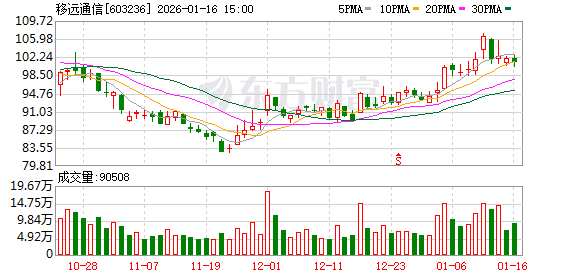
Core Viewpoint - The company, Yiyuan Communication, is actively engaged in providing a wide range of hardware products and solutions in the IoT sector, focusing on satellite IoT technologies and comprehensive solutions for various industries [2] Group 1: Product Offerings - The company offers cellular modules, vehicle pre-installed modules, smart modules, short-range communication modules, GNSS positioning modules, satellite communication modules, and antennas [2] - In addition to hardware, the company provides AI solutions, industrial intelligence, and smart agriculture solutions [2] Group 2: Technological Focus - The company has established a standard module matrix covering three main technical routes in the satellite IoT field: 3GPP NTN, private protocols, and satellite direct cellular (D2C) [2] - The company is committed to closely monitoring industry trends and cutting-edge technologies to deliver integrated solutions [2]

移远通信:公司已形成覆盖3GPP NTN、私有协议、卫星直连蜂窝(D2C)三大主流技术路线的标准模组矩阵
Zheng Quan Ri Bao Wang· 2026-01-16 12:15
Core Viewpoint - Company has established a comprehensive standard module matrix in the satellite IoT field, covering three main technical routes: 3GPP NTN, private protocols, and satellite direct-connected cellular (D2C) [1] Group 1: Product Offerings - The product lineup includes multiple models such as BG95-S5, CC200A-LB, and EG91 [1] - Company targets core application scenarios in satellite communication, developing industry solutions for smart tracking, vehicle satellite communication, wearable devices, emergency communication terminals, and deep-sea transportation [1] Group 2: Supporting Services - Company provides antennas and CMP connection services to analyze connection status and network performance in real-time [1] - These services aim to enhance the efficient operation of satellite IoT applications [1]