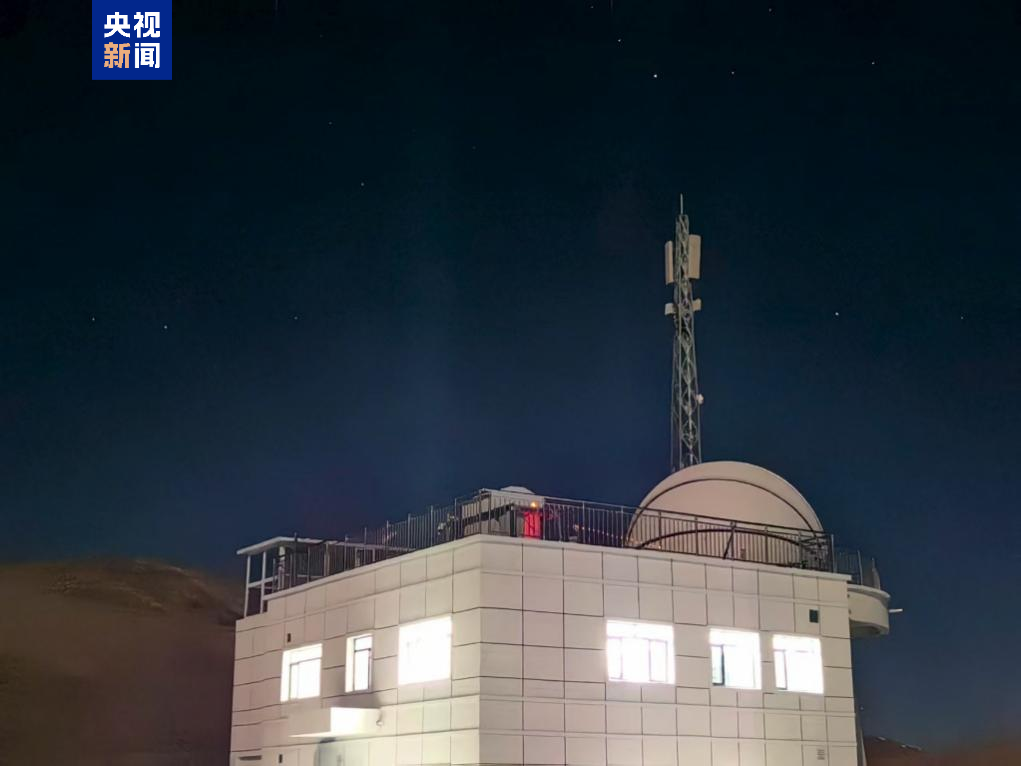
星地激光通信系统

Search documents
120吉比特每秒,刷新中国纪录!
中国能源报· 2026-01-30 09:59
Core Viewpoint - China has achieved a significant breakthrough in high-speed star-ground laser communication, successfully conducting business application experiments with a transmission rate of 120 Gbps, marking a new record in the field [1][3]. Group 1: Technical Achievements - The experiment was conducted at the Xinjiang Tak County laser ground station, utilizing the AIRSAT-02 satellite developed by China Aerospace Science and Technology Corporation [3]. - The star-ground laser link established a rapid capture with a success rate exceeding 93%, maintaining stable communication for up to 108 seconds, validating the link's stability and data reliability at high speeds [3]. - The research team enhanced the satellite's original transmission capacity from 60 Gbps to 120 Gbps through "on-orbit software reconstruction" without modifying the satellite hardware [3][5]. Group 2: Advantages and Challenges - Star-ground laser communication offers significant advantages, including large bandwidth, strong anti-interference capabilities, and good confidentiality, making it an optimal solution for high-speed data transmission [3]. - However, practical applications face challenges such as satellite platform micro-vibrations and severe atmospheric turbulence, which must be overcome to achieve stable high-speed transmission [3][5]. Group 3: Future Prospects - The research team has addressed three core technical bottlenecks: optimizing real-time correction algorithms to stabilize light beam disturbances, applying advanced compensation techniques to reduce data error rates, and improving adaptive transmission strategies to maximize channel capacity [5]. - With ongoing operational validation, star-ground laser communication is expected to support future massive space data transmission, potentially breaking existing communication speed limits and becoming a key hub connecting space-based information networks with ground fiber networks [5].

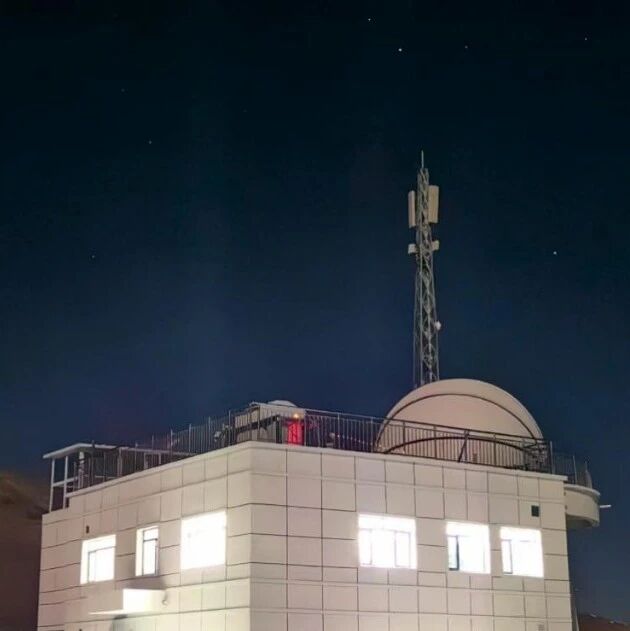
120吉比特每秒,刷新中国纪录!我国实现业务化应用→
Ke Ji Ri Bao· 2026-01-30 07:39
Core Viewpoint - The successful implementation of a high-speed laser communication system in China marks a significant advancement in satellite-ground communication technology, achieving a new record of 120 Gbps transmission speed, which lays a crucial technical foundation for future data transmission needs in space-based applications [2] Group 1: Technological Achievements - The experiment conducted by the Aerospace Information Innovation Research Institute utilized a self-developed 500mm laser communication system and the AIRSAT-02 satellite, achieving over 100 Gbps in practical applications [2] - The laser link established a rapid capture time of seconds, with a success rate exceeding 93%, and maintained stable communication for up to 108 seconds, validating the reliability of data transmission at ultra-high speeds [2] - The research team enhanced the satellite's original transmission capability from 60 Gbps to 120 Gbps through "on-orbit software reconfiguration," demonstrating the potential for significant performance improvements without hardware modifications [2]


超百G实验成功 中国星地激光通信业务化应用迈上新台阶
Zhong Guo Xin Wen Wang· 2026-01-30 06:15
Core Insights - The China Academy of Space Technology has successfully conducted a business application experiment for space-ground laser communication, achieving a communication rate of 120Gbps, marking a significant advancement in China's capabilities in this field [1][4]. Group 1: Experiment Achievements - The experiment utilized a self-developed 500mm aperture laser communication system and the AIRSAT-02 satellite, enhancing the satellite's communication capacity from 60Gbps to 120Gbps without hardware changes [2][5]. - The experiment set a new record for space-ground laser communication transmission rates and addressed challenges related to establishing stable and efficient communication links [4][5]. - During the experiment, a successful link was established in seconds with a success rate exceeding 93%, achieving a maximum continuous communication duration of 108 seconds and transferring 12.656Tb of data [4][5]. Group 2: Technical Challenges and Solutions - The project faced several challenges, including satellite platform micro-vibrations and atmospheric turbulence, which affected the application efficiency of laser communication technology [5]. - The project team implemented key technological breakthroughs and optimizations to enhance signal stability and communication availability, ensuring the success of the 120Gbps experiment [5]. Group 3: Future Implications - The tower county laser ground station, as China's first operational space-ground laser communication station, has been undertaking various operational tasks since its establishment in September 2024, with continuous improvements in communication speed and efficiency [6][7]. - The demand for high-speed data transmission is increasing, and the limitations of microwave communication spectrum resources highlight the necessity for developing space-ground laser communication technology [8]. - With ongoing operational validation, space-ground laser communication is expected to become a backbone hub connecting space-based information networks and terrestrial fiber optic networks, contributing to an integrated space information network system [8].
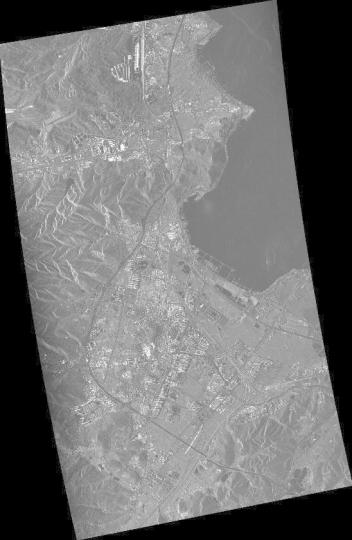
120吉比特每秒!我国超高速星地激光通信实现业务化突破
Ke Ji Ri Bao· 2026-01-30 01:36
Core Insights - China has successfully conducted a business application experiment for space-ground laser communication, achieving a stable high-speed transmission rate of 120 Gbps, setting a new record in the field [1][3] - This advancement marks a new phase in the business application of space-ground laser communication, laying a critical technological foundation to meet future demands for massive space-based data transmission [1] Group 1: Experiment Details - The experiment was conducted at the Xinjiang Tak County laser ground station, utilizing the AIRSAT-02 satellite developed by China Aerospace Science and Technology Corporation [3] - The laser link established a rapid capture and connection within seconds, with a success rate exceeding 93%, and the longest continuous stable communication lasting 108 seconds [3] - The research team achieved this enhancement without modifying the satellite hardware, instead employing "on-orbit software reconfiguration" to double the original transmission capacity from 60 Gbps to 120 Gbps [3][5] Group 2: Technical Challenges and Solutions - Space-ground laser communication utilizes laser as a medium for high-speed information transfer, offering advantages such as large bandwidth, strong anti-interference capability, and good confidentiality [3] - The team overcame three core technical challenges: optimizing real-time correction algorithms to stabilize light beam disturbances caused by atmospheric turbulence, applying advanced compensation techniques to reduce data error rates, and improving adaptive transmission strategies to maximize channel capacity [5] - The successful operation of space-ground laser communication demonstrates its capability to support future massive space data transmission, with potential to become a key hub connecting space-based information networks and ground fiber networks [5]
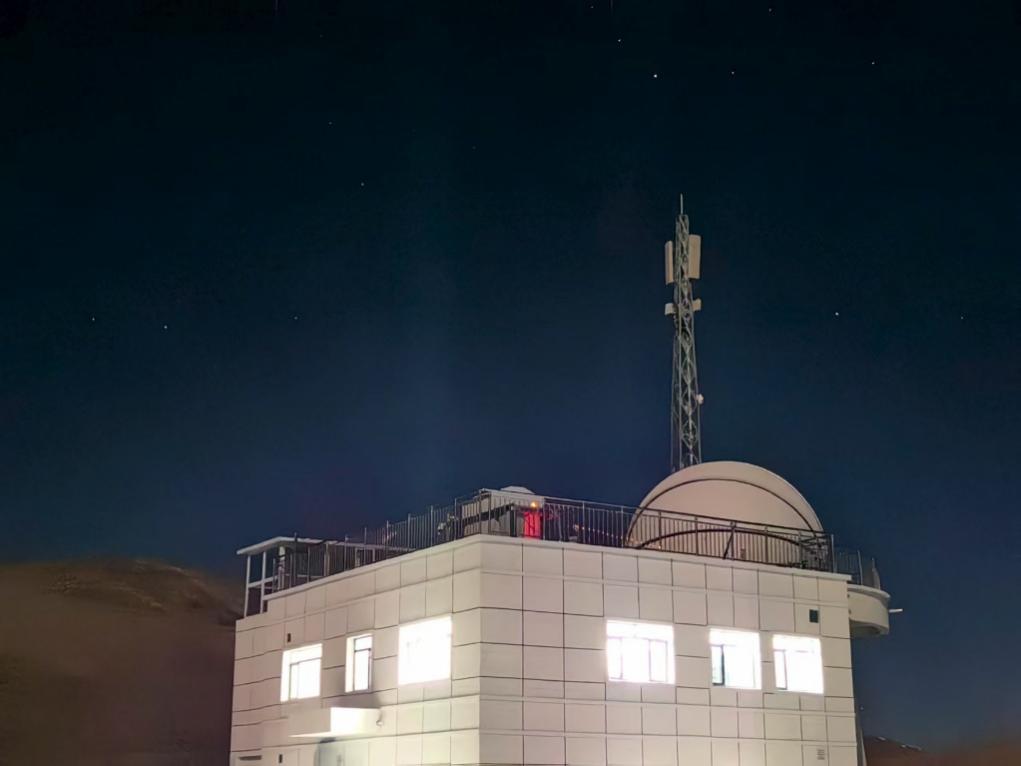
速率超百G!我国星地激光通信业务化应用实验取得新进展
Yang Shi Xin Wen· 2026-01-30 01:23
Core Insights - The Chinese Academy of Sciences' Aerospace Information Innovation Research Institute has successfully conducted a business application experiment for over 100G space-ground laser communication, achieving a communication rate of 120Gbps, marking a significant advancement in China's capabilities in this field [1][4]. Group 1: Experiment Details - The experiment utilized a 500mm aperture space-ground laser communication system developed by the Aerospace Institute and the AIRSAT-02 satellite, enhancing the satellite's communication capacity from 60Gbps to 120Gbps without hardware changes [2]. - The experiment achieved a successful link establishment rate of over 93%, with a maximum continuous communication duration of 108 seconds and a data volume of 12.656Tb, demonstrating high-quality remote sensing image processing [2][4]. Group 2: Technical Challenges and Solutions - The experiment addressed several key challenges in high-speed space-ground laser communication, including the need for rapid link establishment, long-term stability, and efficient data transmission [2]. - The research team overcame technical bottlenecks by optimizing algorithms for real-time optical distortion correction, applying signal damage compensation techniques, and improving adaptive transmission control strategies for non-stationary atmospheric channels [3][4]. Group 3: Future Implications - Space-ground laser communication is positioned as the optimal solution for high-speed data transmission, with ongoing validation indicating that it meets the core technical requirements for handling massive space data downlink [8]. - As the network of laser communication ground stations expands and technical specifications improve, space-ground laser communication is expected to break through existing speed limitations, becoming a crucial link between space-based information networks and terrestrial fiber networks [8].