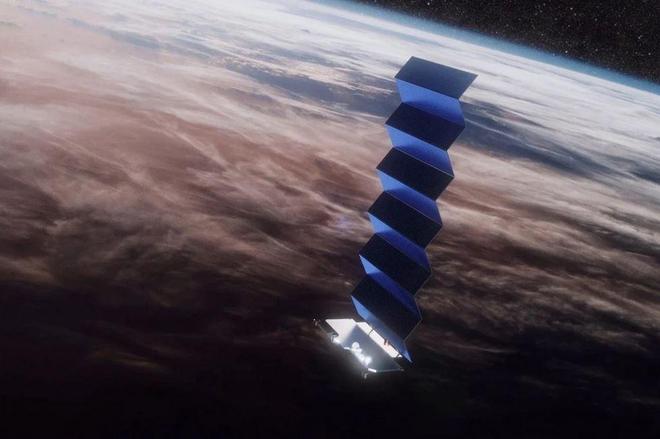
星链(Starlink)互联网卫星星座

Search documents
“中国点名安全风险之际,星链宣布重大调整”
Guan Cha Zhe Wang· 2026-01-02 14:20
Core Viewpoint - SpaceX plans to restructure its Starlink satellite constellation by lowering the altitude of over 4,400 satellites to enhance space safety and reduce collision risks [1][3]. Group 1: Satellite Reconfiguration - The reconfiguration will lower Starlink satellites from approximately 550 kilometers to about 480 kilometers, which is expected to increase the density of the orbital space and reduce the overall collision probability due to fewer space debris and planned satellite constellations below 500 kilometers [3][4]. - This adjustment is also anticipated to decrease the time it takes for satellites to deorbit during the upcoming solar minimum period, expected around 2030, by over 80% [3][4]. Group 2: Safety and Coordination - SpaceX emphasizes that the restructuring will be coordinated closely with regulatory bodies, other operators, and the U.S. Space Command to enhance the safety of the satellite constellation, particularly in response to uncoordinated maneuvers and launches by other satellite operators [4]. - The reliability of Starlink satellites is highlighted, with only two out of over 9,000 operational satellites having failed, although the company aims for any malfunctioning satellites to deorbit quickly [4]. Group 3: International Concerns - A Chinese representative raised concerns at a UN Security Council meeting about the unchecked expansion of commercial satellite constellations, specifically mentioning Starlink's proximity to the Chinese space station and incidents of debris generation [5][6]. - The representative called for adherence to the Outer Space Treaty and increased regulation of national commercial space activities to mitigate safety challenges posed by satellite constellations like Starlink [6][5]. Group 4: Future Developments - Starlink aims to deploy over 42,000 satellites upon full completion of its network, with each satellite designed for a lifespan of five years before being deorbited [7]. - China is also developing its own satellite constellations, including the Guowang and Qianfan constellations, with plans to deploy over 10,000 satellites [7].