普通加碘盐

Search documents
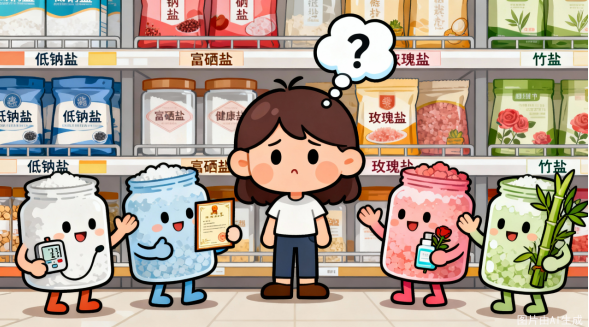
低钠盐、富硒盐、玫瑰盐、竹盐……这么多盐该怎么选?
Xin Hua Wang· 2026-01-31 14:20
Core Viewpoint - The article discusses the various types of salt available in the market, their nutritional values, and how to choose the right salt based on individual health needs, emphasizing that "high-end salts" do not necessarily provide significant health benefits compared to regular iodized salt [1][36]. Group 1: Types of Salt - Common salt types include regular iodized salt, selenium salt, low-sodium salt, and specialty salts like rose salt and bamboo salt, with the primary component being sodium chloride (95%-99%) [3][5][18]. - Regular iodized salt is cost-effective and prevents iodine deficiency diseases, making it suitable for most people [5][20]. - Selenium salt claims to provide selenium but only offers minimal benefits, insufficient to meet daily requirements [8][18]. - Low-sodium salt is beneficial for individuals with high blood pressure, but it is not suitable for everyone due to its potassium content [11][22]. - Specialty salts like rose salt and bamboo salt should be chosen based on specific needs rather than trends, as they do not provide significant health advantages [24][36]. Group 2: Choosing the Right Salt - The selection of salt should align with individual health conditions and dietary environments rather than blindly opting for expensive or trendy options [18][20]. - Regular iodized salt is recommended for the general population, while non-iodized salt is only for specific medical conditions [20][21]. - Low-sodium salt is ideal for those with hypertension but should be avoided by individuals with certain health issues [22][23]. - Specialty salts should be used judiciously, as they do not replace the need for a balanced diet [24][36]. Group 3: Salt Consumption Tips - It is crucial to control salt intake, with a recommended daily limit of 5 grams, and to be aware of hidden sources of salt in processed foods [32][30]. - Cooking techniques such as adding salt at the end of cooking and using natural flavor enhancers can help reduce overall salt consumption [33][34]. - Proper storage of salt is important to maintain its quality and nutritional value, particularly for iodized salt [34][36].